




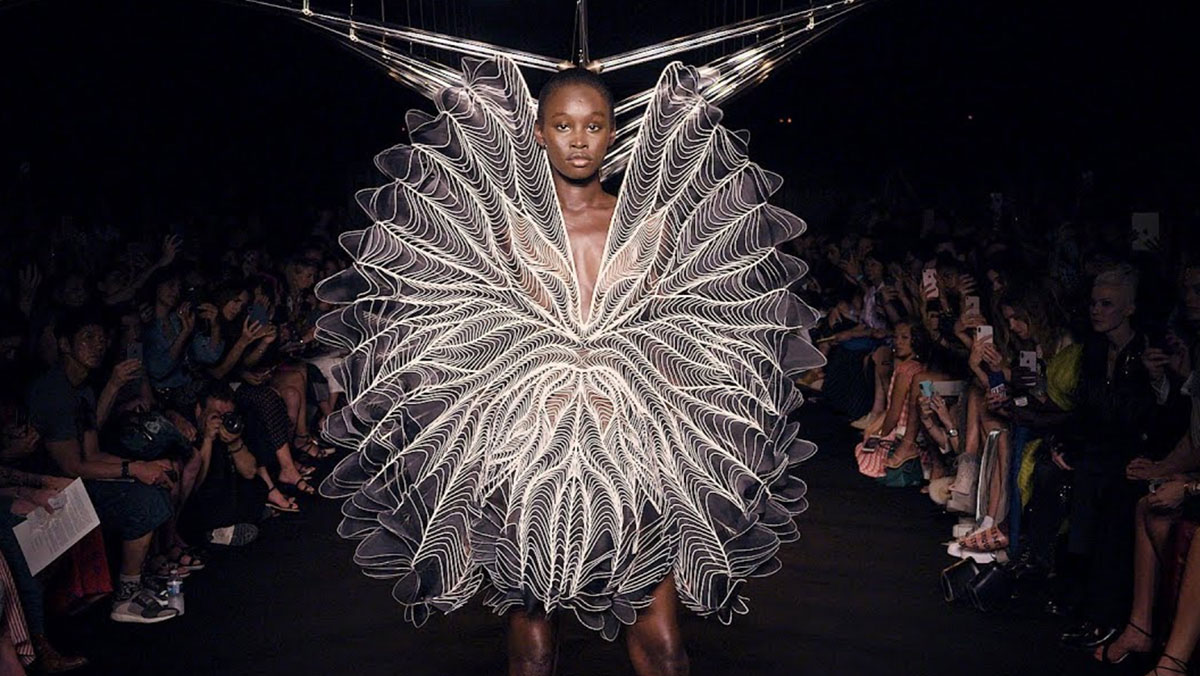
Luxury fashion has always balanced between art and technology. This is the industry where the boldest experiments emerge, gradually making their way into everyday clothing. One of the most fascinating trends of recent years is 3D printing in fashion—a technology that is already transforming the way clothes are designed, produced, and worn.
What materials are used to 3D print clothing?
Although just a decade ago it seemed like a futuristic vision, today 3D printing in fashion uses an increasingly wide range of materials. The most commonly used are:
- nylon (PA12) – lightweight, flexible, and durable, perfect for parts requiring movement;
- TPU (thermoplastic polyurethane) – exceptionally durable and flexible, with a texture similar to traditional fabrics;
- biopolymers like WillowFlex – biodegradable materials, perfect for designers focused on sustainable fashion;
- metal alloys and gold – used in jewelry and accessories;
- transparent and colored resins – perfect for creating glass or crystal-like effects.
These materials make it possible to design both soft, flexible fabrics and hard, sculptural elements.
The greatest designers and 3D printing icons in fashion
The first designer to introduce 3D printing to the haute couture runway was Iris Van Herpen. For over a decade, her collections have been redefining the boundaries of fashion by blending architecture, science, and art. She created the first 3D-printed wedding dress, as well as futuristic designs reminiscent of biological structures and elements of nature. Bold and unconventional. That’s why her creations captivate both fashion and art enthusiasts.
Zac Posen is another icon – his Rose Petal Dress at the 2019 Met Gala became legendary. The gown, featuring 37 petals created with SLA 3D printing and painted with color-changing paint, proved that 3D printing in fashion is more than just an experiment. It’s a field that seamlessly blurs the line between fashion and art.
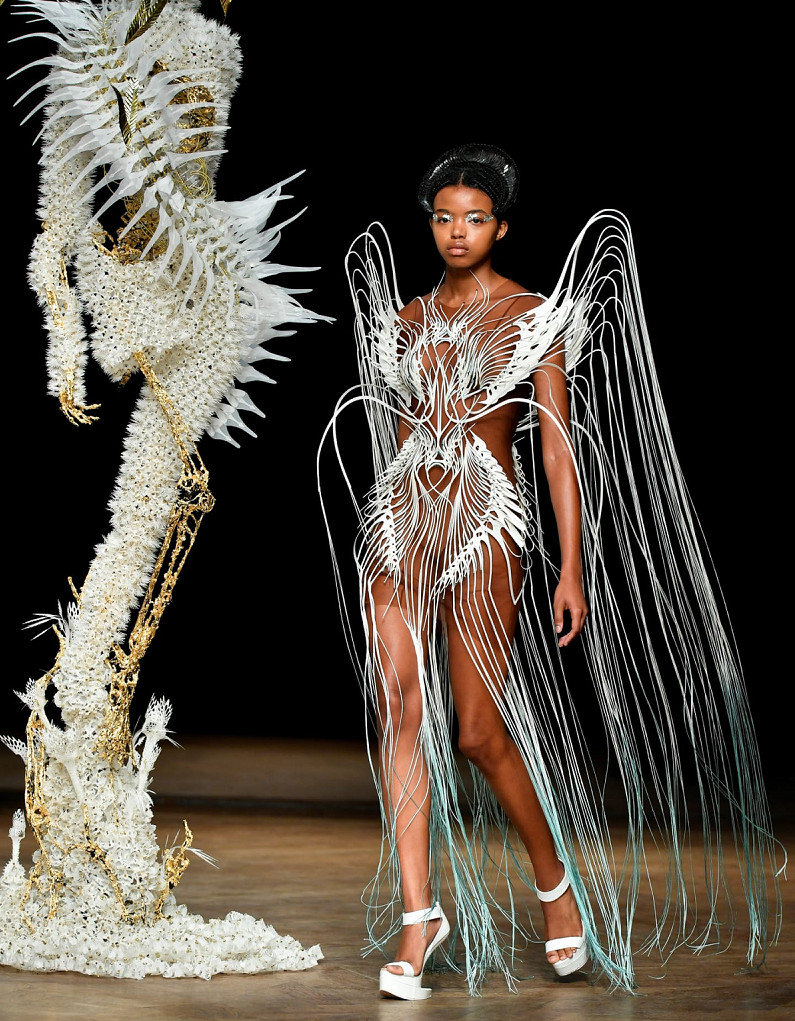
In jewelry, Jenny Wu stands out—an architect who founded the LACE brand in 2014. Her designs combine the precision of CAD with 3D printing in nylon and metal. The brand offers modern forms that are impossible to achieve with traditional methods.
Companies and brands embracing 3D printing
Technology is slowly moving beyond haute couture and entering the mainstream. Chanel has experimented with adding 3D-printed details to its iconic tweed suits. Meanwhile, Scottish brand Pringle has used this technology to create patterns and cuffs on its sweaters.
3D printing is increasingly visible in fashion accessories – from handbags and eyewear to jewelry. In the luxury sector, it serves as a tool for creating unique, limited-edition pieces that highlight the exclusivity of the product.
Clothing, accessories, or just decorations?
Although spectacular dresses fully 3D-printed attract media attention, this technology is currently most often used in:
- decorative elements – appliqués, panels, dress embellishments;
- accessories – jewellery, sunglasses, handbags;
- in hybrid garments – where traditional fabric is combined with 3D-printed elements, offering greater comfort for the wearer.
Fully printed creations still remain the domain of runways and artistic projects. However, technological advancements are bringing them closer to everyday life.
The most fascinating examples of 3D printing in fashion
- Iris Van Herpen wedding dress (2024) – the first fully 3D-printed gown of its kind, custom-designed using a 3D body scan.
- Glass Dress Zac Posena (2019) – a transparent creation worn by Nina Dobrev, made from Somos Watershed resin.
- Spider Dress Anouk Wipprecht – a dress that responds to the wearer’s movement and breathing, equipped with sensors and robotic arms.
- NAMEDRESS by Sylvia Heisel – a bioplastic dress featuring the names of women in STEM, created using zero-waste 3D printing technology.
3D printing in fashion – the future or just a passing trend?
Experts emphasize that while the idea of printing clothes at home is still a vision of the future, 3D printing in luxury fashion is already a real revolution. It helps reduce waste. Additionally, it shortens production time. Thirdly, it opens up limitless creative possibilities and gives customers a sense of uniqueness.
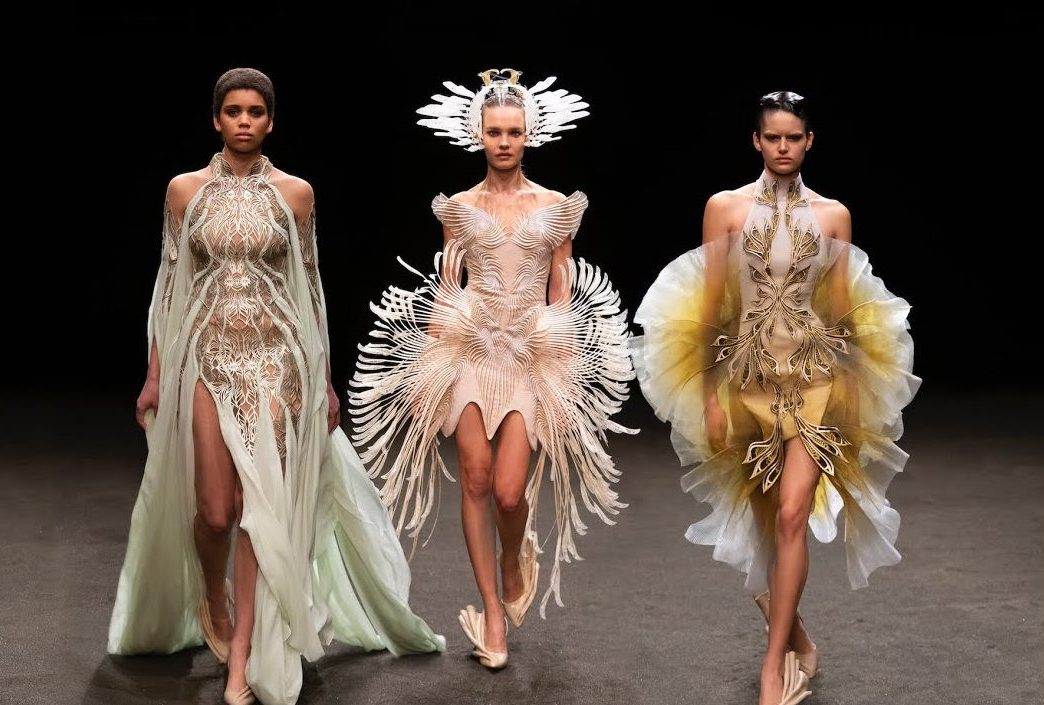
Perhaps in two decades, 3D-printed clothing will be part of everyday life. For now, however, it remains a blend of luxury, art, and innovation. A showcase of how technology can transform fashion.
