




From Sparkle to Tensions – An Introduction to Debswana’s Cuts
Diamonds account for 80% of Botswana’s exports. Sounds impressive, right? But when Debswana announced a 40% production cut on June 6, 2025, that statistic suddenly became alarming. These aren’t just routine market adjustments.
I sometimes wonder if people buying engagement rings have any idea about this reality. Luxury versus the harsh mathematics of the market—these two worlds rarely intersect. And yet, a single decision by one mine can impact the entire global supply chain.
Cuts in 2025 are no coincidence. They are a response to declining demand that has persisted for several quarters. The diamond market is changing faster than ever before. Synthetic stones, shifting preferences among younger generations, and inflation impacting luxury purchases.
These changes have significance far beyond the borders of Botswana.
Numbers are unforgiving. Botswana produces around 24 million carats a year. A 40% cut means almost 10 million fewer carats on the market. That’s a huge difference on a global scale.
To truly grasp the real significance of this decision, however, one must look deeper. Into the history of a small country that became a diamond giant.
From History to Dependency – The Economic Foundation of Botswana
The history of Botswana is essentially the story of a single discovery. One might wonder whether it is a blessing or a curse—but the facts remain as they are.
It all really began in 1967. That’s when the first diamond deposits were discovered in Orapa. No, wait—actually, diamonds were known about before then, but it was only at that point that something tangible was found. In 1969, Debswana was established—a joint venture between the government of Botswana and De Beers. Fifty-fifty, as they say.
| Year | Event |
|---|---|
| 1967 | Discovery of the Orapa deposit |
| 1969 | Establishment of Debswana Mining Company |
| 1972 | Commencement of mining in Orapa |
| 1982 | Opening of the Jwaneng mine |
| 1990 | Letlhakane Mine |
| 2000 | Botswana is becoming the largest diamond producer |
| 2023 | Renegotiation of the Debswana-government agreement |
These numbers are impressive. Diamonds now account for 30-40% of Botswana’s entire GDP. And 40% of all government revenue comes from them. In other words, without diamonds, Botswana would be… well, a completely different country.
Economists love to argue about such cases. Some talk about the “resource curse.” After all, many African countries have oil, diamonds, or other riches, yet people live in poverty. But Botswana is different. Some even call it the “African miracle.”
Maybe they really have managed to avoid this curse? Stable institutions, prudent management of diamond revenues, investments in education. But on the other hand—what will happen when the diamonds run out? Or if demand drops?
This question is becoming increasingly relevant, especially in light of the latest decisions regarding extraction restrictions.
Mechanics of Cuts 2025 – scale, causes, technical details
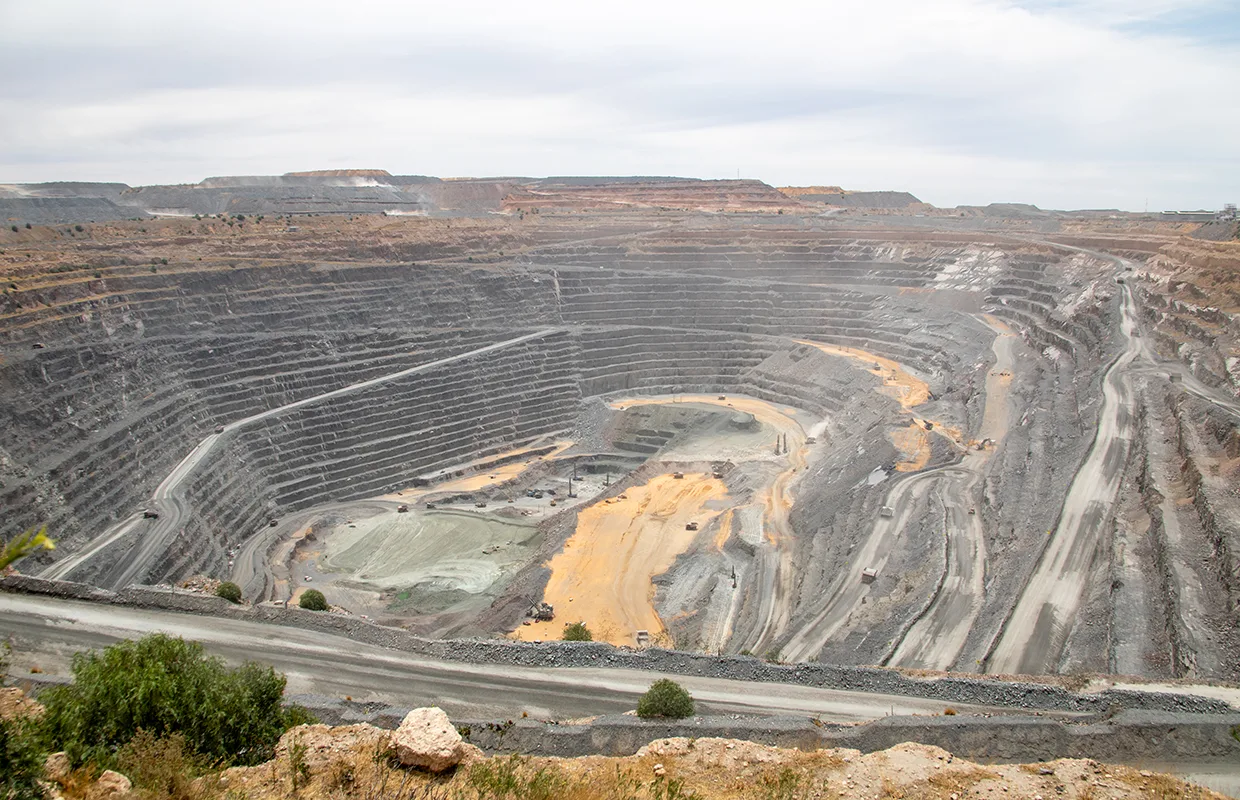
Diamond production in Botswana will drop dramatically in 2025. From 24-25 million carats per year to just 14-15 million. This is not a typical market correction, but a structural shift affecting the entire sector.
The biggest blow affects Jwaneng, the country’s flagship mine. That’s where the longest production shutdowns are planned. Orapa is also cutting output by around 35 percent. Smaller mines like Letlhakane and Damtshaa are partially suspending operations—some shafts simply aren’t profitable at current prices.
The main reason? Raw material prices have dropped by 20-30 percent since 2023. Synthetic diamonds are taking an increasingly larger share of the market. Who would have thought that lab-grown stones would gain popularity so quickly.
| Mine | Status 2025 | Participation in reduction |
|---|---|---|
| Jwaneng | Long production breaks | 45.0% |
| Orapa | 35% reduction | 30.0% |
| Letlhakane | Partial suspension | 15.0% |
| Damtshaa | Selective production | 10.0% |
Technical solutions are evolving as well. Companies are introducing AI-driven drilling—algorithms analyze the quality of kimberlite before full-scale extraction begins. X-ray sorters have become standard. Only batches that guarantee high value are mined.
The entire industry is shifting towards a selective production model instead of mass extraction.
These operational changes are just the beginning. The impact on the country’s economy will be much broader than just production figures.
The big picture – global economic and market impacts
Debswana has just announced production cuts and everyone is watching the numbers. Botswana’s GDP could drop by 1-2 percent—it sounds harmless, but that means over a thousand jobs lost. For a country that lives off diamonds, that’s a significant blow.
In fact, this entire crisis highlights just how fragile this business really is. For decades, Botswana built its economy around natural stones, and now it faces something no one anticipated—lab-grown diamonds already account for 10-15 percent of the global market in 2023.
The competition is responding in various ways. Alrosa is trying to hold its ground, but is also feeling the pressure on prices. Lucara, which has always focused on larger stones, is now looking for new ways to stand out. The most interesting reaction comes from the Indian cutting centers—they’re operating at full capacity, but their margins are shrinking.
Consumers are changing their habits faster than anyone expected. Generation Z doesn’t share their parents’ fascination with natural diamonds. ESG, sustainability, carbon footprint—these terms are coming up more and more often in conversations about jewelry.
I remember how just a few years ago synthetic diamonds were considered fakes. Today, young people buy them consciously, sometimes even preferring them. It’s not just about the price—though of course, that’s a factor too. It’s a shift in mindset.
Global supply chains need to adapt. Distributors who for years worked exclusively with mines are now opening up to lab-grown alternatives. Retailers are testing new marketing strategies. Some are separating their offerings, while others are trying to combine both segments.
Natural diamond prices are falling, but not as dramatically as one might expect. There is still a group of consumers willing to pay a premium for a “real” stone. The problem is, that group is shrinking.
All this turmoil is forcing everyone to think about the future differently than before.
What’s next for the diamond giant? – scenarios and conclusions
Previous analyses have shown that the diamond industry is facing serious challenges. But what happens next? It’s time to consider possible scenarios.
Scenario 1 – extended restrictions until 2026
If the current problems persist, the situation will become difficult. Russian diamonds will remain under sanctions, and demand will stay low. Mining companies will have to drastically cut production. De Beers may close more mines, and smaller companies will simply go out of business.
This means mass layoffs in Botswana and South Africa. But it could also lead to industry consolidation—with only a few major players remaining.
Scenario 2 – moderate demand rebound in Asia
China and India may resume buying diamonds faster than Europe or America. A ten percent annual increase in production sounds optimistic, but realistic.
The young generation in Asia still sees diamonds as a status symbol. Especially in India, where jewelry traditions run deep. The problem is that Asian buyers are highly sensitive to prices.
Scenario 3 – diversification, blockchain, synthetics
The industry could change completely. Synthetic diamonds already cost a fraction of natural ones. Blockchain will help track the origin of every stone – this is crucial for young consumers.
Some companies are already experimenting with diamond NFTs. It sounds strange, but it might just work.
Key actions for different groups:
✓ Investors – diversify your portfolio, avoid small mining companies
✓ Governments of producing countries – develop other sectors of the economy
✓ Jewelers – invest in natural diamond marketing, build awareness of the differences
✓ Consumers – check certificates of origin
The year 2030 will be a milestone – that’s when we’ll see whether the traditional diamond industry has survived the transformation or given way to new technologies.
