




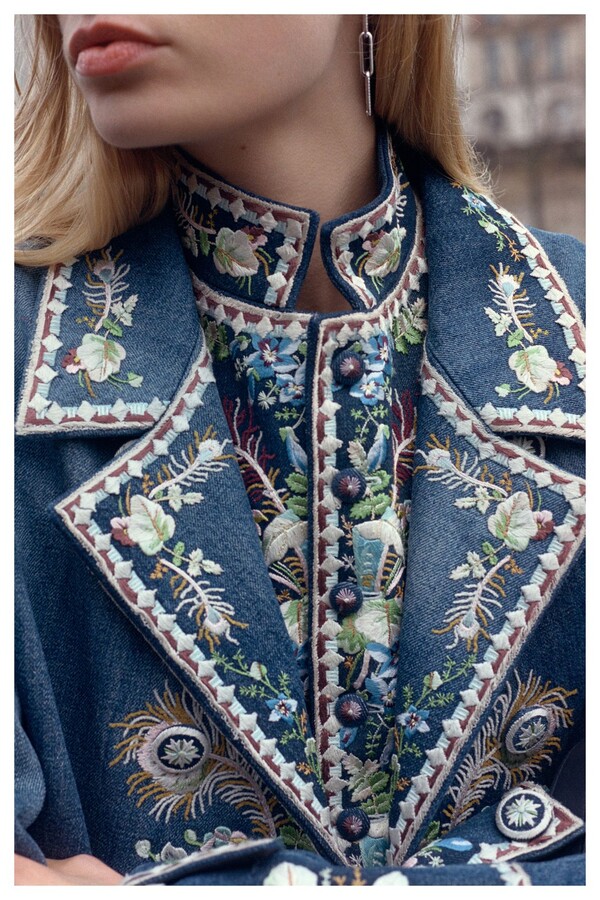
Jonathan Anderson in the Dior Pre-Fall 2026 lookbook makes a move that, in the world of luxury, is often more challenging than a spectacular debut: he consciously slows down. Instead of escalating form and narrative, he focuses on building a language of everyday elegance — a wardrobe that doesn’t shout novelty, but consistently redefines the fashion house’s identity. Under his direction, Dior enters a phase of “life after the show”: less manifesto, more genuine connection with the body, movement, and wearer.
Dior in suspense: between the archive and the present
The direction emerging from this collection can be described as Dior in a state of creative tension — between history and modernity, structure and softness, intellect and sensuality. Anderson does not attempt to “refresh” Dior in a literal way. Instead, he stretches its codes, testing their flexibility.
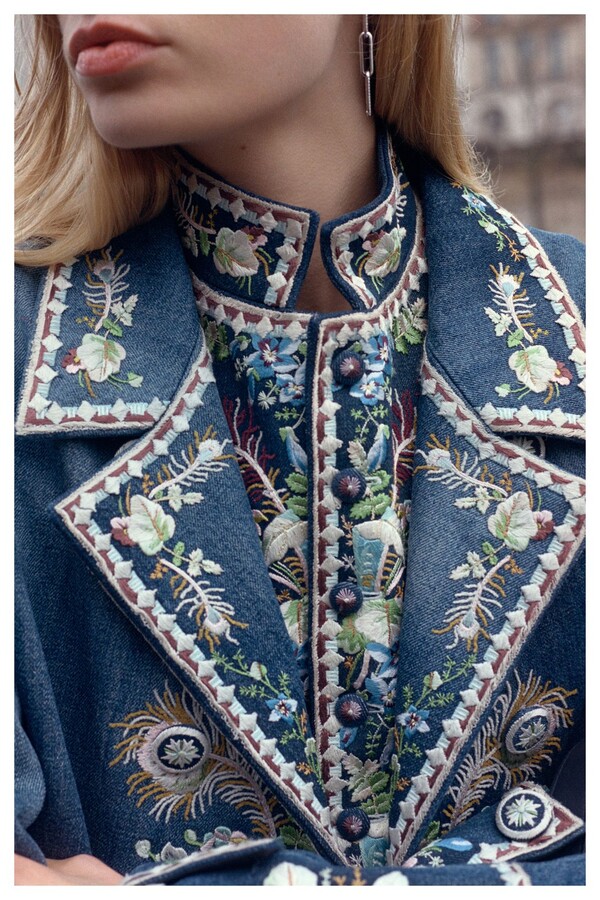
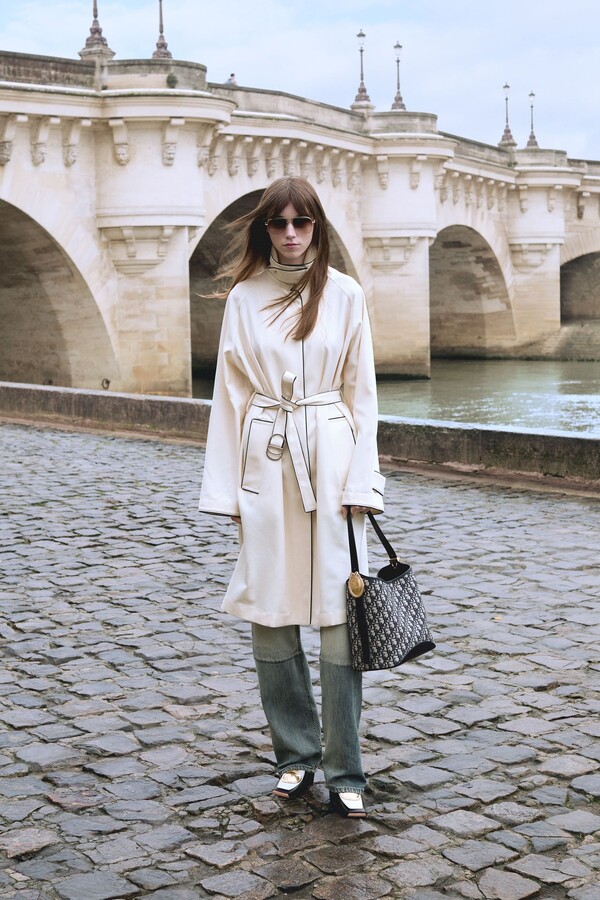
It is a brand in progress, not a closed definition; Dior, which allows itself ambiguity and growth instead of immediate answers.
New proportion: volume on an intimate scale
The silhouette remains the main tool of this transformation. Anderson continues to work with volume but abandons monumentality in favor of a more intimate scale. The strongest element is the new forms of denim: trousers as wide as a pleated skirt, ultra-light, softly washed, almost fluid in motion. This is denim as construction, not utilitarian cliché — redefining the silhouette without the weight of literalism or nostalgia.
Bar jacket without ceremony
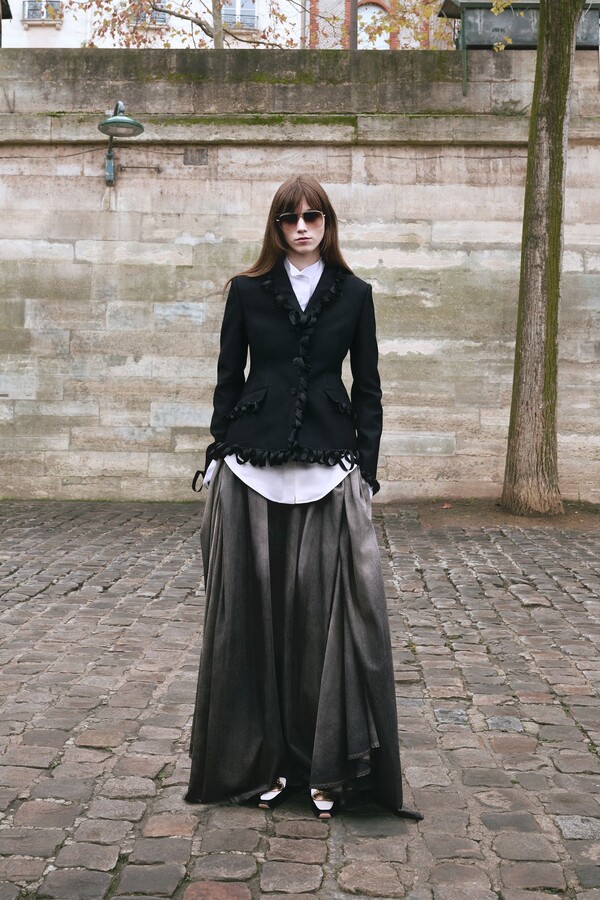
In contrast to these relaxed volumes, the reinterpreted Bar jacket appears — an icon of Dior and its most recognizable code. Anderson does not treat it as a relic. He shortens it, lengthens it, stretches it into a coat, breaks it up with texture, or deconstructs its proportions.
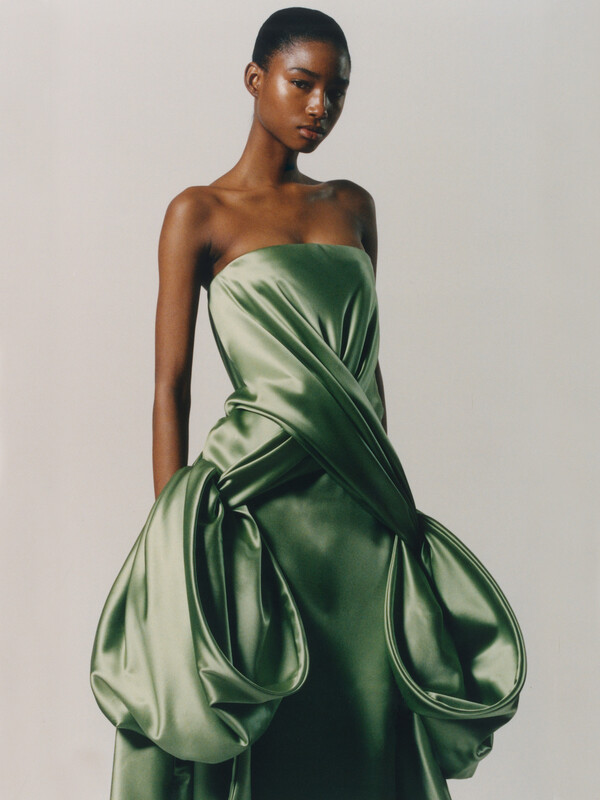
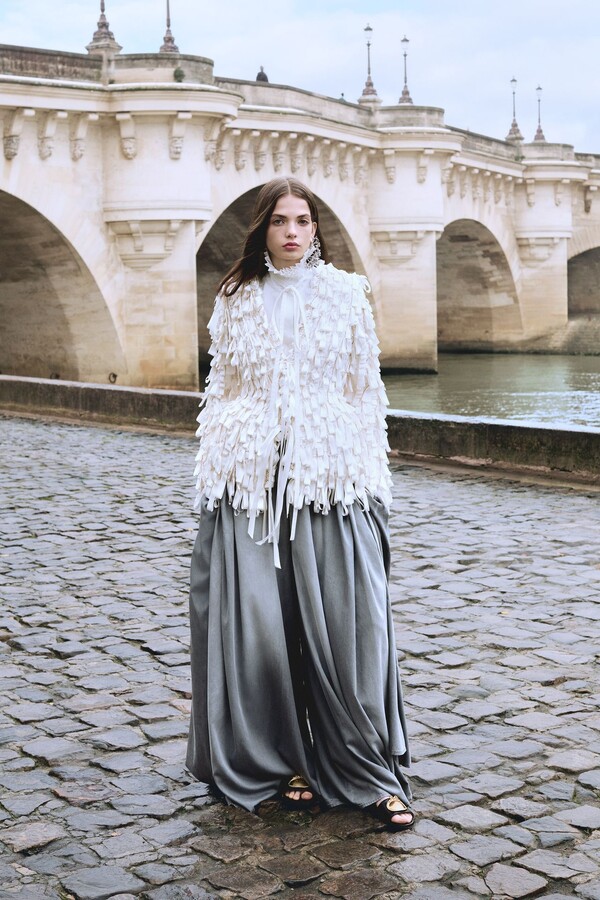
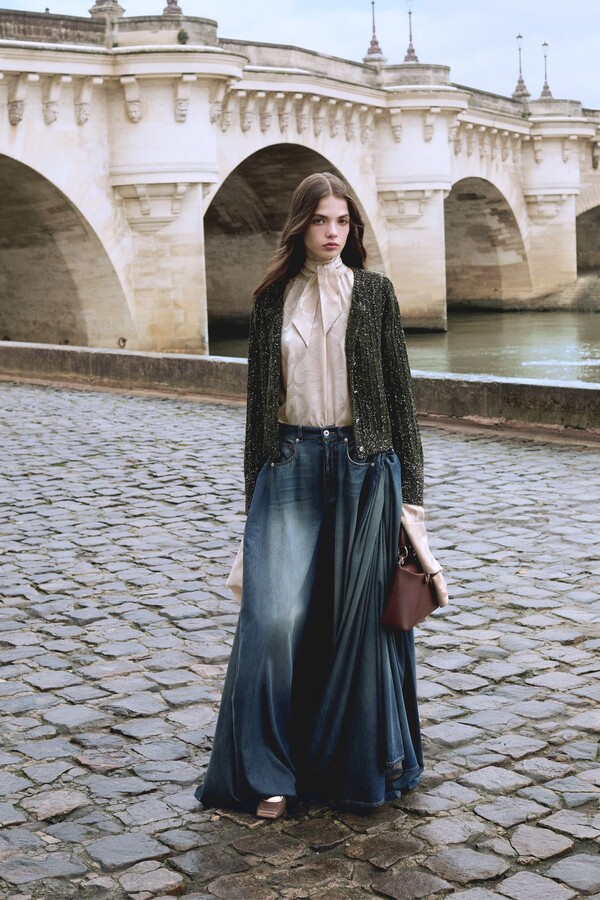
The classic silhouette loses its ceremonial character: the waist is no longer a point of control, but a space for negotiation. This is Dior softer, less declarative, closer to the contemporary rhythm of life.
Archive as an impulse, not a quote
The history of the fashion house is present, but never literal. The inspiration from the trapeze Arizona coat from 1948 leads not to reconstruction, but to abstraction. Double-sided coats reminiscent of blankets, fastened with pins, or jackets with loosely draped collars evoke associations rather than direct quotations. Anderson demonstrates that the Dior archive does not have to be a burden — it can become material for contemporary thinking about form.
Femininity in parentheses
The most ambivalent area of the collection remains femininity. When Anderson reaches for romantic motifs — silk scarf-dresses, delicate appliqués, tulle underlays — he does so with a clear sense of distance. The evening silhouettes are deliberately challenging: tied at the side, with a structurally emphasized bust, lacking the classic lightness associated with Dior. This is elegance subjected to analysis, not idealization.
Knitwear that breathes
At times, the collection opens up to greater everyday wear. Knitwear — like a cardigan shaped like a tailcoat — introduces lightness and humor, while remaining precisely designed. These elements serve as a bridge between concept and a real wardrobe, making Pre-Fall 2026 a collection that functions not only in the realm of ideas, but also in real life.
Dior Pre-Fall 2026, or forever in progress
The most important message of the lookbook does not lie in individual silhouettes, but in the strategy. Anderson clearly resists the pressure to immediately define the new Dior. Instead of a manifesto, he proposes a process; instead of a revolution—evolution. This is a fashion house in motion: intellectual, demanding, sometimes uncomfortable, but consistent.
Pre-Fall 2026 does not offer ready-made answers. It asks questions — about proportion, femininity, heritage, and modernity. And it is precisely in this openness that its strength lies. Anderson does not confine Dior to a single vision. He allows it to breathe, evolve, and mature — without losing intellectual integrity.
