




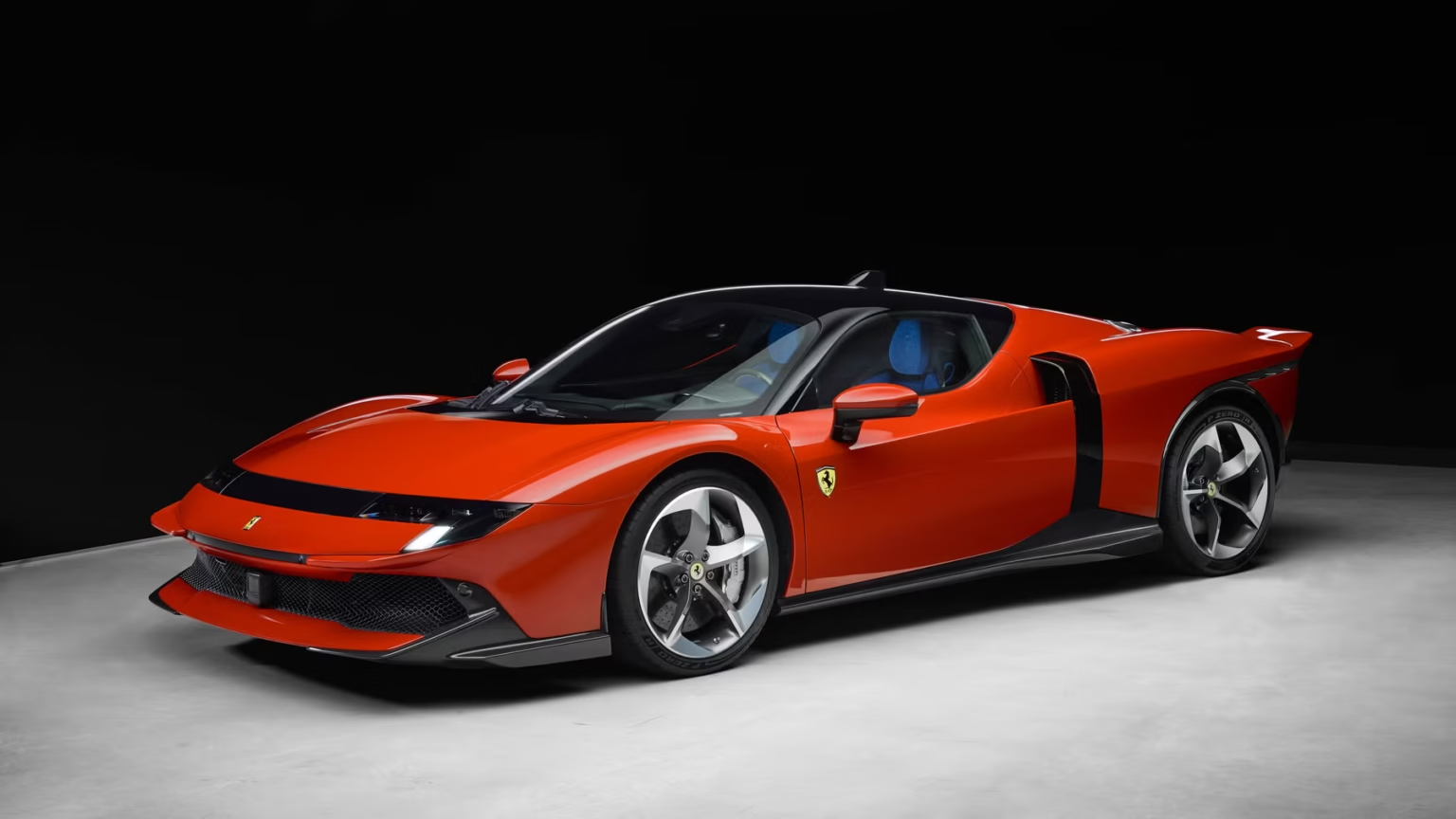
In mid-2026, Ferrari will introduce the most powerful production car in its history to the showroom: the 849 Testarossa, a plug-in hybrid with over 1,000 hp. It was officially unveiled on 09.09.2025, and what immediately sets this model apart is:
- over 1,000 HP of total power (V8 combustion engine + electric motors)
- PHEV drivetrain allowing for purely electric driving mode
- the revival of the iconic “Testarossa” name from the 1980s
Ferrari 849 Testarossa – power that excites!
849 Testarossa is the direct successor to the SF90 Stradale, Ferrari takes hybridization even further, combining brutal performance with the ability to cruise silently through the city on electric power. The name “Testarossa” evokes nostalgia ( red cylinder head, Miami Vice era), but now it stands for the future, not the past. It’s proof that Ferrari knows how to honor its heritage while pushing technology forward.
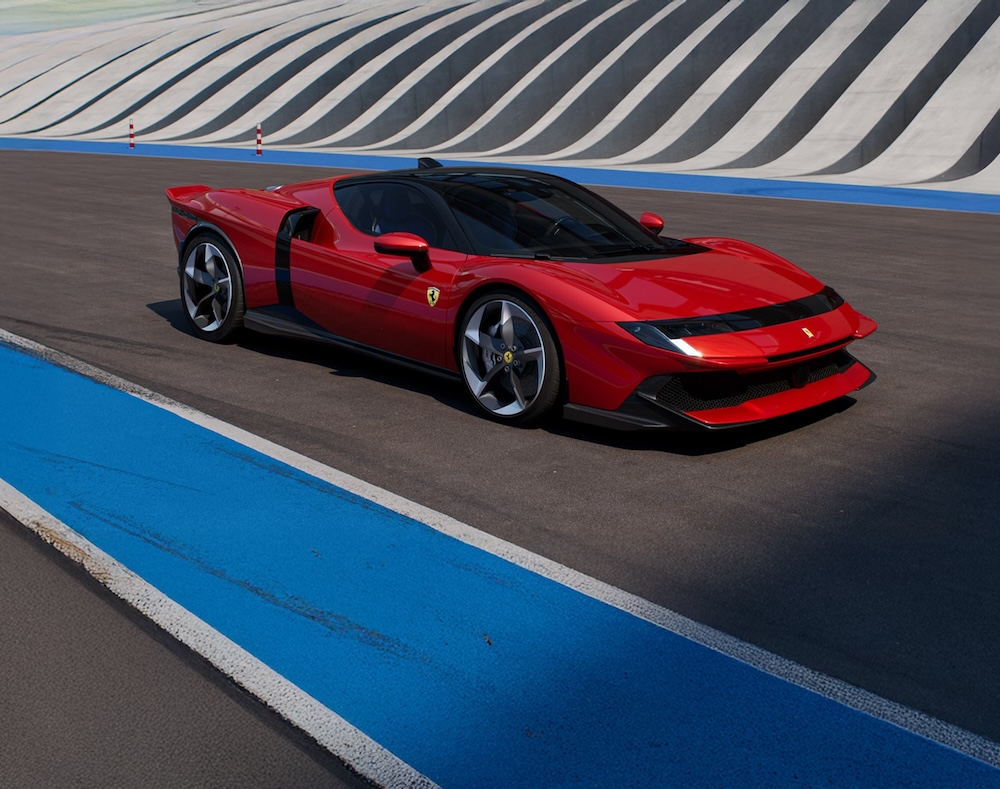
In the next part of the article, I’ll take a close look under the hood for you, covering specific technical solutions, performance, and aerodynamics. Then I’ll analyze the history of the name and the place of the 849 in the brand’s lineup, and finally, I’ll look at its market prospects. For now, there’s one thing you need to know: Ferrari is once again raising the bar, and with production starting in 2026, the first customers will soon receive the keys to a car that redefines the “supercar”.
Hybrid technology 849 Testarossa – power, performance, and aerodynamics
Under the hood of the Ferrari 849 Testarossa lies the most advanced hybrid system ever installed by the Italian brand in a production V8. At its core is a 4.0-liter twin-turbo V8 (approx. 780-800 hp), working in tandem with three electric motors—one at the rear and one on each front axle—delivering a total of approx. 1,036-1,050 hp and all-wheel drive. Thanks to the lithium-ion battery, the range in electric mode reaches 20-25 km, which is enough for quiet departures from the garage or city drives without waking the neighbors.
Track performance and race-inspired aerodynamics
The numbers speak for themselves:
Add row above Add row below Delete row Add column to left Add column to right Delete column Parameter Value 0-100 km/h < 2.5 s (estimate) Top speed > 340 km/h Fiorano lap < 1:19.7 (better than SF90 XX) Dry weight approx. 1,570 kg Aerodynamic downforce > 390 kg at 250 km/h EV range 20-25 km
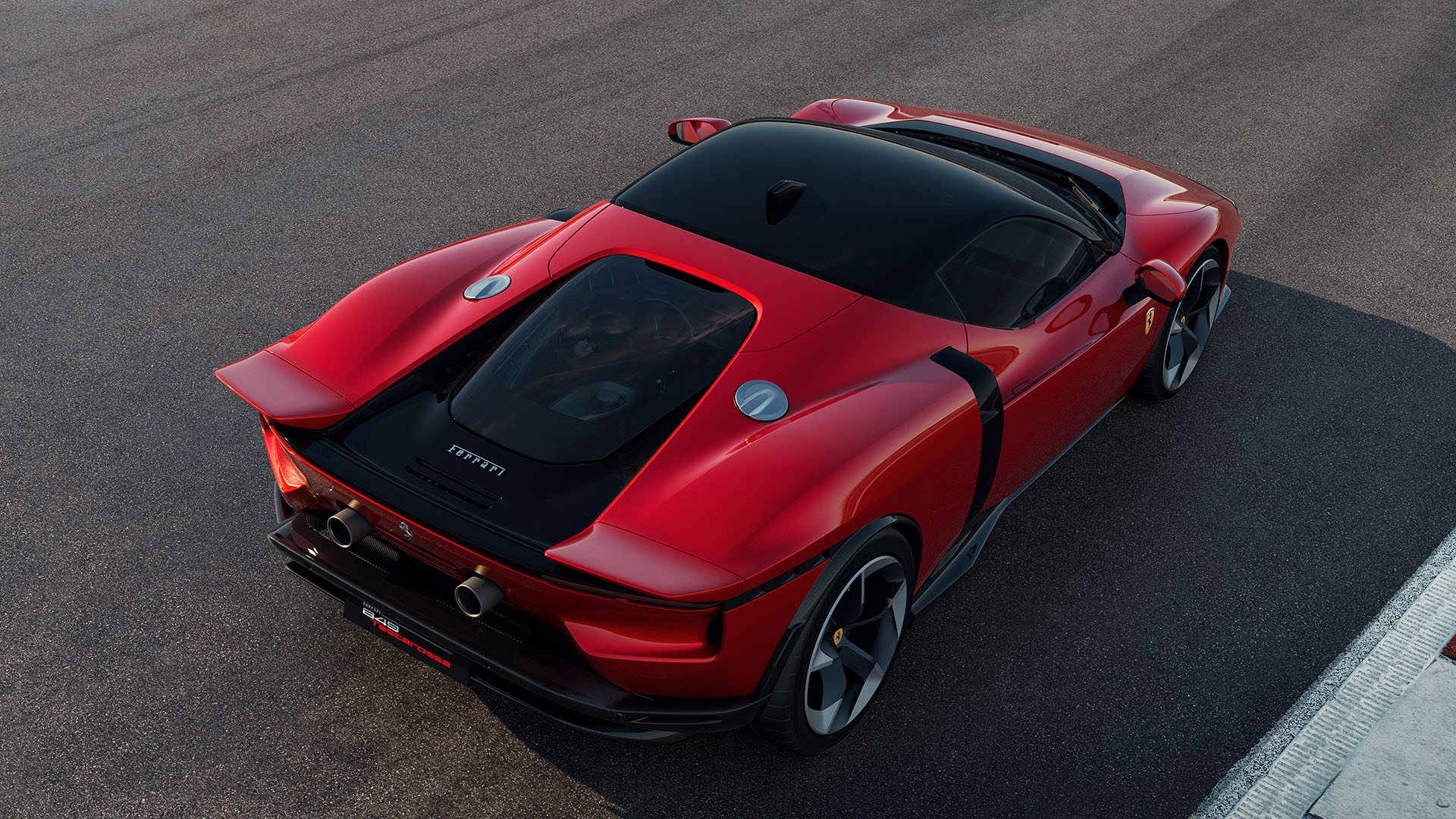
Carbon construction, 8-speed dual-clutch DCT gearbox, and the optional performance package (stiffer suspension, sharper throttle response) keep the weight low for a hybrid and the reactions lightning-fast. Active aerodynamics, S-ducts, louvres, fixed wing — it generates downforce exceeding 390 kg, making the 849 one of the most grippy road-going Ferrari models. Perfect if you enjoy taking corners a few km/h faster than common sense would suggest.
From “red heads” to hybrid, position 849 in the history of the Testarossa
Where did the name Testarossa come from
“Testarossa” sounds exotic, but it simply translates to “red head.” In the 1950s, Ferrari painted the cylinder heads of its racing V12s red. Why? Apparently, they used leftover paint from the car bodies to distinguish Ferrari engines from the competition on the track. This red became a trademark and a legendary name.
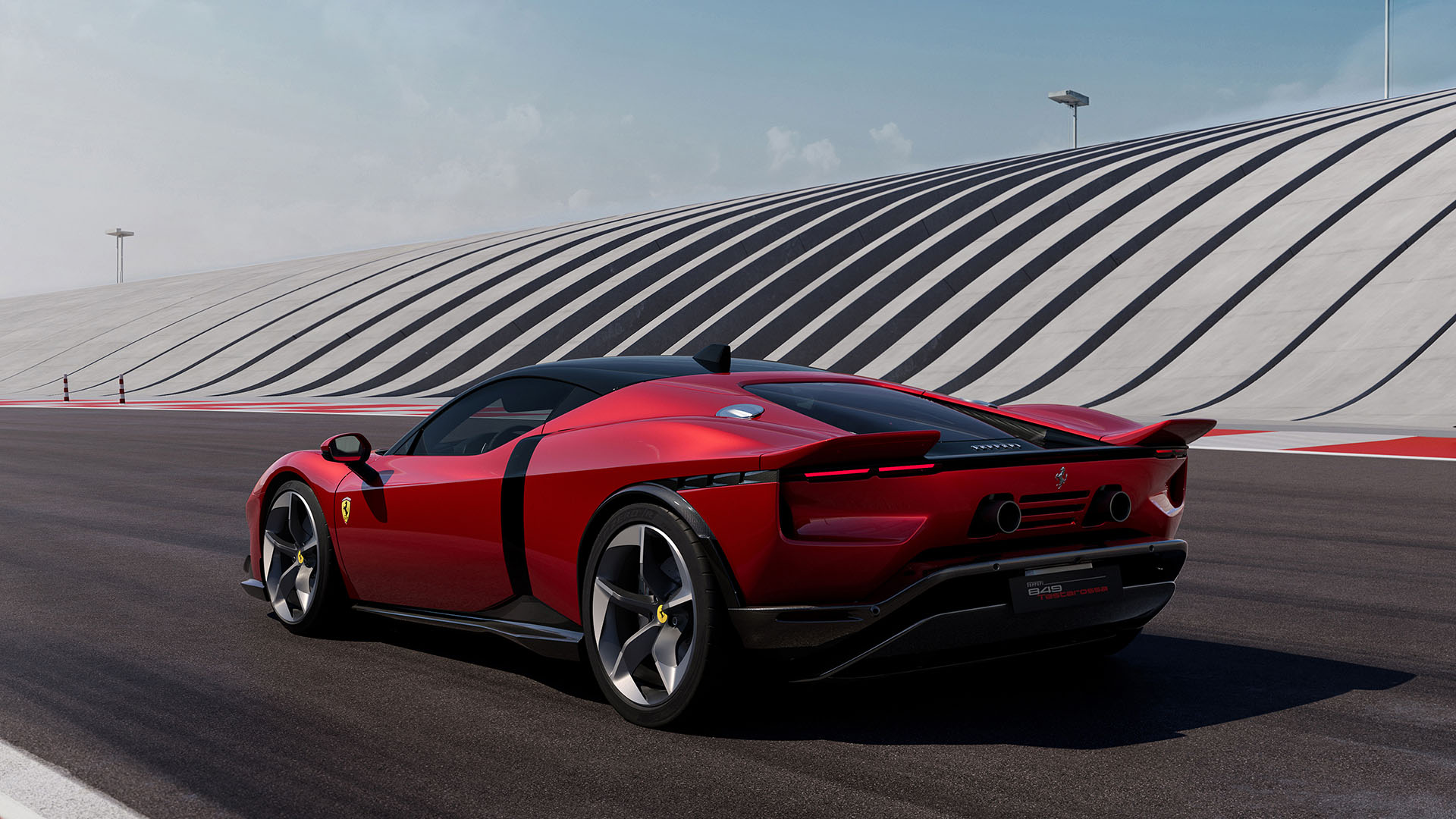
In 1984, the Testarossa returned as an iconic road car. A wide rear, distinctive side cooling slats, 12 flat-mounted cylinders in the back. Around 7,945 units were produced (including the later 512 TR and F512 M), and the series “Miami Vice” made it a pop culture icon. It was pure gasoline, sound, and theater. Personally, I love that series, which is why this brand is quite close to my heart!
From SF90 to the hybrid 849
Jump to 2019, SF90 Stradale. The first production plug-in hybrid Ferrari, featuring a system combining around 1,000 hp. The record time of 1:19.7 at Fiorano in the SF90 XX Stradale version proved that electricity doesn’t kill the sporty character—quite the opposite. The 849 Testarossa model develops this PHEV architecture, combining a historic name with a hybrid future.
Where does the 849 stand in the lineup today? Above GT models like the Roma, below the upcoming F80 hypercar. It competes with the Lamborghini Revuelto, the McLaren W1, and the electric beast Rimac C_Two. From red racing heads to the modern PHEV, Testarossa is about continuity, not just a name.
A bridge to an electric future and an opportunity for collectors
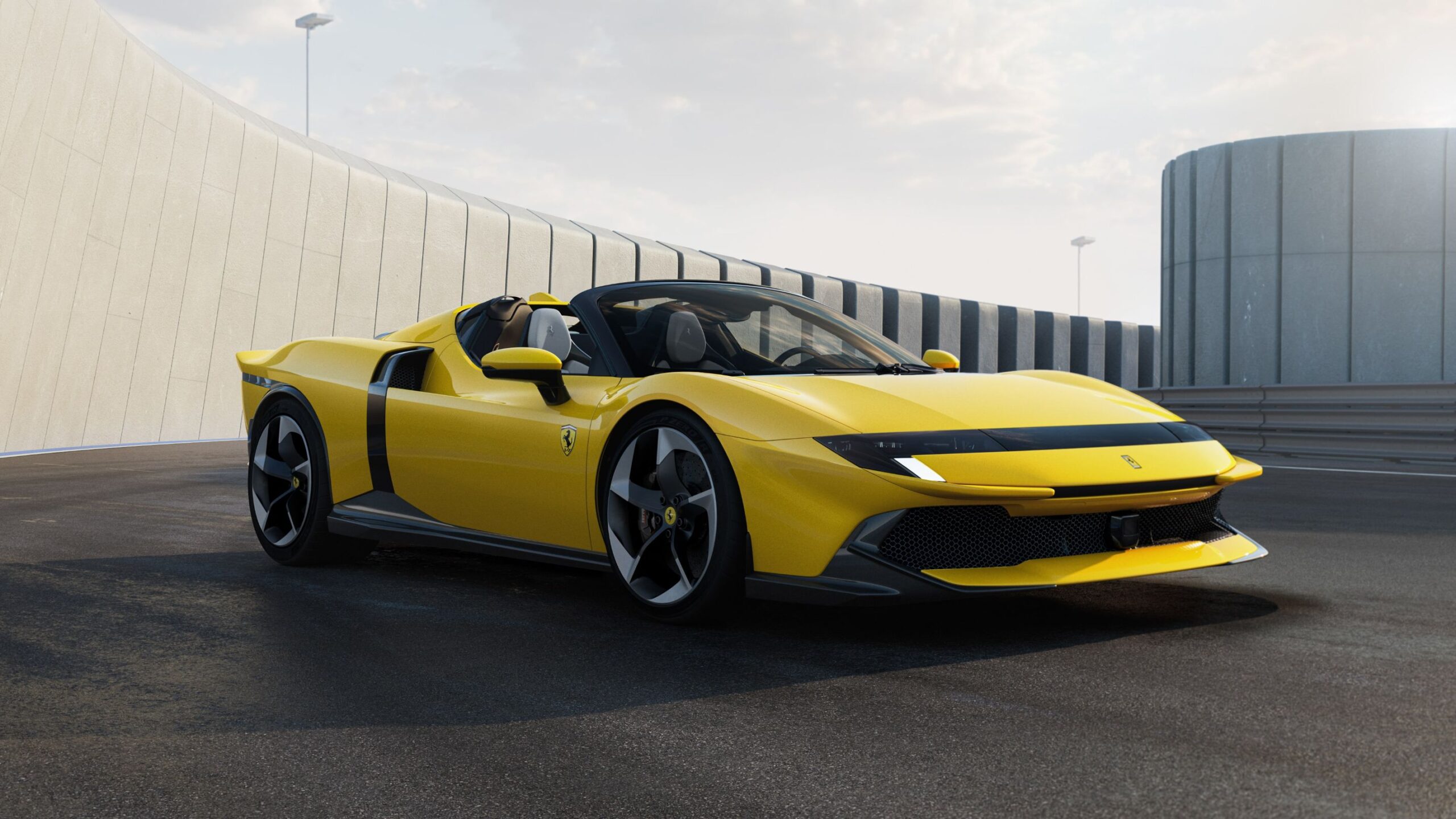
The return of the Testarossa name, the status of being the most powerful production Ferrari, and hybrid technology—all this means that the 849 could quickly appreciate in value. The model serves as a bridge between the SF90 and future versions of the F80 or fully electric vehicles planned after 2030-2035. It is possible that Ferrari will attempt to break records at the Nürburgring or organize exclusive track days at Fiorano.
On the other hand, EV mode allows for economical city driving — the hybrid V8 doesn’t have to run all the time. So if you’re planning to invest in the 849, keep an eye on prices and limits. This might be the last chance for this iconic model before full electrification.
Steffano
F1 gadget collector
Sport & Moto
Premium Journalist
