




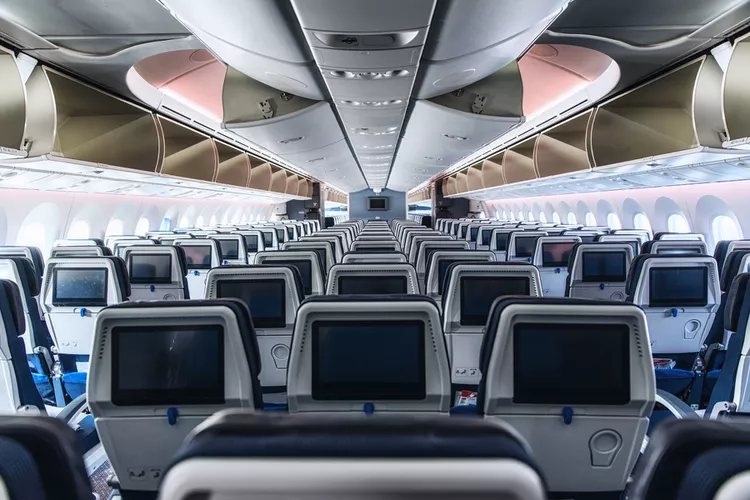
When Emirates announced in 2019 that Dior would design the entire amenity kits for First Class, some thought it was just another marketing move. Others saw it as a sign of something bigger — luxury fashion had truly boarded for good. And it’s not just about a paper box with a logo, but a complete experience: from Hermès blankets and Diptyque fragrances to uniforms tailored from sketches drawn in Parisian ateliers. In fact, the entire premium cabin is now becoming an extension of the haute couture runway.
How is luxury fashion changing premium flying and why is the premium market coming on board?
Why now? Because the premium cabin market is growing – according to IATA data, business and first class passengers generate over 40% of long-haul airline revenues. And the average HNWI (high-net-worth individual) flies an average of 15-18 times a year. Middle Eastern airlines – Emirates, Qatar Airways, and recently also Riyadh Air – already know that for this group, “comfortable seats” are not enough. It’s about identity, aesthetics, and status.
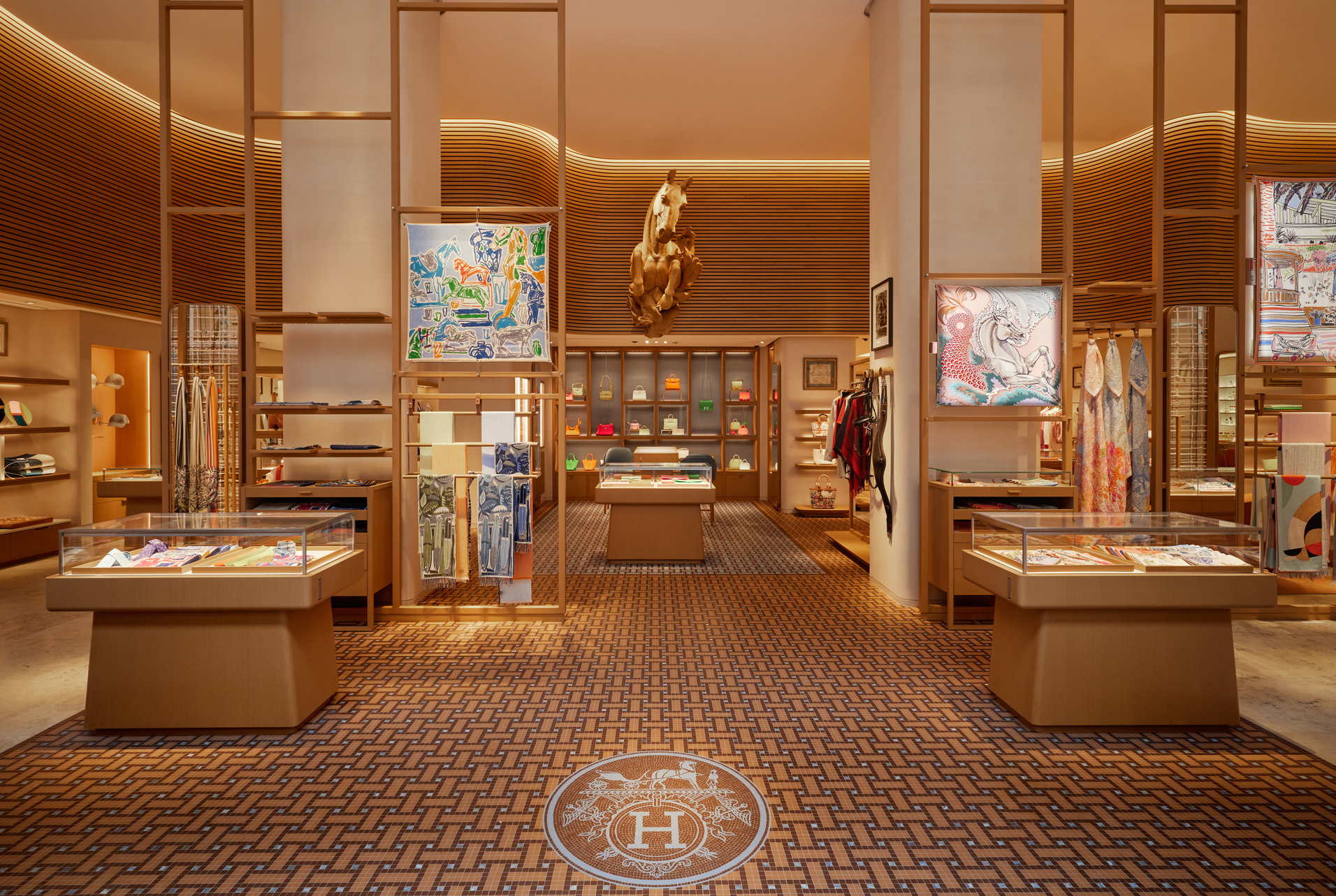
Dior and Hermès are symbols of two types of luxury. The former represents “New Look” elegance, the staging of an experience.
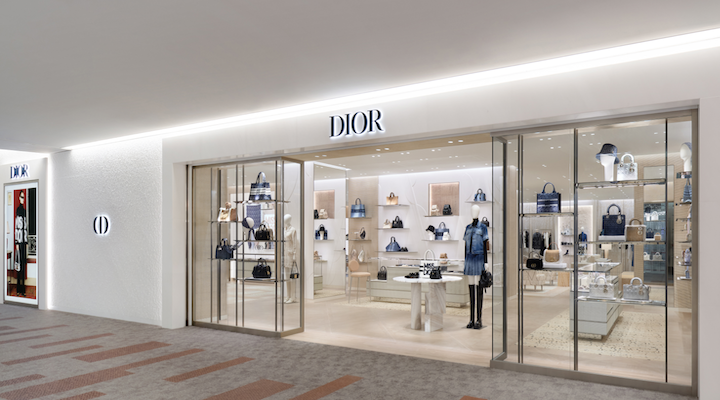
Second – craftsmanship, exclusivity of materials, restraint in detailing. Today, both houses influence not only what we wear, but also how we travel.
In the following section, we will take a closer look at where luxury at 10,000 meters originated, which specific collaborations define the market today, how it all works from a business perspective — and whether it is truly worth it.
From Pan Am to Riyadh Air: a history of luxury at altitude
In the 1950s, flying was more of a social event than just transportation – stewardesses in Dior “New Look” style suits, passengers in suits, DC-7 interiors with mahogany and leather. The Pan Am Clipper was not just a plane; it was a symbol: if you could buy a ticket, you belonged to the elite. Uniforms designed after Parisian models from 1947, dinner served on porcelain – this was functional luxury, without unnecessary embellishments.
The golden age of flying: from Dior New Look to private jets
The breakthrough came in the 1980s and 1990s, when mass aviation became… well, truly mass. Luxury shifted to private jets. Hermès began designing cabin interiors for Bombardier—not for millions of passengers, but for a select elite. Leather, silk, hand-stitched details. The division was clear: you either fly on a “regular” plane, or you have your own.
Then came the 2000s and the boom of the premium economy. In 2004, Emirates introduced Bulgari amenity kits—suddenly, business was meant to be glamorous, not just functional. In 2019, Dior sponsored BTS’s tour, and within three days, interest in the brand increased by 420%. Pop culture entered the cabin, and the Middle East became the new center of aviation luxury.
The post-pandemic era marks a paradigm shift: from “functional premium” to full-fledged couture in the cabin. Hermès designs silk masks and blankets, but avoids mass collaborations. Personalization, hygiene, discreet luxury — it’s no longer just about flying. It’s a tailor-made experience.
What does couture look like in the cabin: specific collaborations and details
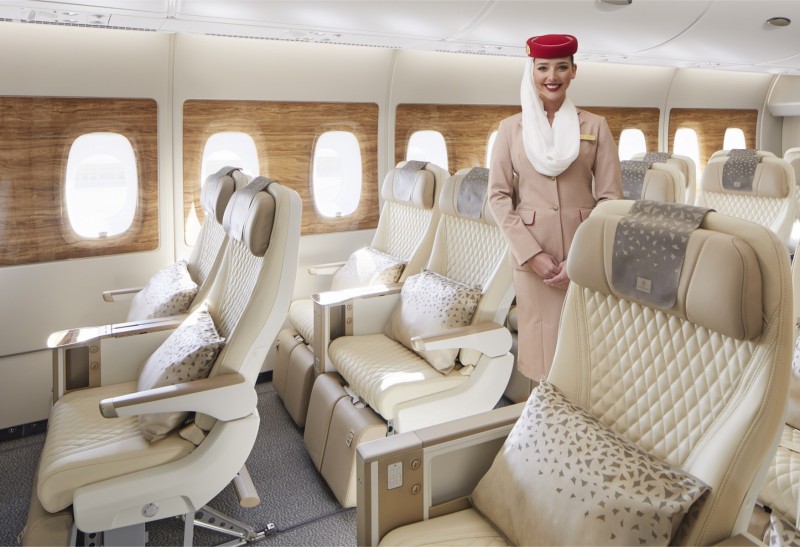
When you step into an Emirates A380 cabin or a private Gulfstream, the first touch says more than the logo. Vegetable-tanned leather on the armrests, alcantara reminiscent of Hermès finishes, a silk robe folded on the seat — haute couture in the cabin is not just about aesthetics, it’s a tactile experience.
Cruise lines and their high fashion partners
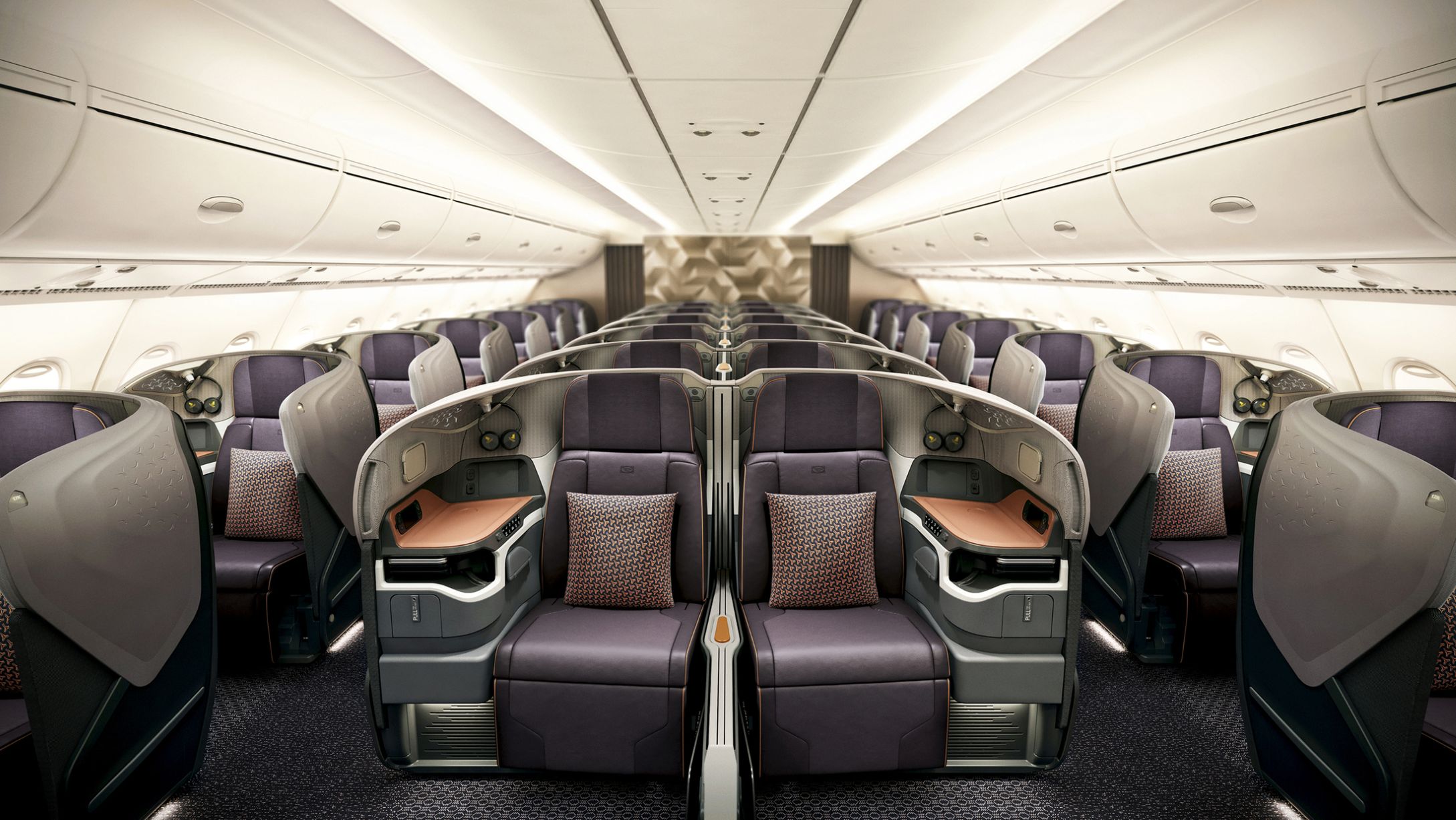
Emirates has been collaborating with Bulgari since 2004—the amenity kits in first class are small leather cases with miniature perfumes and cosmetics. Qatar Airways has taken a similar approach, packing travel kits in boxes designed by the Italian house. Etihad goes even further: in first class cabins, you’ll find Versace details—patterns on pillowcases, wool blankets with the distinctive Greek ornament, and in the amenity kits you’ll find Dior Sauvage or Hermès Terre d’Hermès.
Emirates premium economy class on the A380 and Boeing 777 means specific numbers:
| Element | Premium Economy Emirates |
|---|---|
| Number of seats (A380) | 56 |
| Pitch | 40″ |
| Screen | 19″ |
| More space vs economy | 40% |
Modernization of this level is already taking place on several intercontinental routes.
Private jets: where Hermès lives in the seat
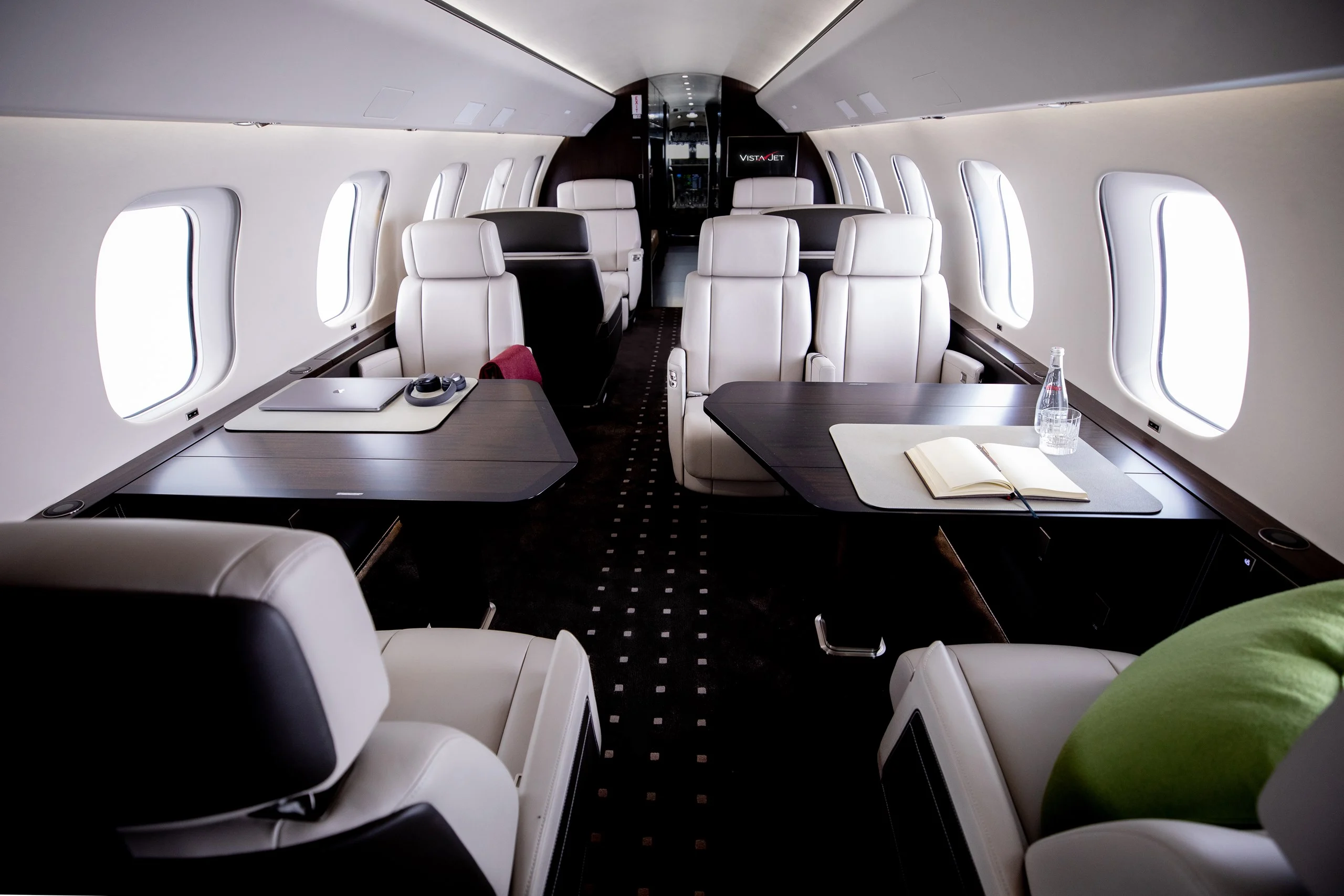
VistaJet and NetJets offer something more — interiors designed with Hermès leather, not as branding, but as a material. The seat upholstery is full-grain leather from the same series as Birkin bags, and the quilted wall panels mimic the interior of the boutique on Avenue George V. Riyadh Air (launch planned for 2025) is even announcing fashion shows on board long-haul flights — a theatrical display of luxury taken to the extreme, but after all, it’s about more than just transportation.
These solutions are not accidental – every detail has a business and psychological justification, which I will explain in a moment.
Business Above the Clouds: Market, Clients, and Return on Investment
When Emirates installs Hermès in its suites and Singapore Airlines boasts a Dior showroom at 12,000 meters, it’s not just pretty pictures for brochures. This is a business worth billions of dollars—with tangible returns on investment that can easily be tracked in quarterly reports.
Premium cabin market: how much is luxury at altitude worth?
The global premium cabin market in commercial aviation is estimated to reach around $50 billion in 2025. After the pandemic, this segment has been growing at a rate of 10-15% per year—significantly faster than the rest of the industry. Interestingly, private jets with custom designs (often featuring fashion elements) saw an increase in orders of about 25% in 2024. This shows that demand for luxury in the air is not weakening—quite the opposite.
| Indicator | Value |
|---|---|
| Premium market value | ~$50 billion (2025) |
| Annual growth rate | 10-15% |
| The rise of custom jets (2024) | +25 % |
| The Middle East’s presence in first class | ~70% |
| Increased loyalty through luxury | +30% |
Who are the passengers of the couture class?
Profile? Above all, HNWI (high net worth individuals) — people with assets exceeding one million dollars. In addition, corporate elites who travel for business but expect a certain standard. And the growing middle class in Asia and the Middle East, who are just discovering premium economy but are already aspiring to higher classes. It’s worth noting that the Middle East (Emirates, Qatar Airways, the new Riyadh Air) now accounts for about 70% of the global supply of first class seats. That’s where fashion is making its boldest entrance on board.
Why is this profitable for fashion lines and houses?
Benefits for airlines:
- Higher yields – a first class ticket is often 8-12 times more expensive than economy
- Customer loyalty increases by approximately 30% (IATA data) thanks to the luxury experience
- Competitive advantage through strong fashion branding
- Halo effect: luxury in the cabin elevates the perceived value of the entire airline brand
Benefits for fashion houses:
- Access to a global, mobile audience – passengers are often influencers themselves
- BTS/Dior Effect (2019): +420% increase in interest within 3 days after the collaboration announcement
- Strengthening the aura of exclusivity – Hermès deliberately avoids mass collaborations, so every presence in the cabin sends a “for the chosen few only” signal
- The sale of travel products (toiletry bags, amenities sets) is an additional distribution channel
In Poland, the luxury goods market is growing by about 24% annually (2025), which suggests that there is also potential demand for premium travel—even if low-cost airlines still dominate. The question is whether Polish airlines will ever opt for couture on board. For now, probably not.
Between Elitism and Ecology: The Shadows of Luxury in Aviation
Glitter and nappa leather in the cabins of Etihad or Emirates are more than just a display of wealth—they are also an increasing political and image problem for the entire airline industry. While airlines boast about Brioni suits worth $56,000 and Hermès shoes in first class, millions of people can barely afford an economy ticket. This contrast creates a dispute that is hard to ignore.
Luxury for the 1%? The debate over elitism in the skies
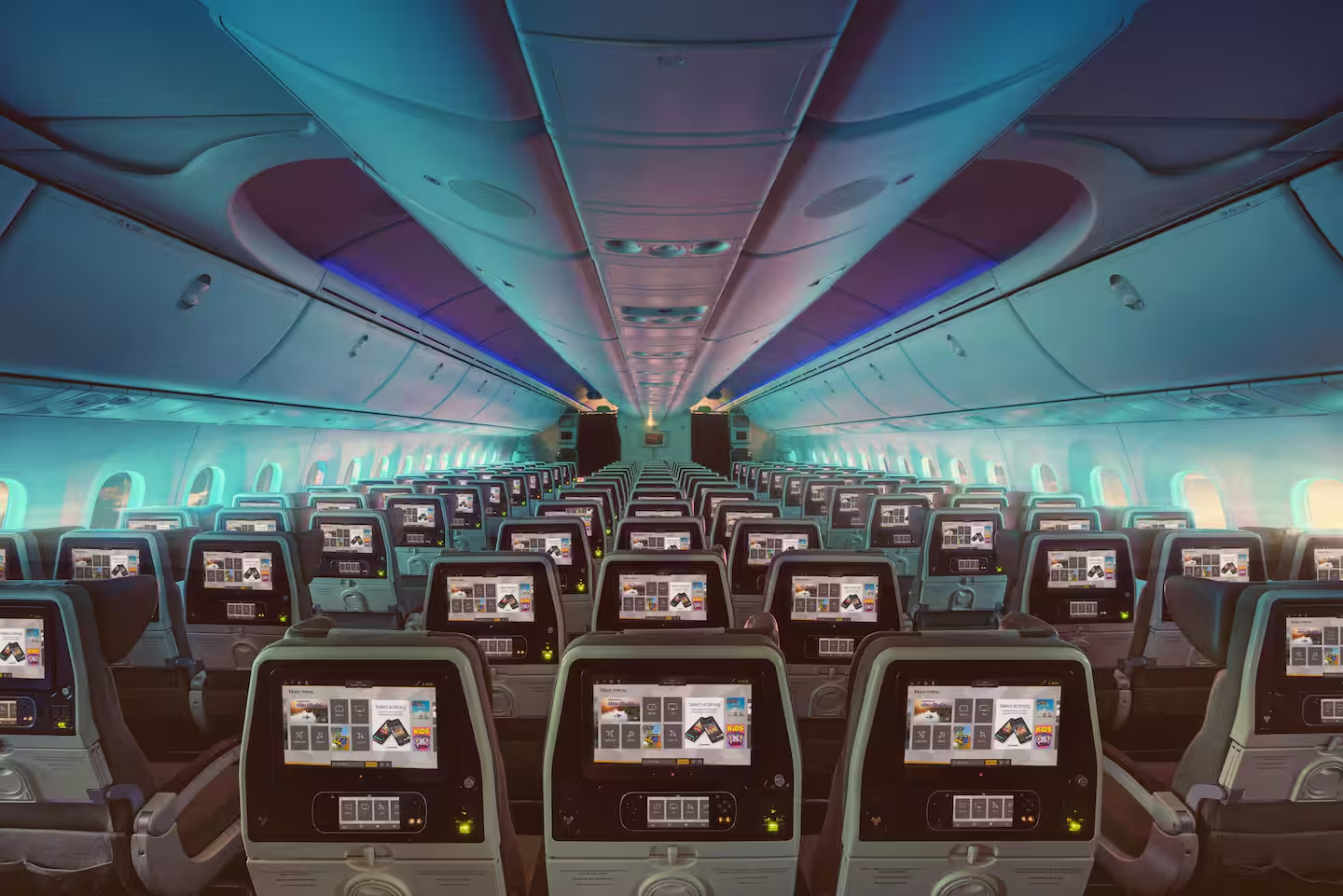
Access to haute couture products on airplanes is in fact reserved for a small group—mainly HNWI (High-Net-Worth Individuals), top businesspeople, politicians, and celebrities. Tickets in the classes where you can don a Dior robe or use a Bulgari kit cost tens of thousands of zlotys, often more than the annual earnings of the “average passenger” in the economy section of the plane. Criticism intensifies especially during times of crisis—when airlines cut seats in cheaper classes while simultaneously investing in suites with marble and coffered ceilings.
Ecological hypocrisy: when Dior meets a helicopter
Ecology is discussed just as loudly. Private jets and helicopters of famous people emit CO₂ even 10 times more per passenger than a commercial flight. A notable example is the German influencer couple (Friz and Wersow), who sparked an online storm by taking a helicopter to shop at the Louis Vuitton boutique—accused of harming the climate with celebrity whims more than hundreds of ordinary tourists flying. Similarly, Anne Hidalgo, the mayor of Paris known for her efforts to limit air and car traffic in the capital, came under fire when the media revealed she had spent about 84,000 euros of public money shopping at Dior—despite her environmental policies and closing streets to cars.
Price versus production: factories in Asia and criticism of margins
The third source of tension is the debate over prices versus actual production costs. In China, social media users (Reddit, X) are posting videos from Dior and Hermès factories in Asia, asking the question: why does a handbag cost $10,000 when the company spends only a few hundred to make it in China? Luxury margins have always been high, but in an era of transparency and conscious consumers, such revelations carry reputational risks.
The first responses from the industry are already emerging. Hermès declares the use of plant-based dyes instead of synthetic ones, Qatar Airways boasts that 80% of fabrics in its new cabins come from recycling, and Emirates is testing emission compensation. However, for now, these are still just declarations. The survival of flying haute couture salons under public scrutiny—and whether they remain a symbol of elitism the world no longer tolerates—will depend on how quickly and effectively fashion houses and airlines implement truly sustainable solutions.
Next stop: the future of fashion in the skies
The flying fashion salon is only just beginning its true journey. What we have seen so far—Hermès blankets, Dior uniforms—is merely a warm-up before the real revolution. In the next 5-10 years, the combination of technology, market geography, and new experience models may make today’s first class cabins look like prehistory.
AR, NFT and AI: technology tailored to the passenger
After 2026, virtual fashion comes on board. Imagine AR fittings: you put on goggles, choose a Chanel bag, and see how it matches your style – you can order it even before landing. NFTs will become an exclusive pattern for first class passengers: limited edition digital Gucci designs available only at 10,000 meters altitude. AI personalization goes even further – the algorithm will adjust lighting, music, and seat color scheme to your aesthetic profile. Not science fiction, but a logical step for airlines already investing millions in every cabin detail.
From Dubai to Gdańsk: where will the luxury of tomorrow take off?
Forecasts for 2030 are clear: Middle Eastern airlines (Riyadh Air, Emirates, Qatar) may control up to half of the premium market. The growing middle class in Asia adds its share — the Chinese passenger expects fashion just as much as the Swiss banker. And Poland? Our luxury goods market is growing faster than the European average. The potential is there — imagine Gdańsk amber in LOT’s cabin design or collaborations with local designers. Even Ryanair is testing premium — if it works, flying fashion will no longer be just for millionaires.
But the real change goes beyond the airplane itself. Emirates is planning an Air Hotel converted from an A380 for around 2029. Yachts, airport lounges, private terminals—all of this is meant to create an ecosystem of luxury travel, where fashion becomes a language of identity.
Siner Miki
editorial team technology & moto
Luxury Reporter
