




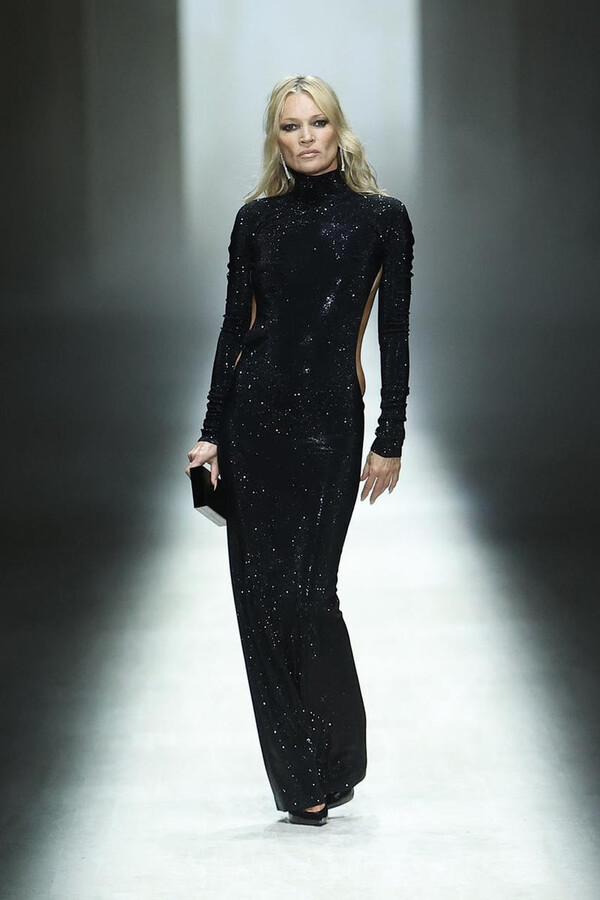
Demna’s debut for Gucci was not just an ordinary change of creative director. It was a moment of tension. Expectation. A test of courage. Milan held its breath, because the designer’s move from Balenciaga to the Italian fashion house meant one thing: a clash of two powerful aesthetics. And yet, what we saw was neither a copy of the past nor an aggressive deconstruction. It was Gucci Primavera — spring as a state of mind, not a season.
Gucci Primavera: a new beginning without erasing history
The name of the collection is no coincidence. The reference to Renaissance sensibility, to the painterly sensuality of Sandro Botticelli, resonates with the archival DNA of the brand. But Demna did not create a show about museum nostalgia. He created a show about feeling.
Primavera is a declaration of lightness, softness, and—as the designer himself emphasized—sophistication. A surprising word in the context of his career so far. This time, however, it wasn’t about a conceptual joke or an exaggerated silhouette. It was about the tension of skin beneath the fabric, the sheen on the hip, the movement of the waist.
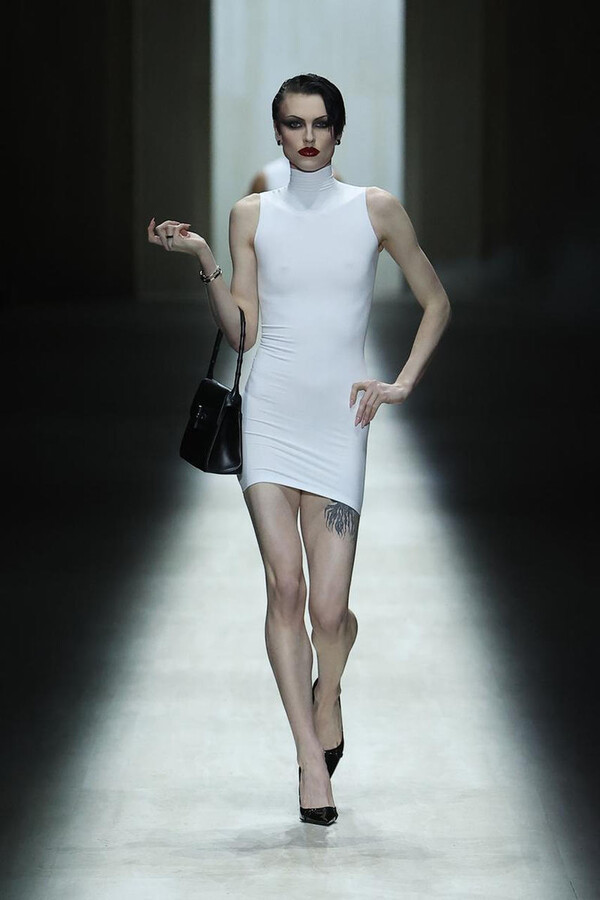
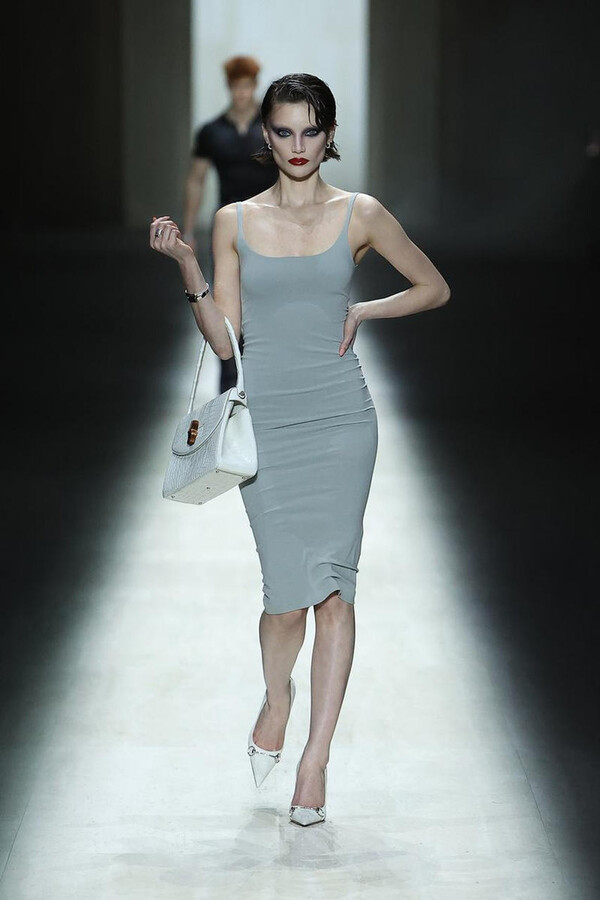
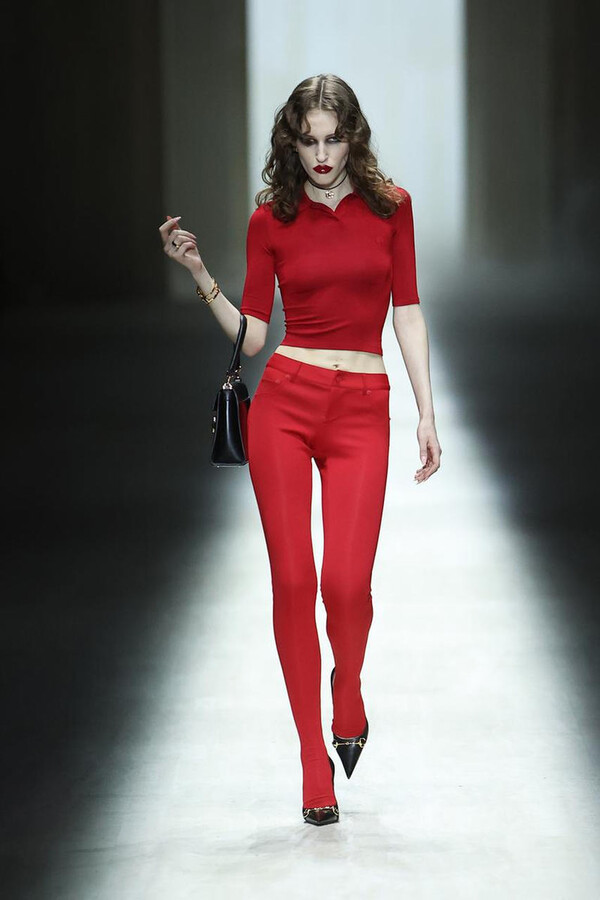
This is Gucci that wants to be worn here and now.
The body as a manifesto
The strongest message of the collection was clear: the body returns to the center.
The dresses fit like a second skin, almost seamless, shaping the silhouette in a way that felt more technological than tailored. Thin knits and elastic fabrics hugged torsos, hips, and backs with a precision that left nothing to chance. Low-rise trousers evoked the spirit of the late ’90s, but without literal retro styling. Leather pencil skirts accentuated the waist, velvet pants in deep tones moved with a heavy elegance, and sheer fabrics balanced between a club night and a luxurious lounge.
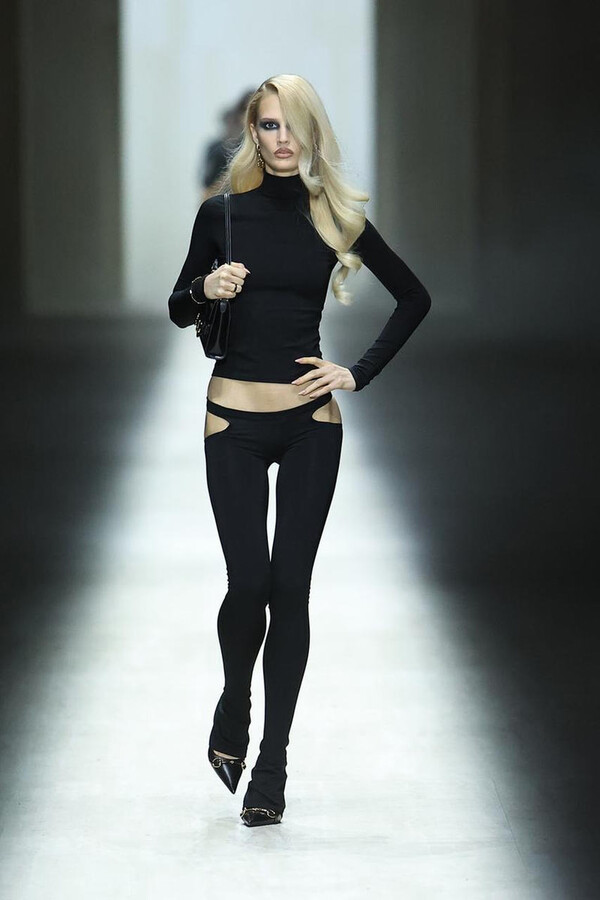
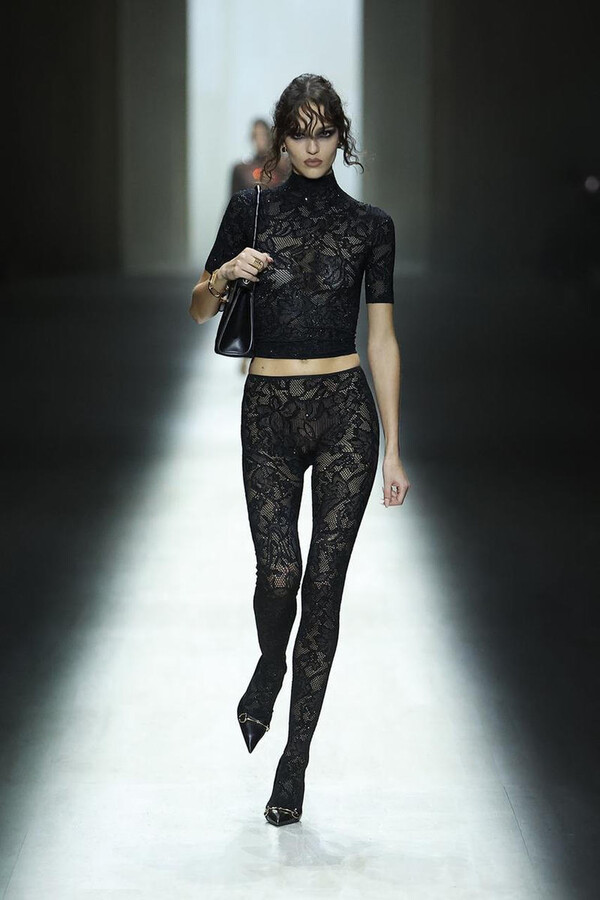
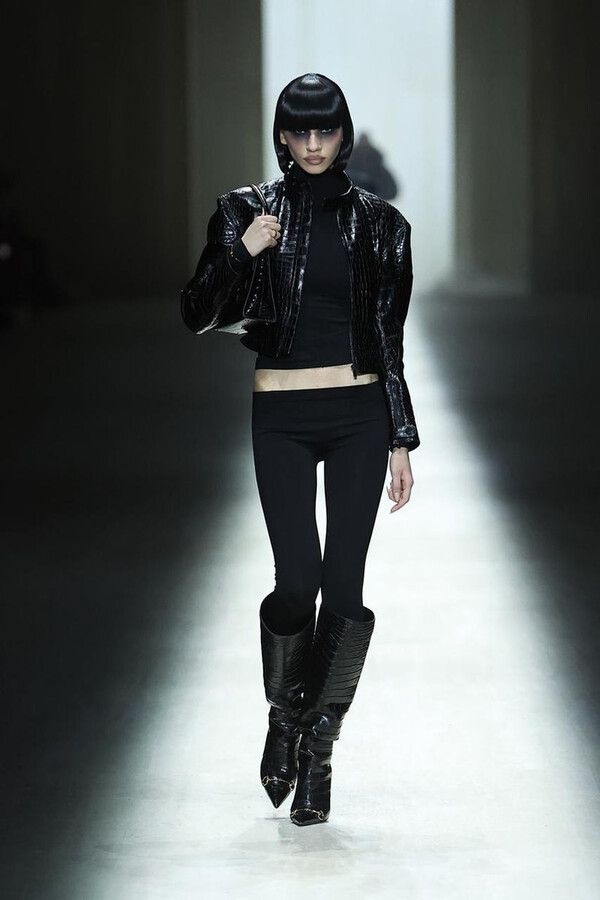
This is a radical departure from the oversized style that Demna has been associated with for the past decade. Here, there is no hiding the silhouette. It is an affirmation of it.
The spirit of Tom Ford and the energy of the 1990s
It’s impossible to talk about this collection without mentioning Tom Ford. His era at Gucci was defined by sex appeal, provocation, and controlled decadence. In Primavera, that spirit has returned, but accelerated. More aware of its media power. More direct.
Smudged makeup in the heroin chic aesthetic, low-rise jeans, sequins, glossy leather, and silhouettes that look as if they’re just returning from a late-night afterparty — this isn’t nostalgia. It’s a deliberate play with codes that are once again defining contemporary glamour.
Kate Moss and the symbolic end of an era
The finale belonged to Kate Moss. And it’s hard to imagine a more powerful gesture. Her sequined dress looked classic, almost innocent from the front. From the back, it revealed a provocative detail in the spirit of the iconic Gucci thong from the Ford era. This wasn’t just a fashion reference. It was a symbolic closing of the circle. And Moss’s walk down the runway will be one of those iconic fashion moments that will go down in history.
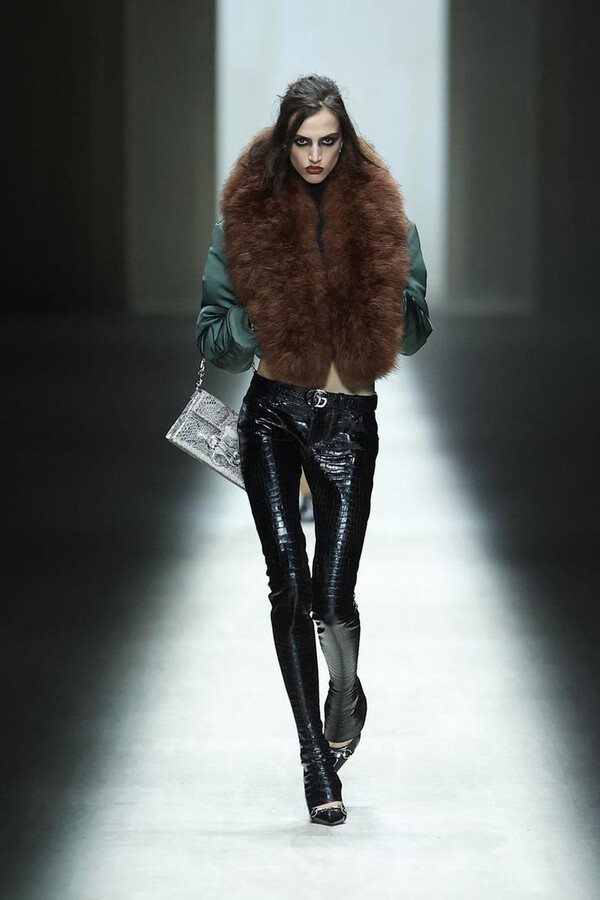
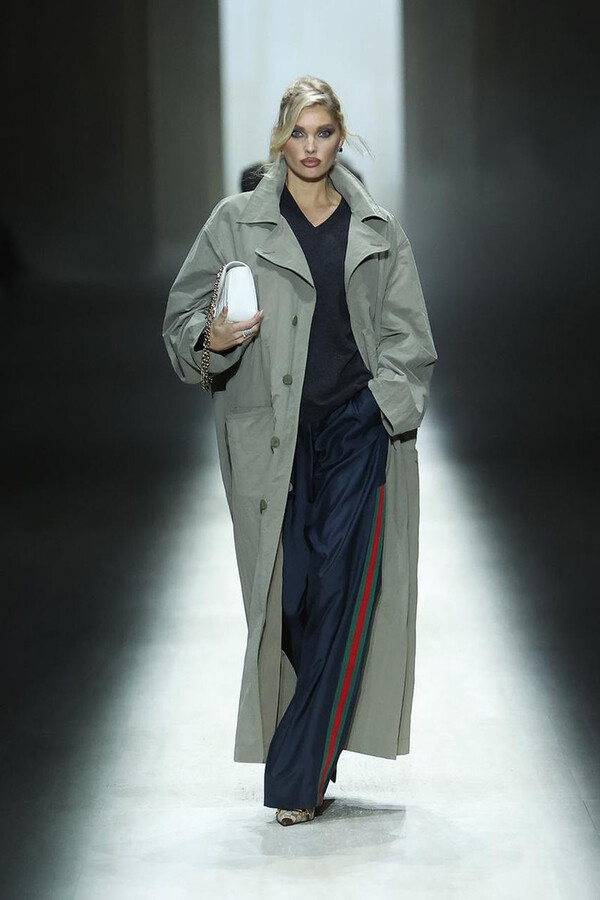
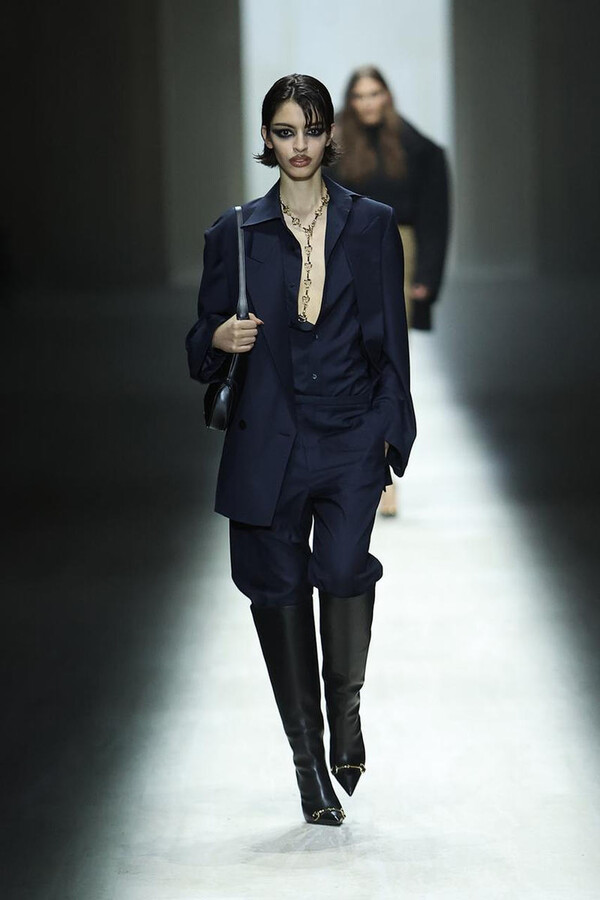
Karlie Kloss also appeared on the runway in a power woman version — a Gucci Supreme pencil skirt, black turtleneck, and blazer. Minimalism, structure, control. Next to her, Emily Ratajkowski in a silver, tight mini dress and Gabbriette in a sheer sequin dress showcased the opposite pole: the girl of the night, confident in her sexuality and her presence in front of the camera.
Demna does not propose a single woman. He offers a spectrum. From the boardroom to the club. From elegance to provocation.
Luxury that you feel, not analyze
The most fascinating thing about this collection is that it doesn’t require decoding. It works instantly. In the feel of the fabric. In the sparkle of sequins. Also in the movement of the hips. It’s a physical, sensual, tangible luxury.
Is it a revolution? Not in the classic sense. It’s more of an intelligent calibration. Demna didn’t try to be more Balenciaga than Balenciaga itself. He tried to be more Gucci than Gucci itself.
And that’s exactly why this Gucci Primavera show was so powerful. Not because it shouted. But because it pulsed with the energy of a new beginning. Primavera isn’t a season. It’s an impulse. And in fashion, an impulse can change everything.
