




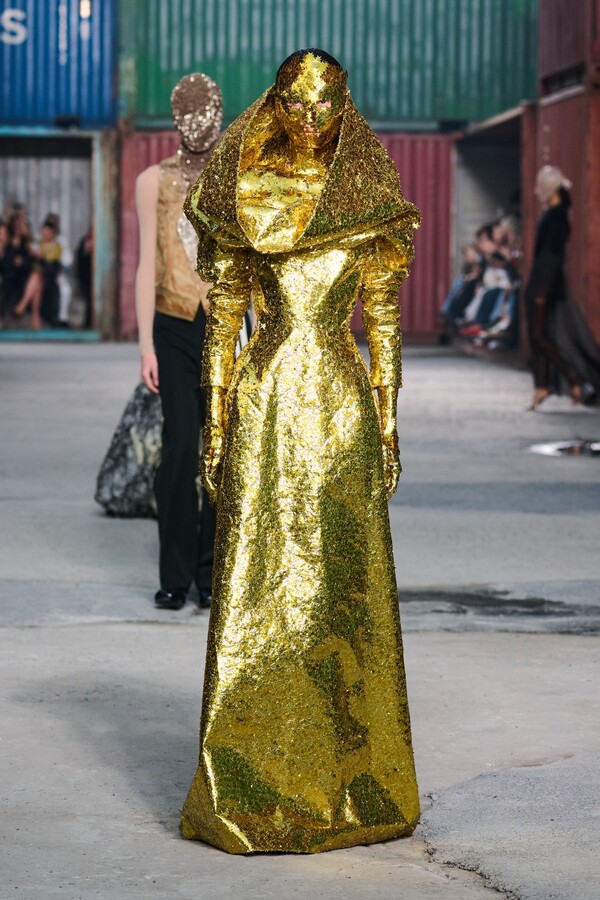
In the world of fashion, which rarely truly surprises, Maison Margiela has made a move that is hard to ignore. Instead of remaining faithful to the Parisian calendar, the brand moved its Fall/Winter 2026–2027 show to Shanghai. Maison Margiela Shanghai was not just a change of geography — it was a clear signal of redefinition. The city, a symbol of the global flow of goods and ideas, became a natural context for a collection that operated on the boundary of matter, time, and perception.
MAISON MARGIELA SHANGHAI: industrial theater
Under the direction of Glenn Martens, the container docks were transformed into a raw, almost cinematic set. Maison Margiela Shanghai unfolded in a space marked by logistics and the history of trade, where golden light contrasted with the coldness of metal. The sounds — from percussive rhythms to a reinterpretation of “Where the Wild Roses Grow” — created a tension that permeated every step of the models.
This was not a show in the classic sense. It was an experience. The set design was not just a backdrop — it was an integral part of the narrative, amplifying the message of flow, transformation, and constant exchange.
Blurring the boundaries between couture and ready-to-wear
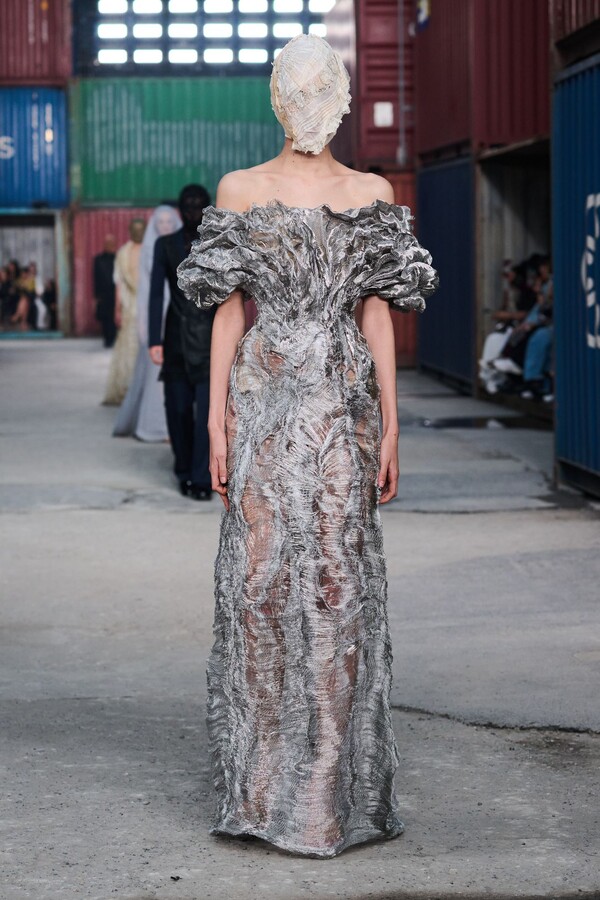
The most significant gesture of the Maison Margiela Shanghai collection was the fusion of the Artisanal line with ready-to-wear. Martens rejected the traditional division, creating a single, fluid narrative. This decision not only refreshes the show format but also redefines the relationship between haute couture and everyday life.
The result? A collection that unites rather than divides — extreme craftsmanship exists alongside functional fashion, without hierarchy. This approach seems especially relevant in a world where the boundaries between luxury and functionality are becoming increasingly blurred.
Lifelike wax figures
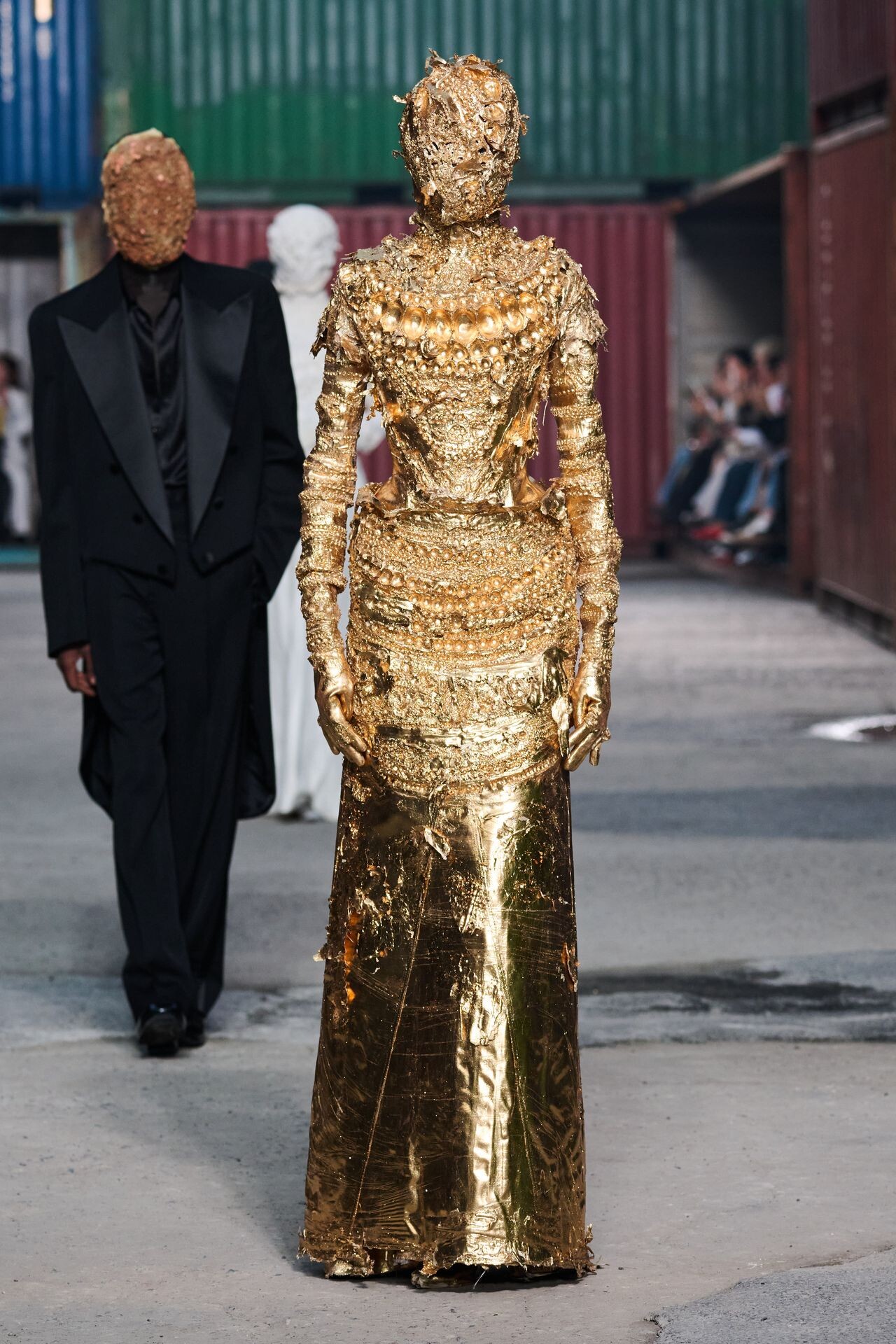
At Maison Margiela Shanghai, material took center stage. The beeswax coating the silhouettes gave them the character of almost archaeological objects—cracked, suspended in time. Porcelain, both in its physical and illusory form, introduced a tension between weight and lightness, durability and fragility.
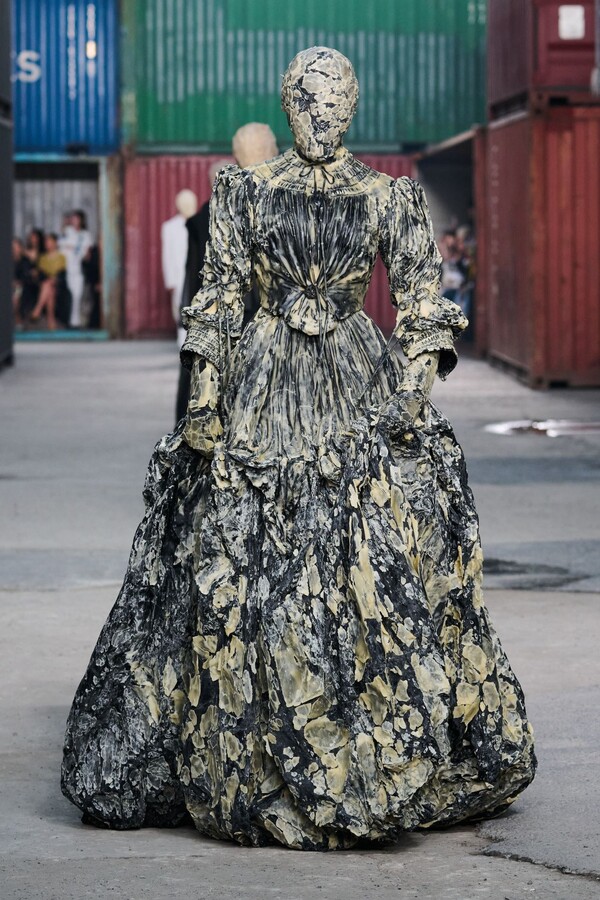
This is a clear reference to the legacy of Martin Margiela, who redefined value through transformation. Martens continues this dialogue. However, he takes it to a new level — more global, more contemporary.
MAISON MARGIELA SHANGHAI: silhouettes between control and deconstruction
The silhouettes showcased at Maison Margiela Shanghai balanced between rigor and experimentation. On one hand — precise tailoring, retro blazers, and leather coats that introduced structure. On the other — spectacular Artisanal forms, such as dresses made from thousands of elements or monumental constructions crafted from taffeta.
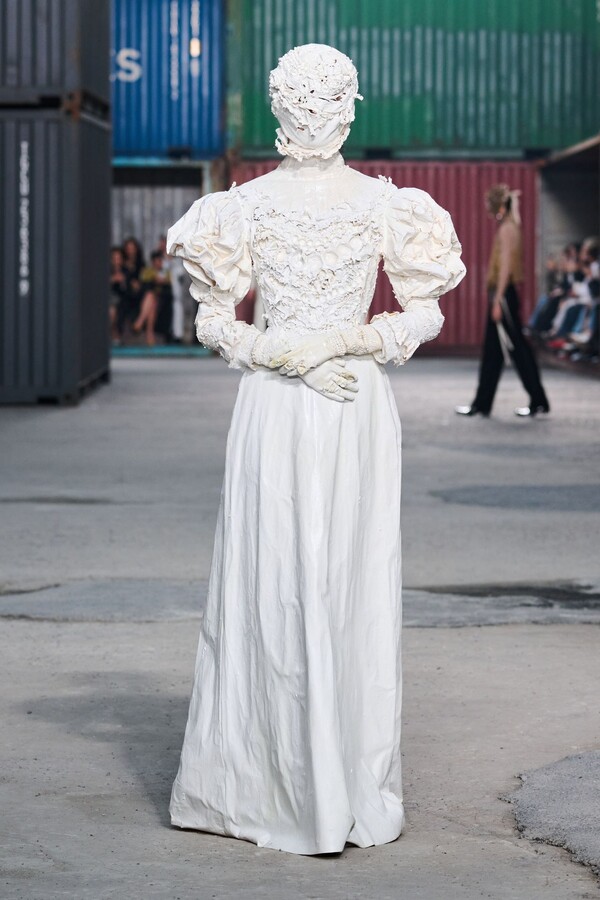
Movement played a key role. Materials cracked, rustled, and responded to the body. Clothing ceased to be static — it became performative. Maison Margiela Shanghai presented fashion as a multisensory experience, not just a visual one.
MAISON MARGIELA SHANGHAI: accessories and the art of illusion
Accessories at Maison Margiela Shanghai were not an addition — they were a continuation of the concept. The footwear disrupted proportions, balancing on the edge of functionality and illusion. The “The Link” bag emphasized construction as a statement. Here, form speaks for itself.
It’s a subtle yet significant reminder that in Margiela’s world, every element—regardless of scale—carries conceptual meaning.
What a show that was!
Maison Margiela Shanghai is a show that doesn’t so much break with the past as consciously develop it. Glenn Martens doesn’t try to replace Martin Margiela — instead, he engages in a dialogue with him, updating his ideas in a global context.
Did everything work perfectly? Not quite. The accumulation of concepts at times weakened the impact of individual looks. But at the same time, it was precisely this intensity that was part of the experience. Maison Margiela Shanghai was not meant to be easy or obvious.
Ultimately, this is a show that redefines not only space, but also the way we think about fashion. And it reminds us that true innovation is not about changing the place — but the meaning.
