




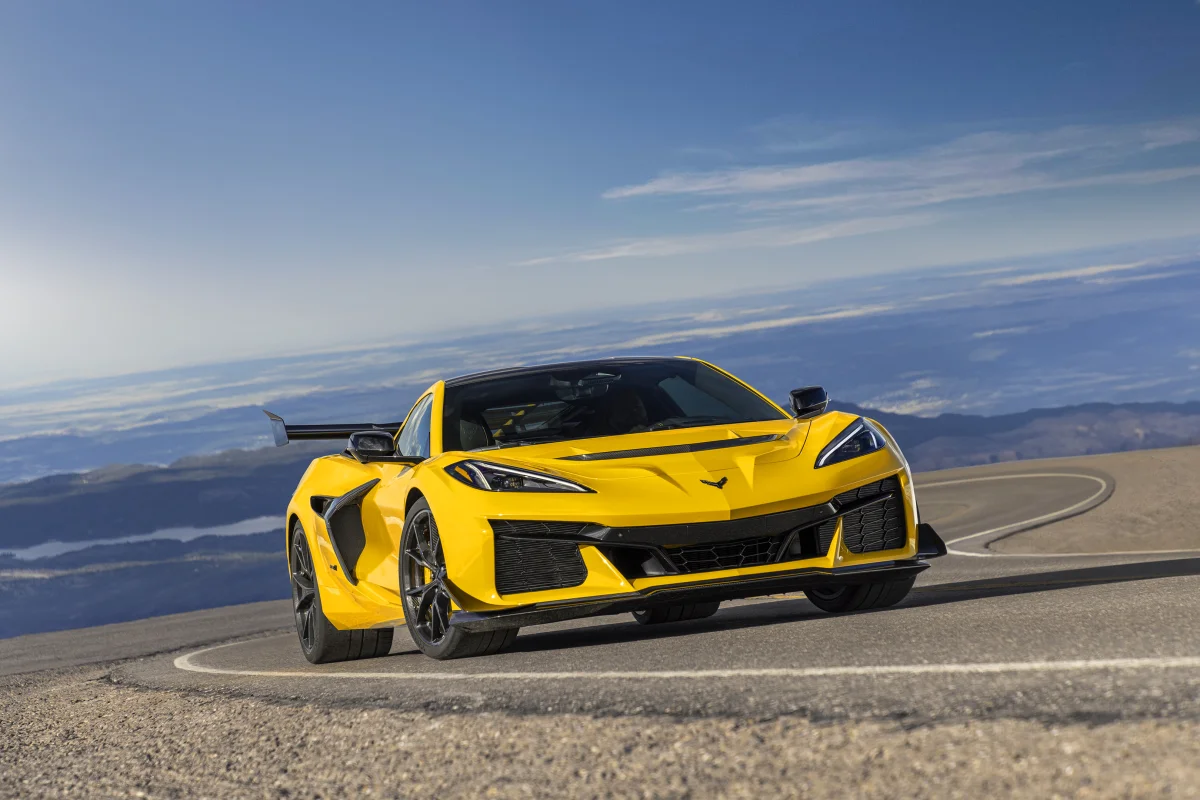
Contemporary statistics leave no doubt – around 90% of new premium segment sports cars roll off the production lines equipped with automatic transmissions. And yet.
A manual renaissance at the top of the automotive pyramid
Manufacturers such as Porsche, Aston Martin, and BMW continue to offer (and sometimes even bring back) manual transmissions in their most powerful models. Interestingly, these versions often attract buyers willing to wait months for delivery.
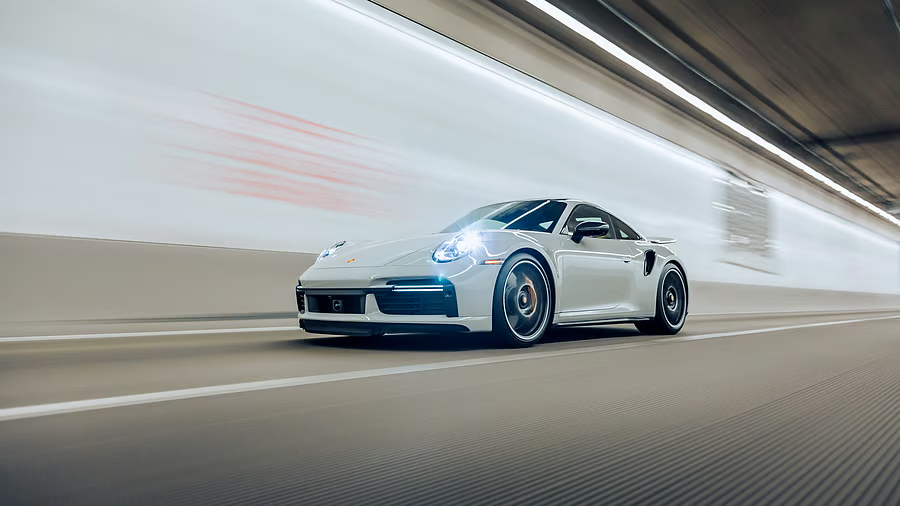
Why is the manual making a comeback right now
Paradox is fascinating. In an era when automatic PDK or DCT gearboxes can outperform manual shifts by hundredths of a second, and electromobility is becoming a reality, some drivers consciously choose the slower option. There are several reasons for this:
- Physical involvement – operating the clutch and gear lever engages your whole body, not just your foot on the accelerator
- Sense of control – it’s the driver who decides when to shift, not the electronics
- Authenticity of experience – a manual demands skill and focus, rewarding you with precision
- That distinctive engine sound with a perfectly timed shift
This isn’t about nostalgia. It’s a conscious choice made by people who could have it all, yet choose more, not less—more involvement in the driving experience.
In the following sections, we’ll explore how we arrived at this point (a brief history of MT in premium cars), who currently offers these rare manuals, and whether the trend stands a chance of surviving a decade of electrification.
From Dominance to Niche – A Brief History of Manual Transmissions in Sports Cars
Manual gearboxes used to be the norm—no big deal, no talk of a “renaissance.” Today, they’re such a narrow niche that every new model with a manual transmission is an event. How did we get here?
The golden era of manuals – from the 911 to WRC
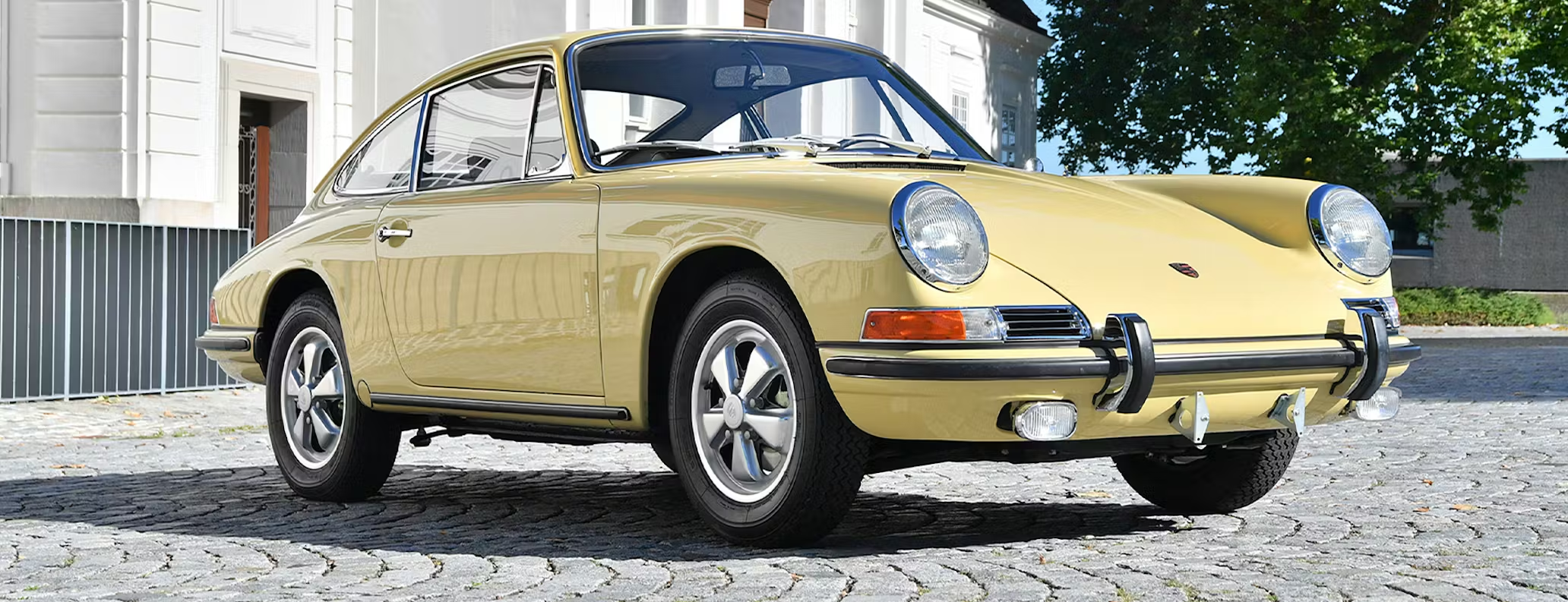
The 1950s to the 1980s were a time when MTs dominated not just sports cars, but the entire automotive world. Porsche 911 debuted in 1963 with a then-revolutionary 5-speed synchromesh gearbox—a standard for decades to come.
Ferrari 250 GTO, Jaguar E-Type, Lamborghini Miura —every icon of that era came exclusively with a manual transmission, simply because there were no real alternatives.
The golden age lasted through the ’80s and into the 2000s: BMW M3 E30, Honda NSX, Subaru Impreza WRX in WRC rallies—the manual gearbox was not only sporty, but also romantic. F1 drivers still had a gear lever up until the mid-’90s.
From GDP to crisis and the first signs of recovery
The breakthrough came around 2005 – F1 switched to seamless shift, Porsche introduced PDK, and BMW’s dual-clutch DCTs started outperforming humans. The 2010-2020 decade was a disaster: less than 5% of premium sales, the Corvette C7 practically abandoned MT in 2019, and Tesla’s electrification wiped it out completely.
But something changed. Honda Civic Type R (2018), Toyota GR Supra with 6MT (2021), Porsche 911 GT3 Touring (2022), BMW M3/M4 6MT (2023) – suddenly, manufacturers started listening to enthusiasts. It’s no longer just about performance; it’s about the experience. And about preserving certain things before they disappear for good.
Market 2025 and technology – why manual still makes sense
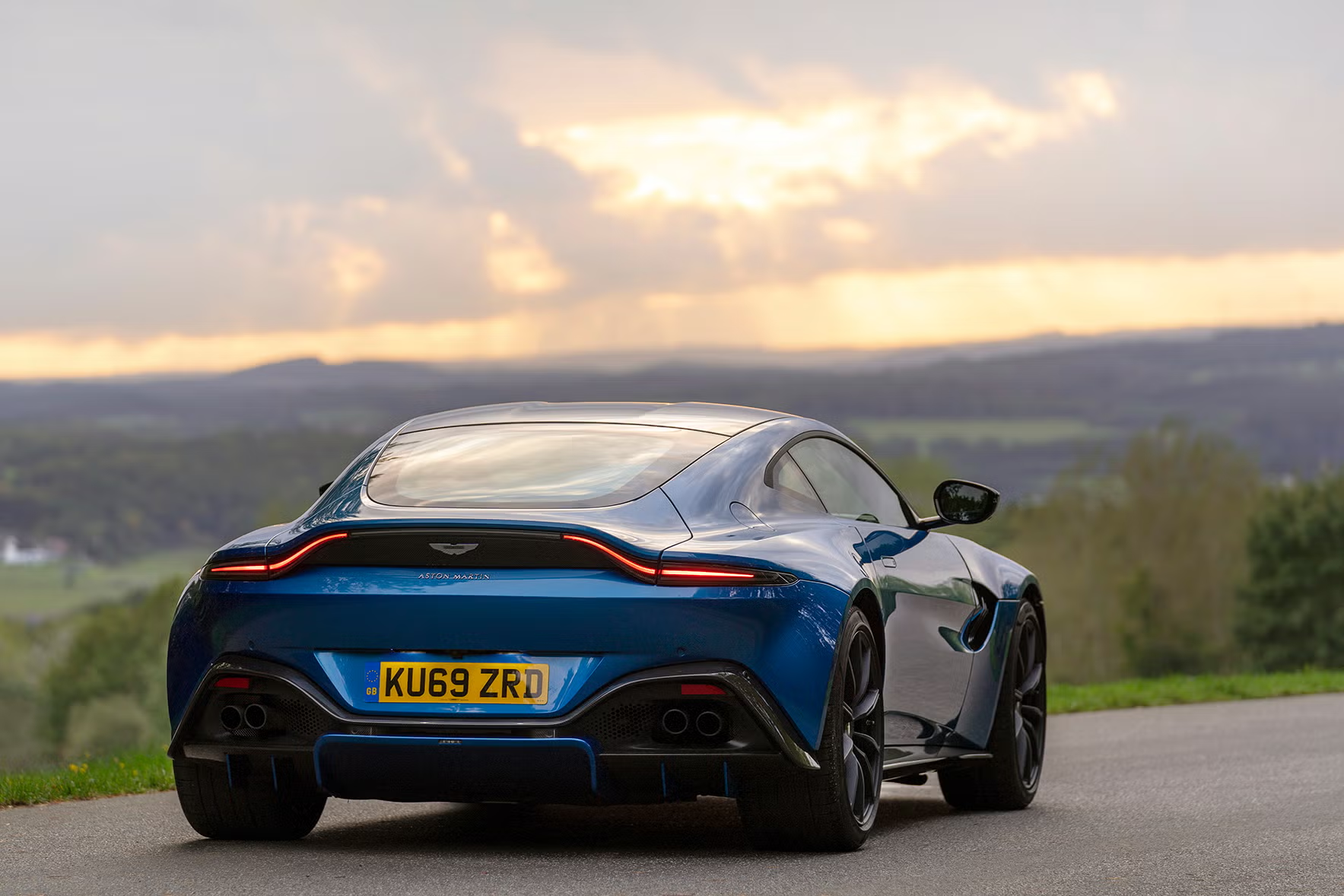
In 2025, manual gearboxes account for just about 8% of sales in the premium sports car segment—it might seem like a niche. But here’s where it gets interesting: since 2022, that share has actually been growing, which, in a world dominated by PDK and DCT, feels almost miraculous. Porsche 911 GT3, BMW M2/M3/M4, Lotus Emira, Toyota GR Corolla, and Aston Martin Vantage—all these models offer a manual, and not as a sad afterthought, but as a fully-fledged, often preferred version.
What does the manual market look like in 2025?
Let’s look at the numbers: around 60% of GT3 buyers opt for a manual gearbox. For the BMW M3/M4, it’s less—about 12-15%—but that’s still more than just two years ago. Toyota GR Yaris in Europe? Over 70% choose the manual. It’s not a huge scale, but the trend is clear, especially in track-focused and collector’s editions. In Europe and Japan, the manual is seen as a “driver’s car”; in the US, it’s a nostalgic choice for enthusiasts (with MT share dropping faster there). In China? Manuals are virtually nonexistent.
| Model | MT runs | Power (HP) | 0-100 km/h (s) | MT price (thousand EUR) |
|---|---|---|---|---|
| Porsche 911 GT3 | 6 | 510 | 3.8 | ~190 |
| BMW M3 | 6 | 510 | 3.4 | ~95 |
| Lotus Emira V6 | 6 | 400 | 4.3 | ~85 |
| Toyota GR Yaris | 6 | 261 | 5.5 | ~40 |
Real pros and cons of a manual gearbox for the driver
Advantages of MT:
- Lower purchase price (EUR 5,000–8,000 difference)
- Greater engagement, complete control over gear ratios
- Durability and easy maintenance – a clutch isn’t rocket science, replacement is simpler than repairing a PDK
- Rev-matching in most modern models (M3, GT3) – automatic blipping on downshifts
- Lever precision – it just feels better to click
Disadvantages of MT:
- Slower acceleration (0.1-0.3 s in 0-100 km/h vs PDK)
- Higher fuel consumption in the city (0.5–1 l/100 km)
- It takes practice – mishandling a manual means burnt clutch and jerky movements
- In traffic jams, it’s torture for your left leg
Manual today is a niche, but a prestigious one – a car with an MT often retains a higher residual value. And yes, for most drivers, an automatic is the better choice. But for that small percentage who want to drive, not just be driven – the manual still makes sense.
What’s next for the manual – drivers’ choices looking ahead to 2030
Will it even be possible to buy a manual car in ten years? Realistically speaking, globally MT will drop below 5% of all cars sold. But in the premium GT and sports car niche, it could remain at 10-15%, especially since brands like Porsche, BMW M, and Lotus openly declare they won’t abandon three pedals as long as there’s demand. These are the manufacturers keeping the manual flame alive.
Virtual manual – does it even make sense?
Interesting that the industry is experimenting with simulated gearboxes in EVs. Hyundai is testing a system with haptic feedback in the shifter, while Alpine and Porsche (Mission X, beta Taycan) are working on “manual” modes with artificial clutch clicks and gear changes. It sounds like science fiction, but maybe it’s a way for fun-to-drive to survive the EV era. The question is: can a virtual “click” replace the real feel of mechanics? I doubt it’s the same, but—who knows.
When MT Makes Sense – A Practical Test
Choose the manual if:
- You regularly attend track days or drive on mountain switchbacks
- A car is a collection/weekend item for you, not an everyday tool
- You value commitment over comfort
Stay at the slot machine when:
- Your day is all about traffic jams, the city, and commuting during rush hour
- Priority: eco, peace, zero stress
Manual is now a conscious lifestyle choice – the last bastion before full automation.
Test it before it disappears for good. After that, only a digital simulation will remain.
Ziggy KOS99
Luxury Reporter editorial team
moto & yachts
