




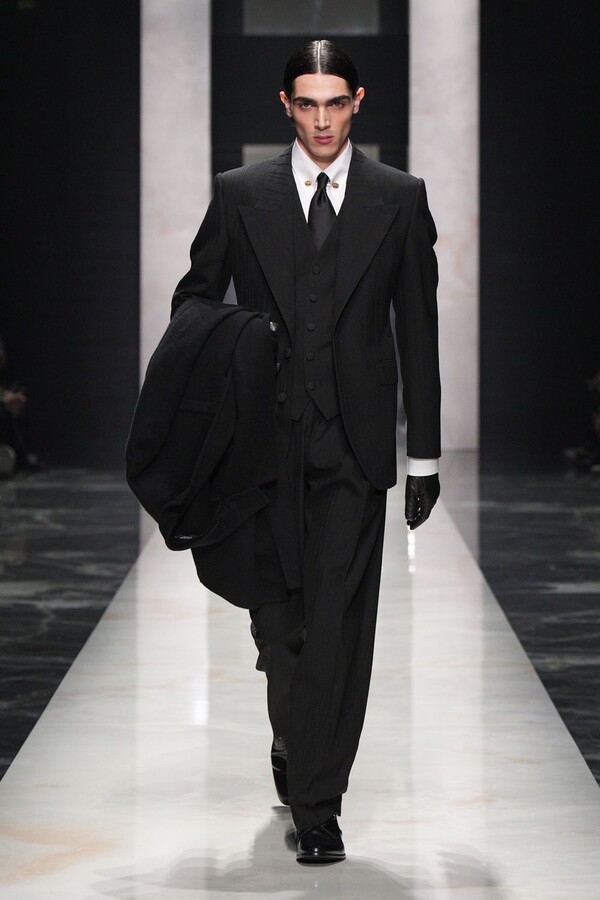
Milano Fashion Week Men’s Fall/Winter 2026/2027, held from January 16–20, 2026, was not a fashion week marked by spectacular twists. Instead of a revolution, Milan offered something much more challenging: consistency, intellectual precision, and a deeper reflection on what men’s wardrobes mean today. Designers seemed to speak with one voice. Men’s fashion no longer needs to prove its modernity. It can simply practice it.
Milano Fashion Week Men’s 2026/2027: Silhouette between discipline and volume
One of the most distinctive themes of the season was working with the silhouette, understood not as a trend but as a tool of communication. In Milan, two approaches coexisted. On one hand, a return to volume — wide trousers, long blazers, fluid layering. On the other, an almost radical slenderness.
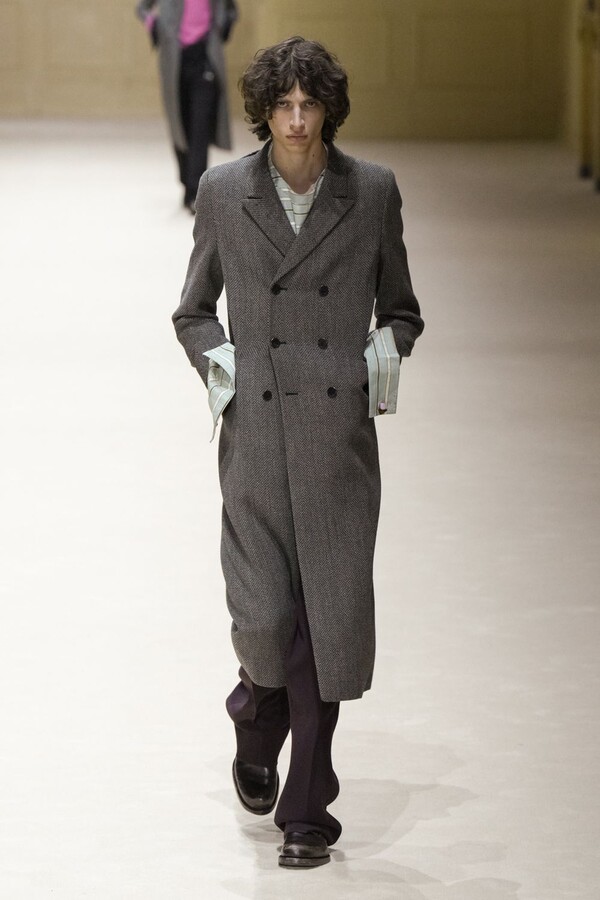
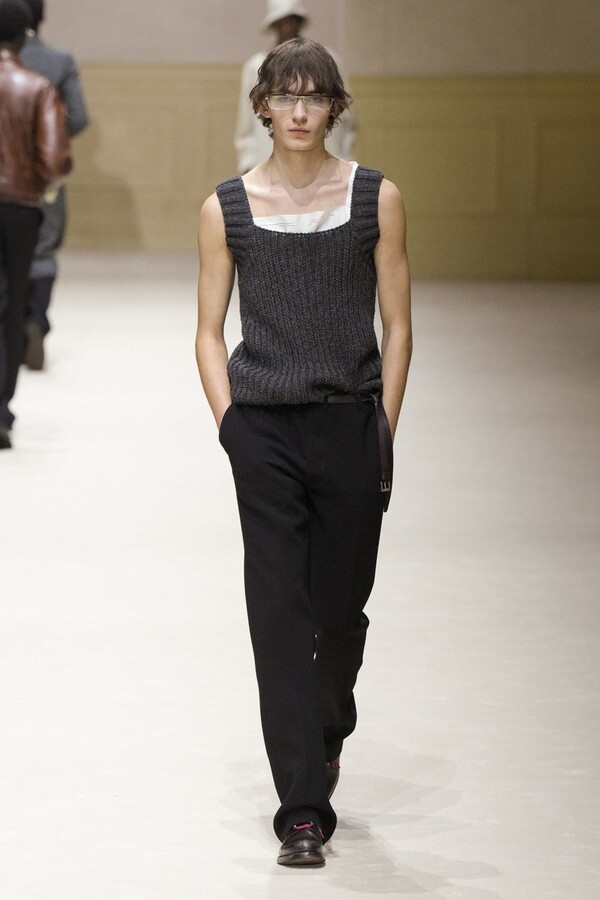
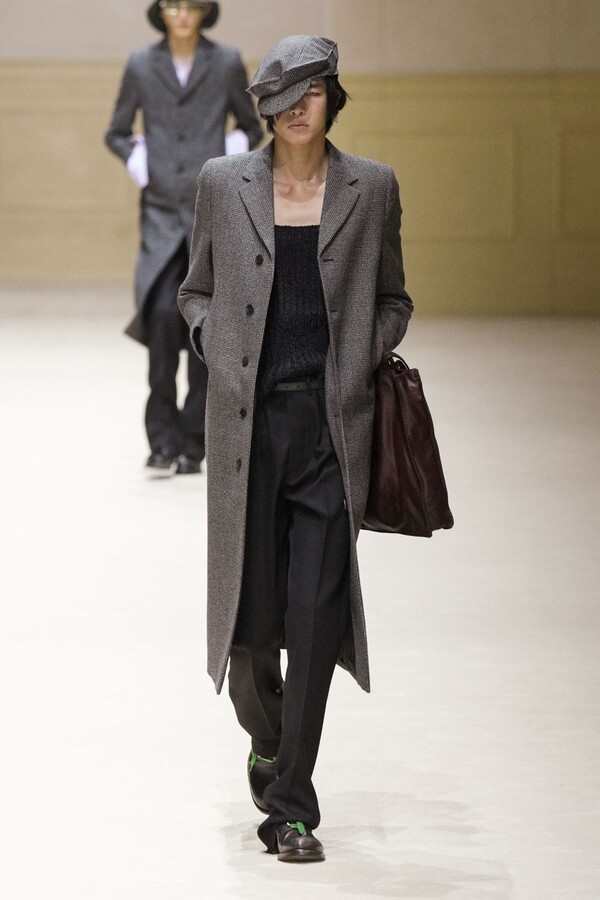
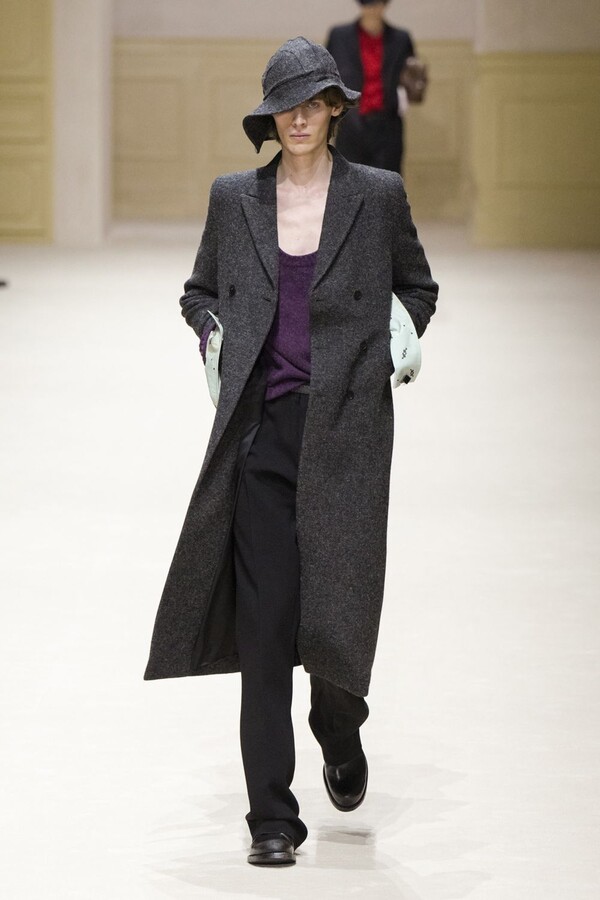
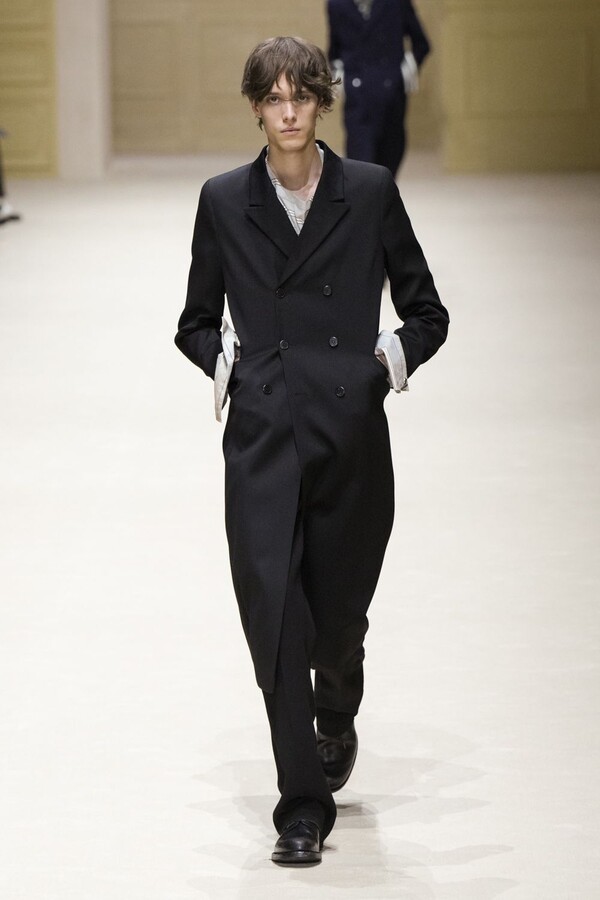
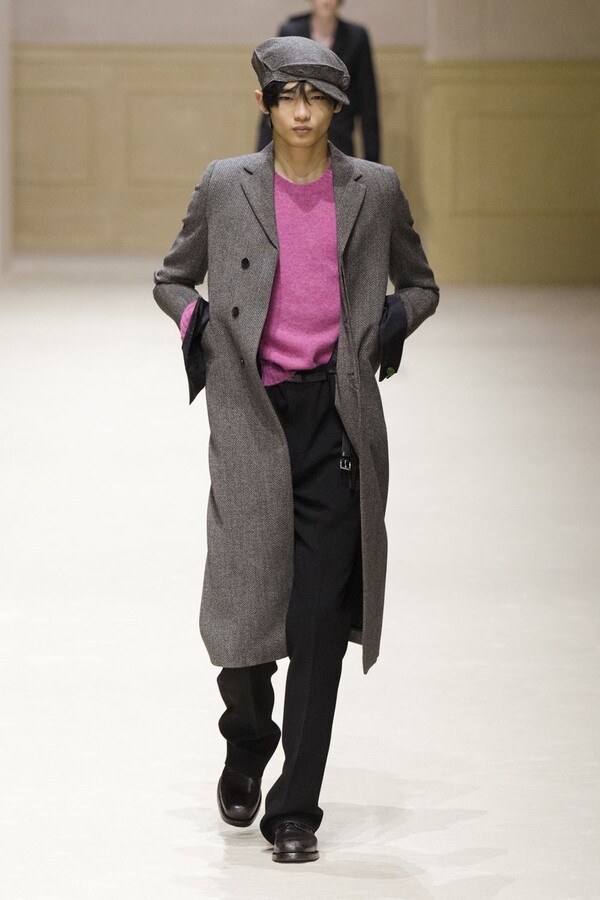
Prada presented a silhouette that was tense, upright, at times even ascetic. Slim coats, high fastenings, and “controlled destruction” of fabrics created an image of disciplined fashion—demanding and deliberately deprived of visual comfort. It was a response to a reality in which uncertainty demands clarity of form.
In parallel, other designers explored volume as an expression of freedom and protection. Clothing became a space rather than a construction. As a result, the Milanese silhouette for the 2026/2027 season is not unified, but polarized. This in itself is an important signal: men’s fashion has stopped striving for a single ideal.
Color as a decision, not a decoration
The season’s color palette clearly departed from the need for spectacle. Earth tones dominated — browns, beiges, muted greens — but were used with a keen awareness of material and texture. Brown became a structural color. It appeared in suede, wool, and leather, emphasizing the artisanal character of the collection.
At Prada, color served as a counterpoint. Shades of old rose, mauve, or anise green did not serve a decorative function. They created tension against the austere form and industrial set design. Ralph Lauren, on the other hand, opted for multicolored looks.
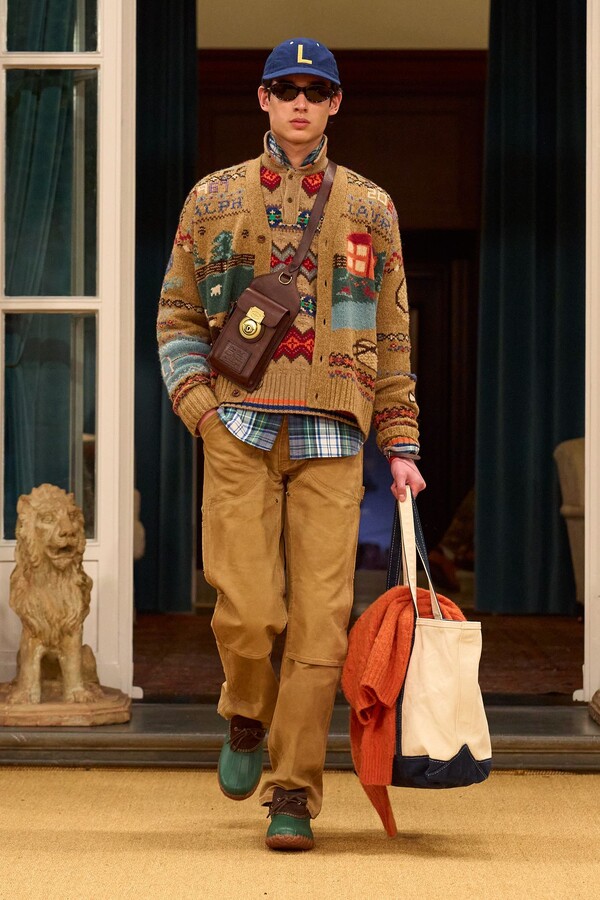
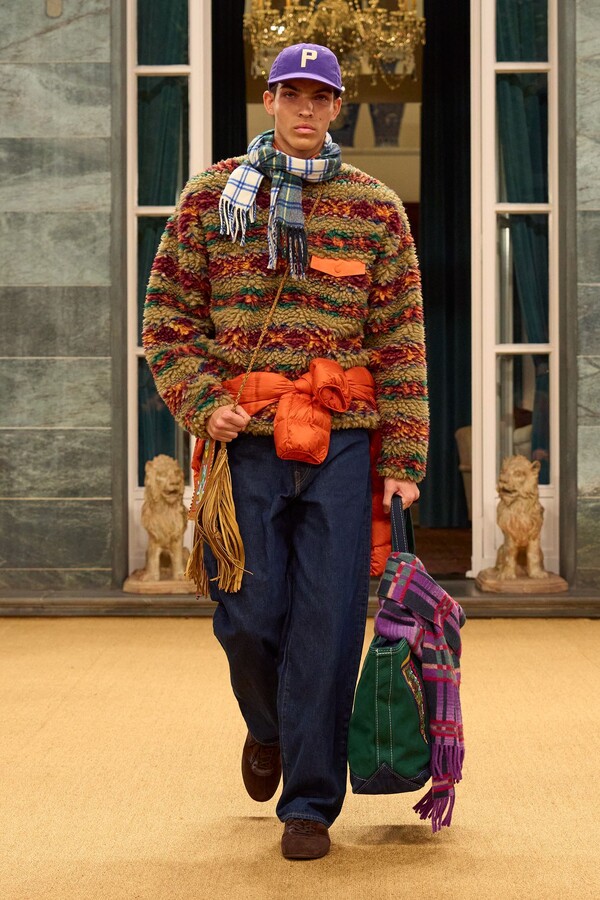
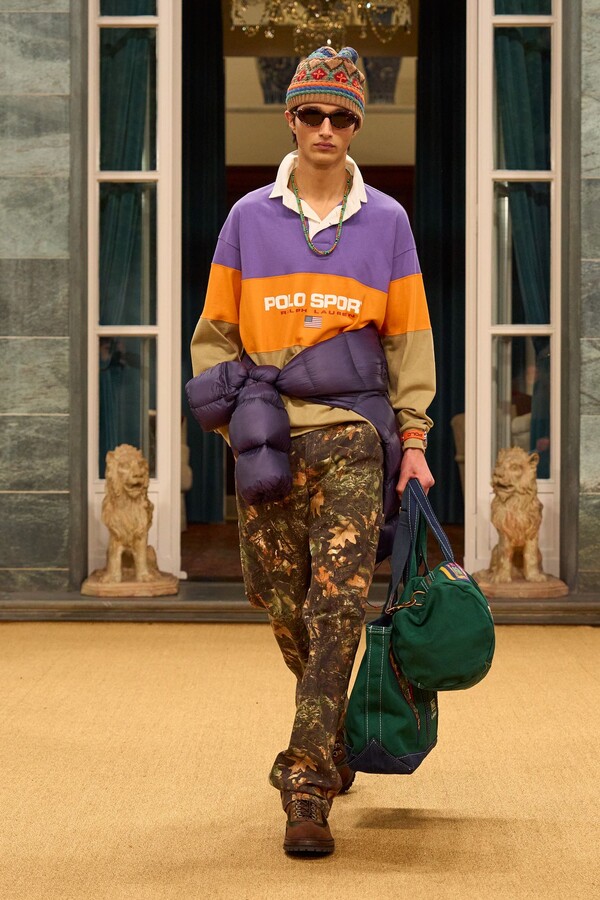
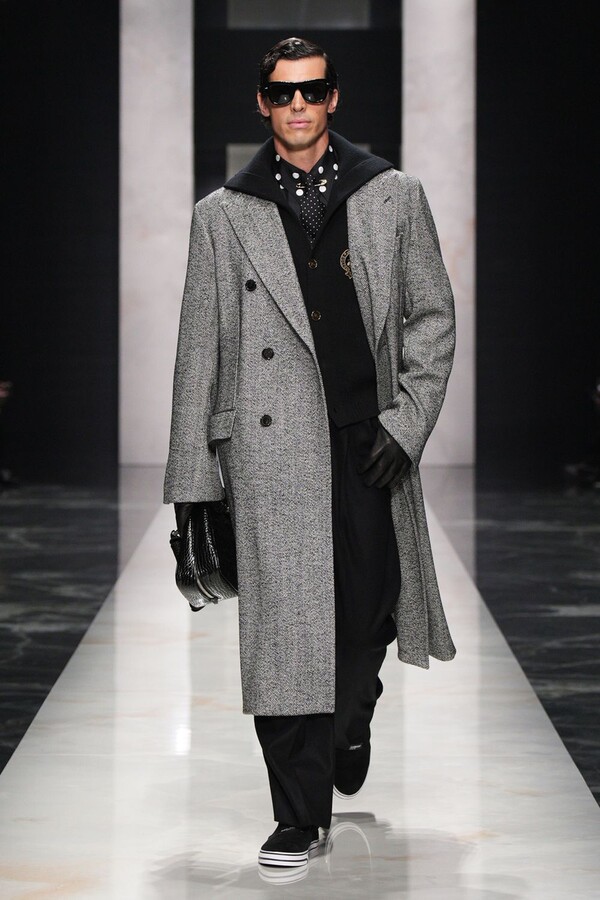
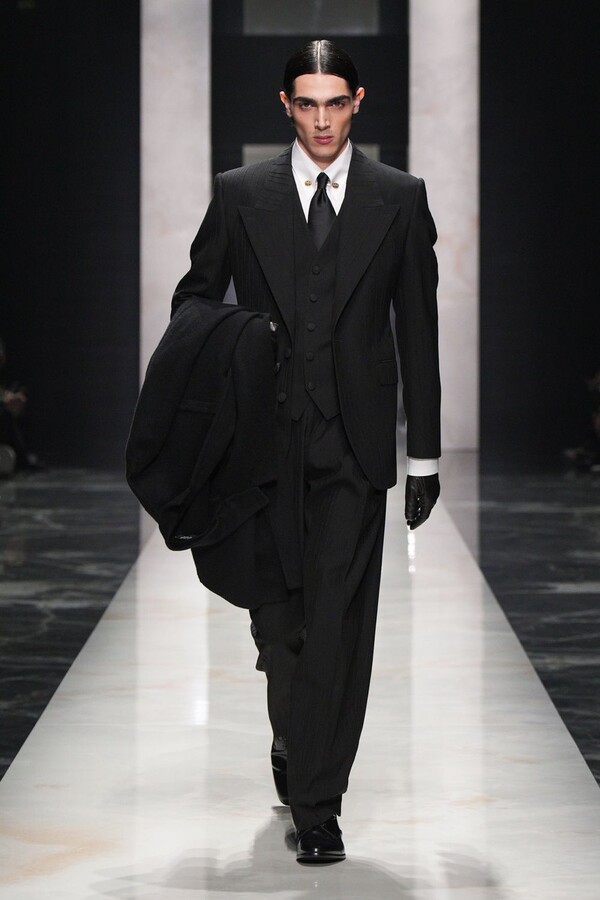
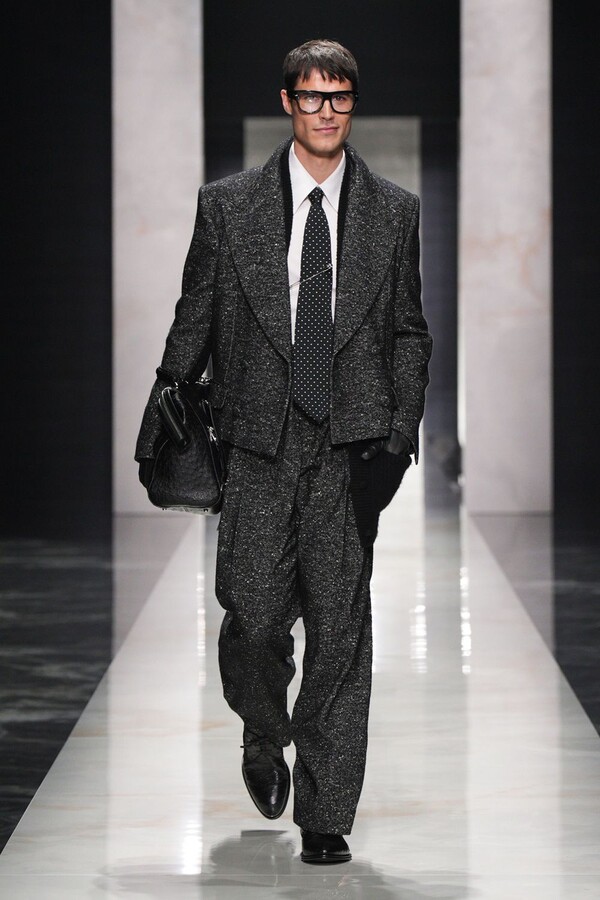
Energetic, overloaded, and based on contrasts and volume. This approach demonstrated that in 2026/2027, color in men’s fashion is not about attracting attention, but about creating mood and meaning. Meanwhile, Dolce&Gabbana moves within a subdued gradient of grays in men’s fashion. The collection is dominated by very masculine cuts, elegant minimalism, and masculine silhouettes without deconstruction.
Milano Fashion Week Men’s 2026/2027: The wardrobe as a system, not a seasonal whim
A clear theme throughout fashion week was the idea of “returning to your own wardrobe.” Designers did not encourage abandoning existing clothes, but rather reinterpreting them. Wide-leg trousers from Armani, classic coats, suede jackets, and oversized blazers appeared as pieces that are already in your closet. The difference lay in how they were worn.
Ralph Lauren built an entire narrative around this. His show was not a story about trends, but about the continuity of style. The juxtaposition of the Polo Ralph Lauren line with Purple Label showcased two registers of the same philosophy: everyday life and ritual, functionality and ceremony. This is fashion that does not need a new definition of masculinity, because it consistently develops its own.
Milano Fashion Week Men’s 2026/2027: Man at the Center, Not the Trend
Perhaps the most important message of Milan Fashion Week was the shift of focus from trends to the wearer. The looks resembled people in motion. Bags filled with clothes. Layers suggesting a change in climate. Details bearing signs of use. Menswear for the 2026/2027 season doesn’t want to be a costume — it wants to accompany.
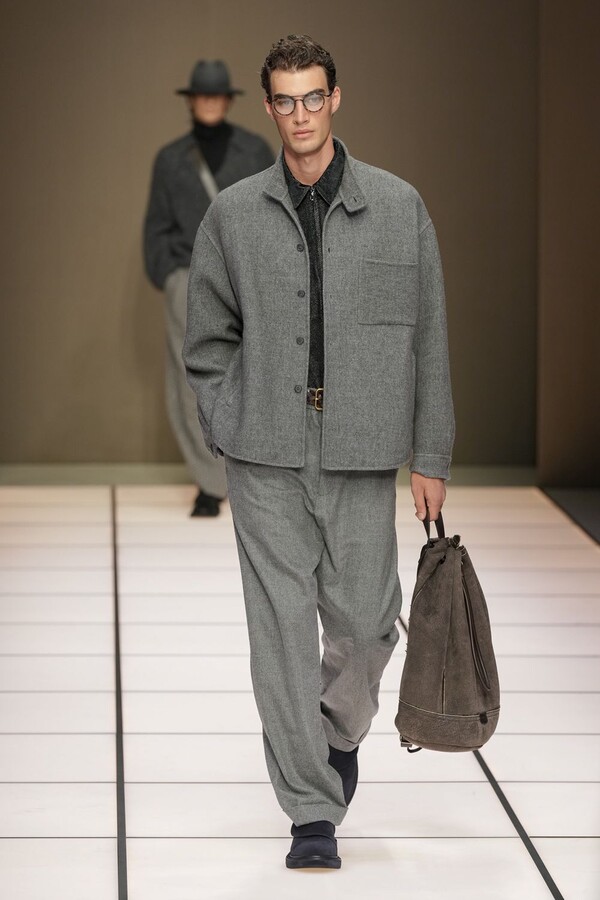
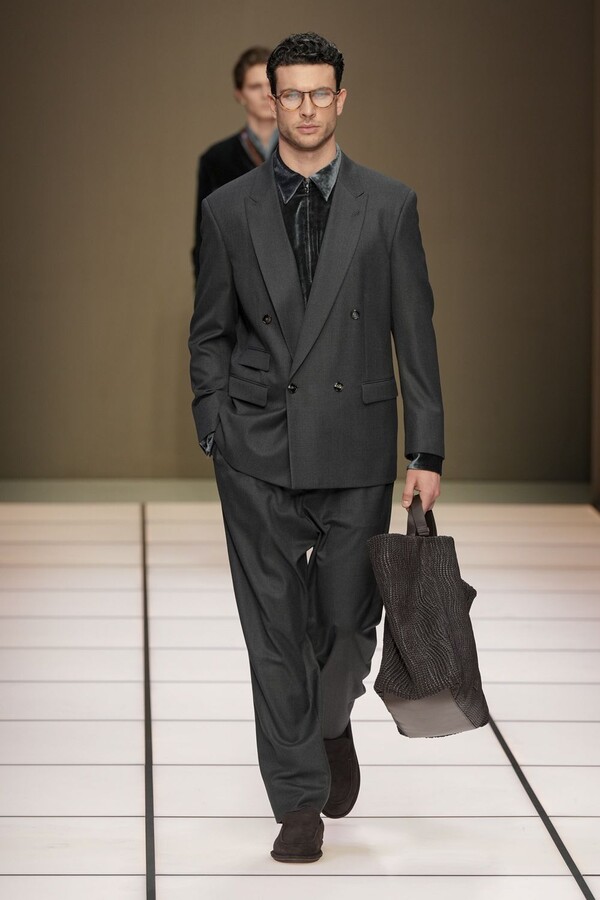
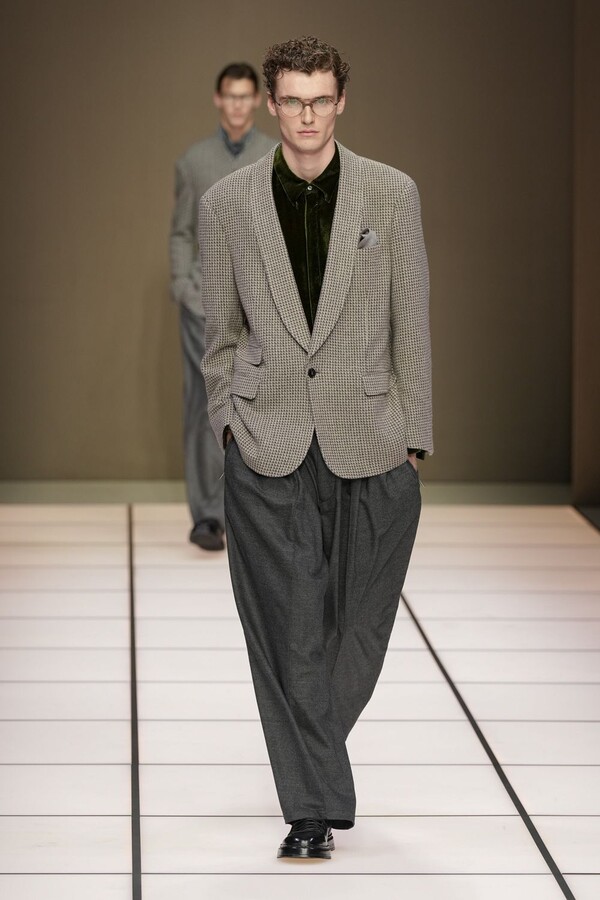
This approach was evident both in Prada’s intellectual austerity, in Ralph Lauren’s narrative consistency, and in Armani’s balanced elegance. Different aesthetics, a shared attitude: clothing as a life decision, not a seasonal gesture.
Milan speaks more softly, but more clearly
Milano Fashion Week Men’s Fall/Winter 2026/2027 proved that men’s fashion is entering a phase of maturity. It no longer needs provocation or manifestos. Instead, it offers precision, craftsmanship, and conscious choices. This is a season where less means more — provided that this “less” is well thought out.
