




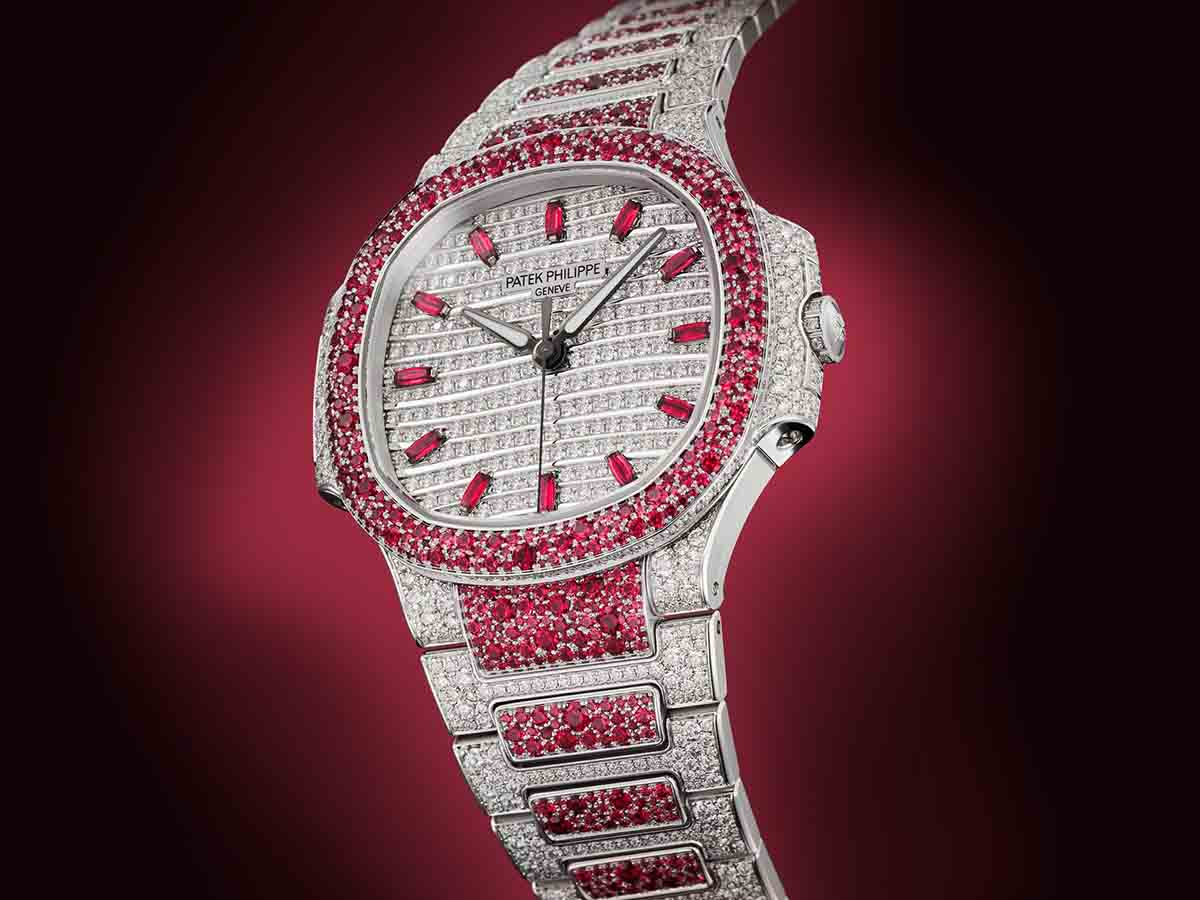
Annual production? Fewer than a few hundred pieces worldwide. Auction prices? Regularly exceed one million dollars. Waiting list? So long that most clients will never receive their own piece. These aren’t science fiction numbers – this is the everyday reality of the Patek Philippe Nautilus Haute Joaillerie, watches, which have ceased to be ordinary timekeeping devices and have become… well, what exactly?
Patek Philippe Nautilus Haute Joaillerie – when a sports watch becomes a jewel
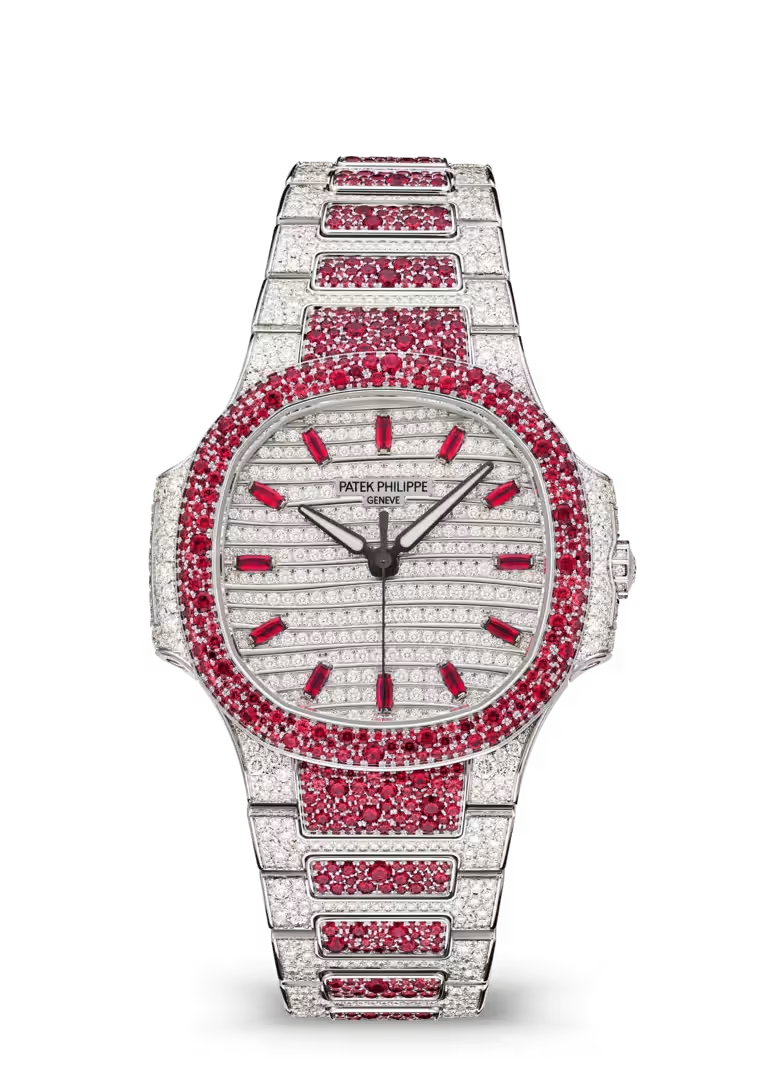
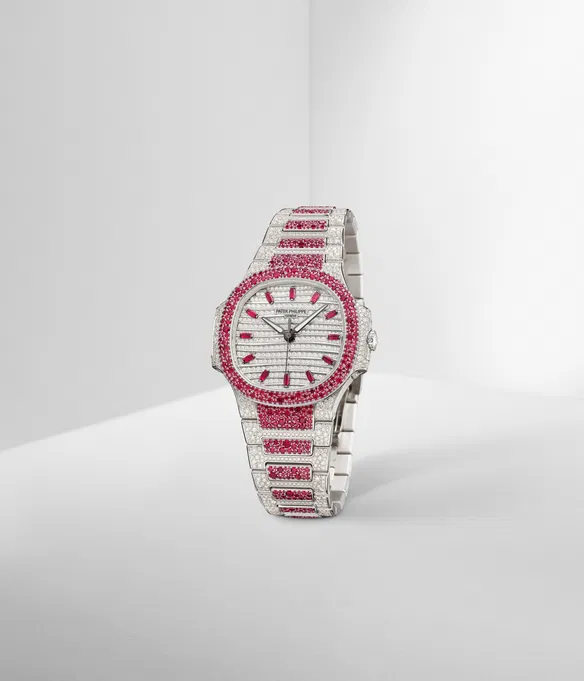
The classic Nautilus, designed in 1976 as a steel “sporty elegant,” was a revolution—luxury in casual form. The Nautilus Haute Joaillerie is something completely different. Instead of steel, we have 18-karat gold or platinum. Instead of a plain case—hundreds of diamonds in a pavé setting, covering every available millimeter. This is no longer a sports watch. This is jewelry that—oh yes—also tells the time.
The difference? Huge:
- Steel Nautilus: an icon of accessibility (theoretically)
- Nautilus Haute Joaillerie: a symbol of absolute exclusivity
- One product is produced in the thousands; the other in the hundreds (if)
- You can buy one (after years of waiting); the other you’ll probably never get
What’s next in this text? We’ll go through the history – from athlete to jewel. Then we’ll take a look inside the workshop – how these little masterpieces are created. Finally: the market, investments, and the question of where it’s all heading.
From the Quartz Crisis to Haute Joaillerie – the Evolution of the Nautilus
When Gérald Genta designed the Ref. 3700/1A “Jumbo” in 1976, no one called this a jewelry watch. Steel, 42 mm in diameter, inspired by ship portholes — the Nautilus was meant to be Patek Philippe’s response to the quartz crisis and the sports revolution in the industry. The Geneva manufacturer focused on durability and modernity, not on diamonds.
From gold and complications to Haute Joaillerie
The 1980s and 1990s saw a gradual expansion of the line—with smaller references, the first complications (perpetual calendar, moon phase), and, above all, gold versions of the cases. This was essentially the first sign that the Nautilus was no longer just a “sports watch.” The real breakthrough? The year 2002 and Ref. 4700/1R—a ladies’ model in rose gold with a diamond-set bezel. Patek openly called it “Haute Joaillerie” and… well, the market went wild.
The next decade brought a culmination: in 2016, watches for the 40th anniversary of the line (including spectacular diamond editions), in 2018, the iconic 7118/1200R-001 with a fully set case, and in 2021, a decision that changed everything—the end of production of the famous 5711. Demand exploded, and diamond versions—previously seen as “collector’s ornaments”—became investment trophies. Ref. 5811 took over the legacy, but Nautilus Haute Joaillerie is already in a league of its own.
Craftsmanship, specifications, and the market – inside Nautilus Haute Joaillerie
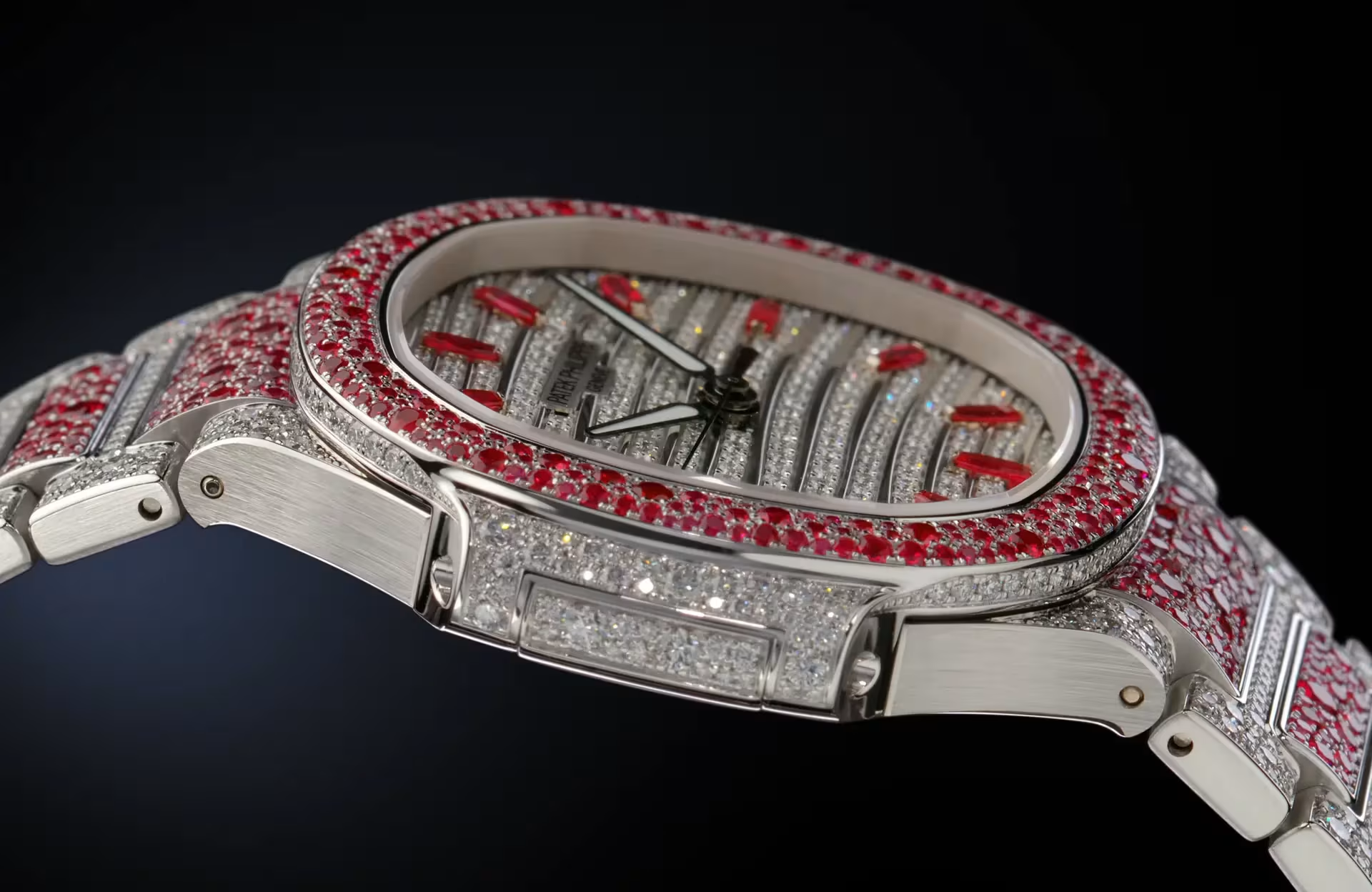
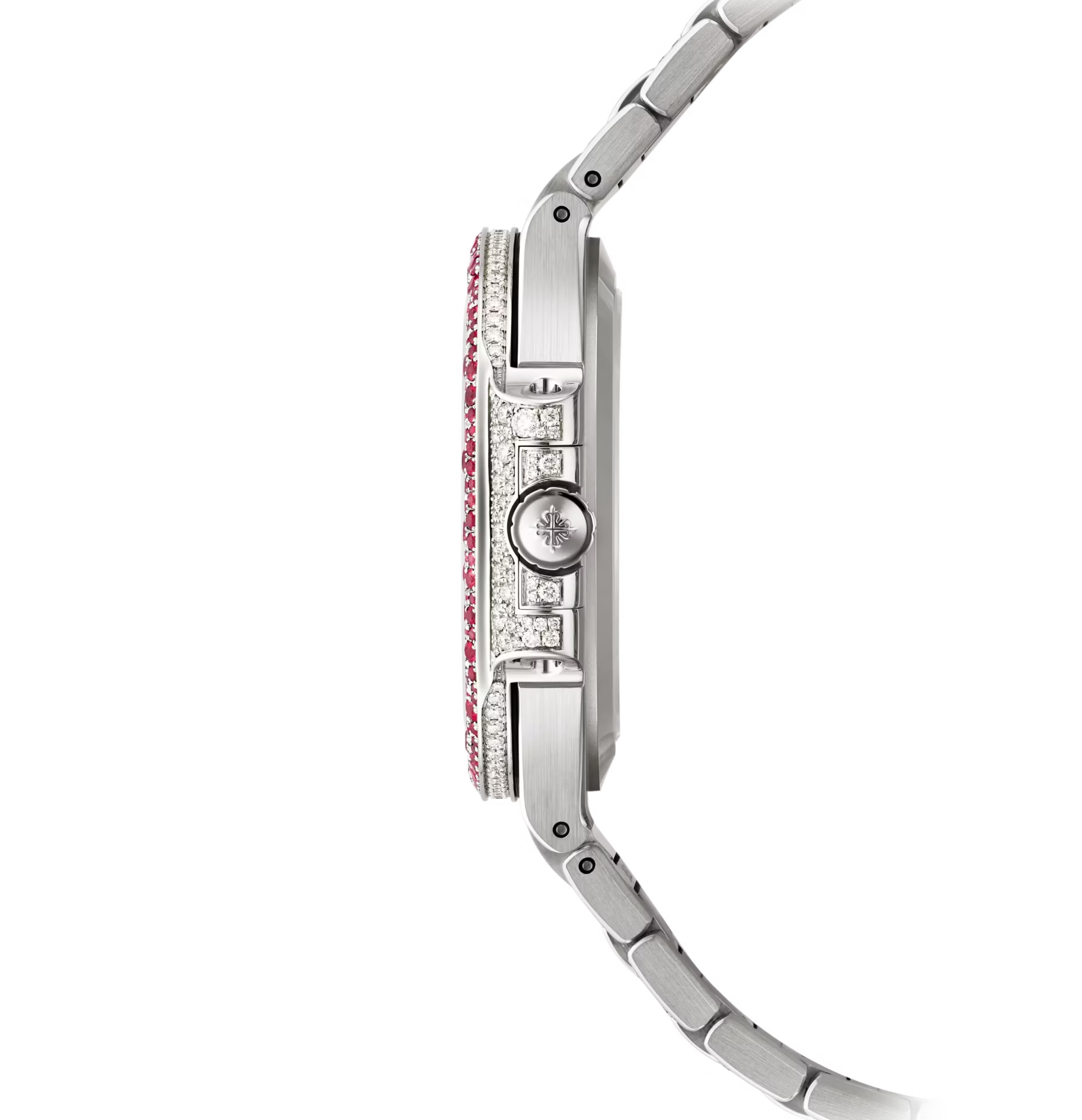
Nautilus is still a sports watch – an octagonal bezel, horizontal dial embossing, an integrated bracelet – but in its Haute Joaillerie edition, it transforms into wrist jewelry. Cases made of 18-carat gold (white, rose, yellow) or platinum are fully pavé-set with diamonds, baguette-cut sapphires, or colorful precious stones. What’s truly impressive? Up to over 2,000 stones on a single watch – each one hand-set using the invisible setting technique so that the metal almost disappears. And despite all this? The Nautilus Haute Joaillerie still maintains water resistance up to 120 m (60 bar).
What does the diamond Nautilus look like up close?
Let’s take Ref. 5980/1400R-011: 40.5 mm of rose gold, caliber CH 28‑520 C with chronograph and date, power reserve of 45-55 h. Nothing complicated – but every element of the case and bracelet sparkles with stones, while the dial remains legible.
Market and investments: why are values rising?
Nautilus Haute Joaillerie is an asset for UHNWI. Production? Extremely limited – just a few dozen pieces per year. Demand? Celebrities, collectors, auctions. Ref. 3700 has increased by ~800%, Ref. 5711 Tiffany achieved over 1,500% growth within a year. Diamond versions decline more slowly than steel ones – gemstones stabilize the value. The only question is: how long will this frenzy last?
The future shines bright with diamonds – what’s next for Nautilus Haute Joaillerie
Nautilus Haute Joaillerie is the result of a deliberate policy of rarity – Patek Philippe, the last major family-owned manufacture from Geneva, has kept its annual production at around 60,000 watches for years and has no intention of changing this. “Tradition over mass production” – this mantra means that diamond versions of the Nautilus will remain even rarer than the steel ones. What does this mean for us, collectors?
Controlled rarity – the Sterns’ strategy for the coming decades
Patek will not follow the path of mass production. Instead, experts predict:
- Greater share of gold and diamonds at the expense of steel (a trend already visible)
- A boom in bespoke orders for ultra-wealthy clients
- Growing importance of ethical issues – sourcing diamonds with a Kimberley certificate is now standard
- Digital twins (NFT, “metaverse twins”) as authentication and an additional layer of exclusivity
Analysts see full diamonds as “future blue chips” – forecasts predict a 5-10% annual increase in value over the long term. But beware: a speculative bubble is also a real possibility, especially if the market is flooded by a wave of flippers.
Ultimately? Nautilus Haute Joaillerie is a watch for generations. If you’re buying it for yourself and your daughter – great decision. If it’s just to sell in a year – maybe it’s worth reconsidering.
MIKI 90
editorial team watches & moto
Luxury News
