




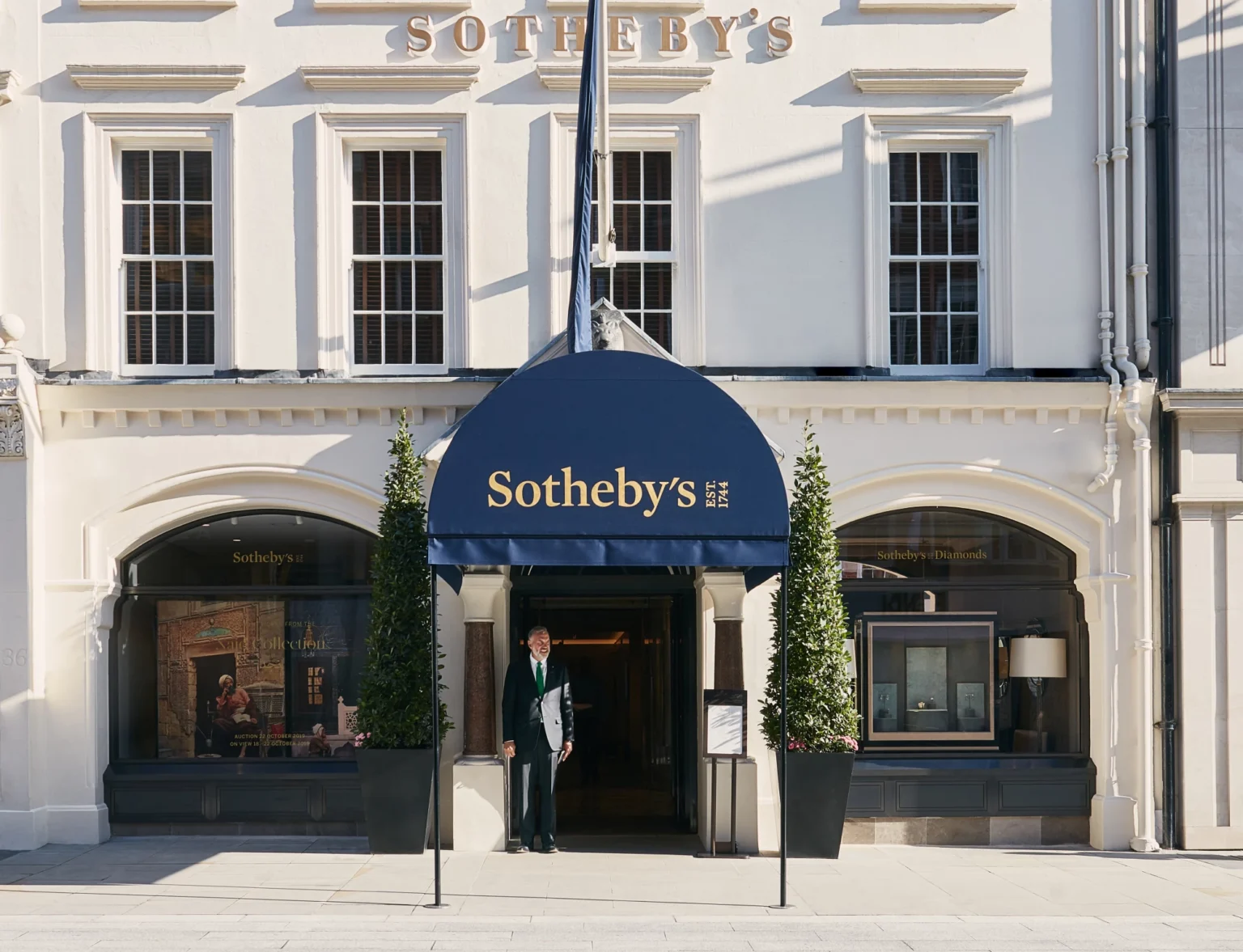
What happens when a rumor spreads like wildfire about one of the most important auction houses pulling out of the world’s largest e-commerce market ? Could 1.4 billion Chinese consumers lose access to Sotheby’s digital auctions?
To grasp the significance of this situation, you need to look at the numbers. Chinese e-commerce platforms handle daily transactions worth more than the GDP of some small European countries. That’s no exaggeration—we’re talking about a market where, on Singles’ Day alone, sales reach $84.5 billion. For comparison, that’s more than Slovakia’s annual GDP.
Sotheby’s withdraws from ecommerce operations in mainland China

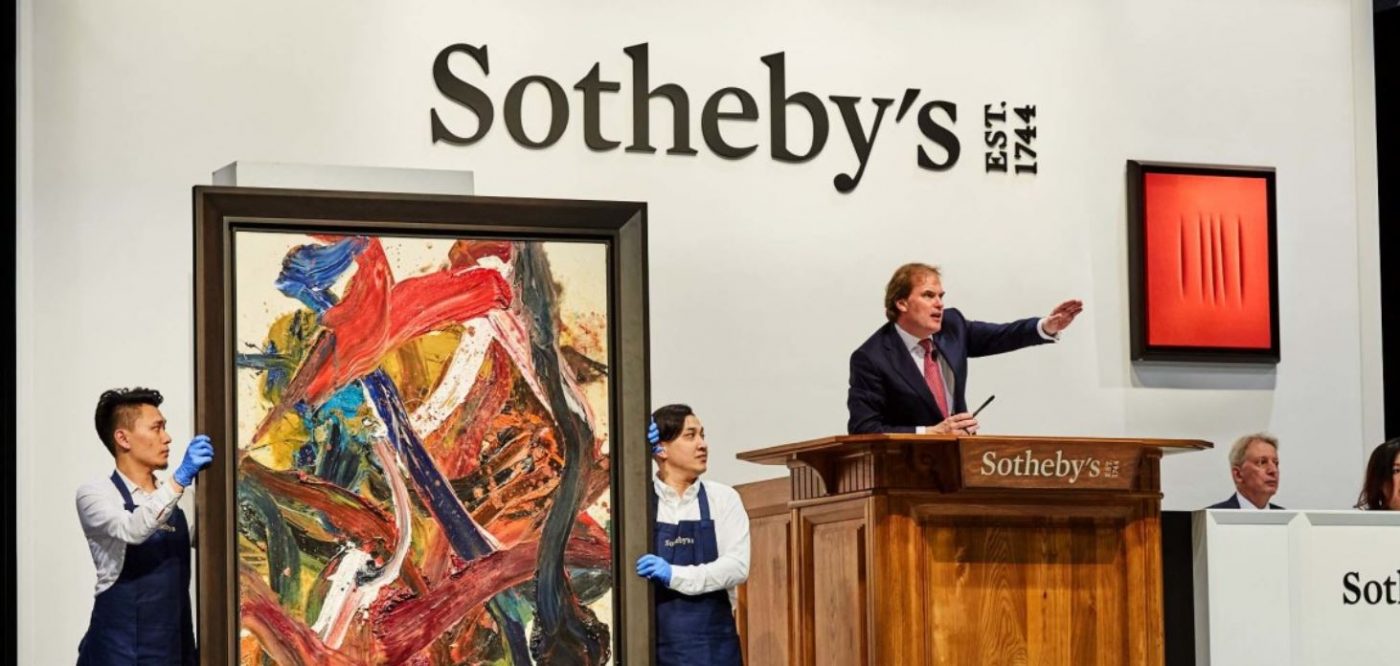
Sotheby’s is no accidental player here. The auction house has been building its position in Asia for years, and its digital presence in the region is delivering spectacular results. The best example is the sale of the Pink Star pink diamond on April 4, 2017, for HK$553 million (USD 71.2 million) — a record-breaking transaction that demonstrated the strength of the Asian art market.
“Rumors about Sotheby’s withdrawing from Chinese e-commerce are spreading rapidly, but lack official confirmation.”
It is in this context that news emerged about the company possibly pulling out of e-commerce operations in mainland China. This information is circulating among collectors and industry media, but Sotheby’s has not issued an official statement on the matter. So why is the rumor spreading so quickly?

In the world of art, information travels faster than in any other industry. Collectors, dealers, and investors are highly sensitive to any signal that could affect access to works or change the ways they are acquired. When a rumor emerges about such a significant move as withdrawing from the Chinese market, it immediately sparks interest.
To answer the question posed in the title, we need to analyze several key aspects:
- Verifying the credibility of sources and the facts behind the rumor
- Analysis of possible motives behind such a business decision
- Assessment of the impact on the art market and the strategies of other players
Is this story based on facts, or is it just market speculation?
No confirmation – what the facts and sources say
Fact-checking is essential these days—especially when it comes to major companies and their business decisions. Recently, I came across rumors about Sotheby’s withdrawing from China, so I decided to see what the official sources have to say.
I reviewed all of Sotheby’s communication channels since the beginning of the year. The latest tweet, dated November 10, 2025, was about Abu Dhabi Collectors’ Week—no mention of China or any kind of withdrawal. The company’s website still promotes Asian auctions, and the “Contemporary Art Asia” section is operating as usual.
For comparison, it’s worth looking at what a real withdrawal from the Chinese market looks like. On May 24, 2022, Airbnb officially announced the end of its operations in mainland China—they issued a press release, sent emails to users, everything was clear and well documented. Here, there is nothing of the sort.
The verification methodology was quite straightforward—I searched media databases like Factiva, checked corporate registries, and Chinese ICP license databases.
Interestingly, some journalists sometimes like to repeat unverified information without checking their sources. I used to do that myself, but I’ve learned to double-check every fact.
| Source | Position/No information |
|---|---|
| Official Sotheby’s website | No information whatsoever about withdrawal |
| Company’s social media | Normal operations, promotion of Asian auctions |
| Press releases 2025 | No announcement about ceasing operations in China |
| Corporate registers | Companies in Hong Kong and Beijing remain active |
Everything suggests that the rumors remain just rumors. The lack of official confirmation in available sources is quite clear. Of course, things may change, but as of today, there are simply no facts.
Sotheby’s Twitter, post from 11/10/2025
Sotheby’s International, Contemporary Art Asia section, accessed 11/10/2025
Airbnb Press Release, 05/24/2022
Regulatory and market challenges in China
It may seem obvious, but regulatory barriers in China are more than just paperwork. When we look at the situation of foreign companies in e-commerce, we see a real maze of regulations that can discourage even the biggest players.
1. Regulatory landscape
The 2017 Cybersecurity Law was just the beginning of the challenges. Companies are required to store user data on servers located in China—no exceptions. And since November 2021, the Personal Information Protection Law (PIPL) has raised the stakes even higher. Penalties can reach up to 50,000,000 CNY, which is no trivial amount.
The problem is that these regulations are constantly evolving. In fact, every few months there’s a new interpretation or an additional requirement. For auction houses dealing with collectors’ data from around the world, this means continuously adapting IT systems and compliance processes.
2. Competitive landscape
Alibaba still dominates with around 47% of the e-commerce market share, but JD.com is not far behind with its 20%. Interestingly, Temu—the platform from PDD Holdings—plans to expand into Poland in 2025. This shows just how aggressively Chinese companies are growing on a global scale.
These platforms have something that foreign players can’t easily replicate—a deep integration with the Chinese payment system, logistics, and consumer preferences. Alipay, WeChat Pay, local distribution centers. All of this has been built up over years.
For foreign auction houses, this means competing on an uneven playing field. It’s not just about price competition, but about an entire infrastructure that favors local players.
3. Airbnb Case Study
Airbnb ceased operations in China on May 24, 2022. Officially, they spoke about “focusing on international markets,” but we all knew what was really going on. The “zero-COVID” policy was just the tip of the iceberg.
Compliance costs were skyrocketing—every new regulation meant months of work for lawyers and developers. Users were leaving en masse for local competitors who understood the specifics of the Chinese market better and adapted to changes much faster.
Importantly, Airbnb was not a small company. They had resources, teams in China, local partnerships. If they couldn’t make it work, that says a lot about the scale of the challenge.
4. Art market-specific restrictions
This is where things get even more complicated. Chinese law divides works of art into several categories, and “cultural relics” are subject to particularly strict export regulations. The problem is that the boundaries between these categories are often blurred.
Customs procedures are a nightmare of their own. The valuation of artworks by customs officials often has little to do with their actual market value. And limits on repatriating payments mean that even a successful sale may not translate into real revenue.
I know of cases where licensing procedures dragged on for months. In the meantime, the market changed, collectors lost interest, and storage costs kept rising.
All these factors create a market that, in theory, offers enormous opportunities, but in practice puts obstacles in the way of foreign companies at every turn. It’s no surprise, then, that more and more international players are reconsidering their presence in China.
What’s next? Scenarios and recommendations for the online art market
No one really knows what will happen next with all the commotion surrounding auction platforms. Sotheby’s faces a dilemma, and as market observers, we need to be ready for various scenarios.

I see three possible scenarios for how things could unfold. The first is a complete exit from China—radical, but perhaps necessary. The second is a pivot to Hong Kong, which seems like a compromise. The third option involves strengthening our presence through a partnership with a local Chinese platform.
| Scenario | Strengths | Weaknesses | Chances | Threats |
|---|---|---|---|---|
| Full look | No regulatory issues | Loss of a gigantic market | Focus on other regions | Competition will take the position |
| Pivot HK | Maintaining access | Limited autonomy | A bridge between markets | Political uncertainty |
| Partnership | Local partner | Division of control | Deep penetration | Dependence on a partner |
Collectors should act now. Diversifying platforms is essential—you can’t rely on just one auction house. Monitoring ICP licenses has become a necessity, even if it sounds absurd. Currency hedging is also worth considering, especially for larger transactions.
I’m noticing interesting trends that could change the entire game. NFT auctions are gaining momentum, despite all the talk about a bubble. Metaverse exhibitions sound like science fiction, but they’re already happening. AI algorithmic valuations are the future—or perhaps already the present.
Dealers need to think bigger. Traditional sales channels are no longer enough. Investors should track not only prices but also changes in market infrastructure.
The outlook for 2026-2027 is difficult to predict. We’re likely to see greater market fragmentation. Regional platforms will become more important. Technology will play a bigger role in valuations and authentication.
Don’t wait for things to unfold—prepare for every scenario today.
NIKO 89
art & investment editorial team
Premium Journalist
