




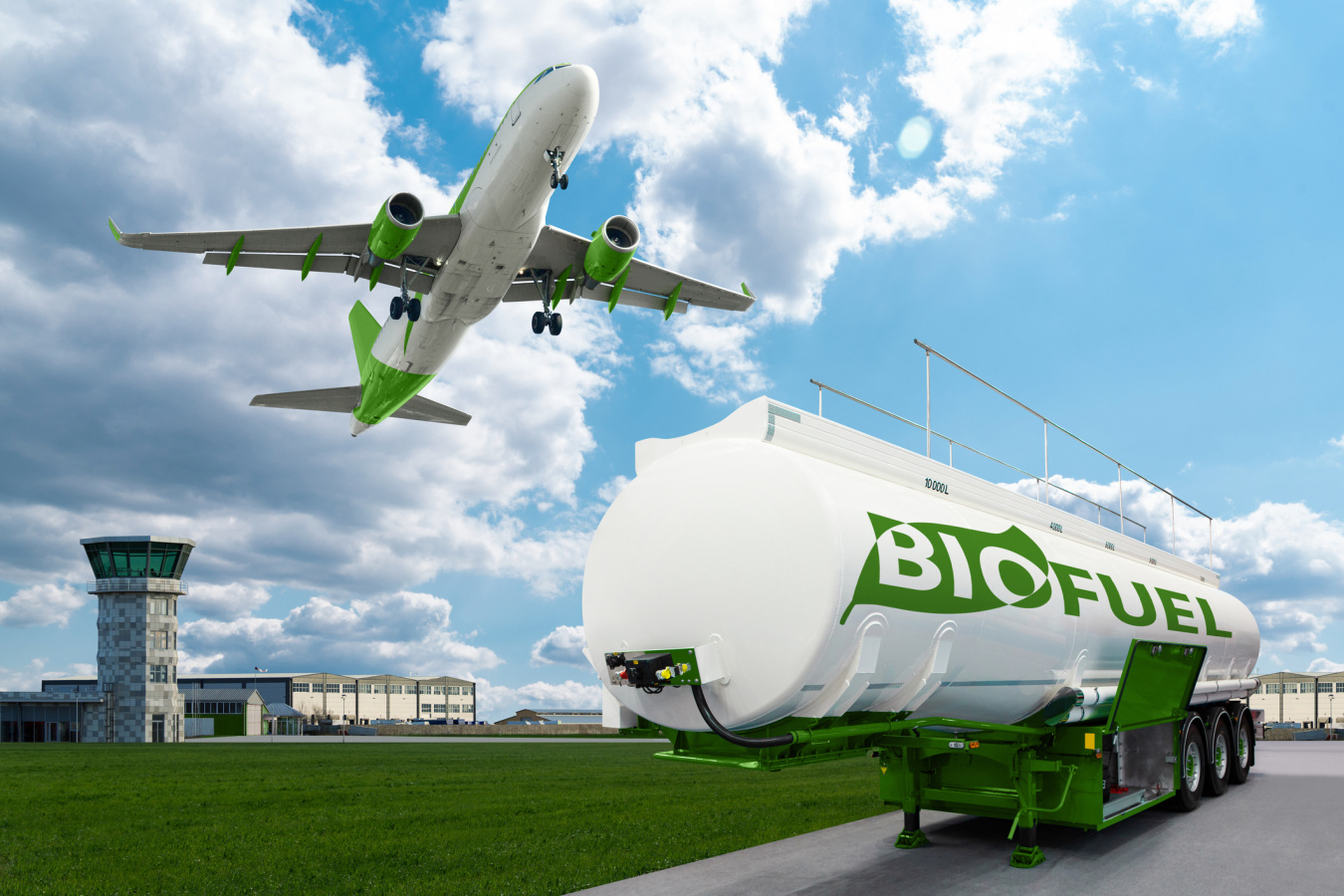
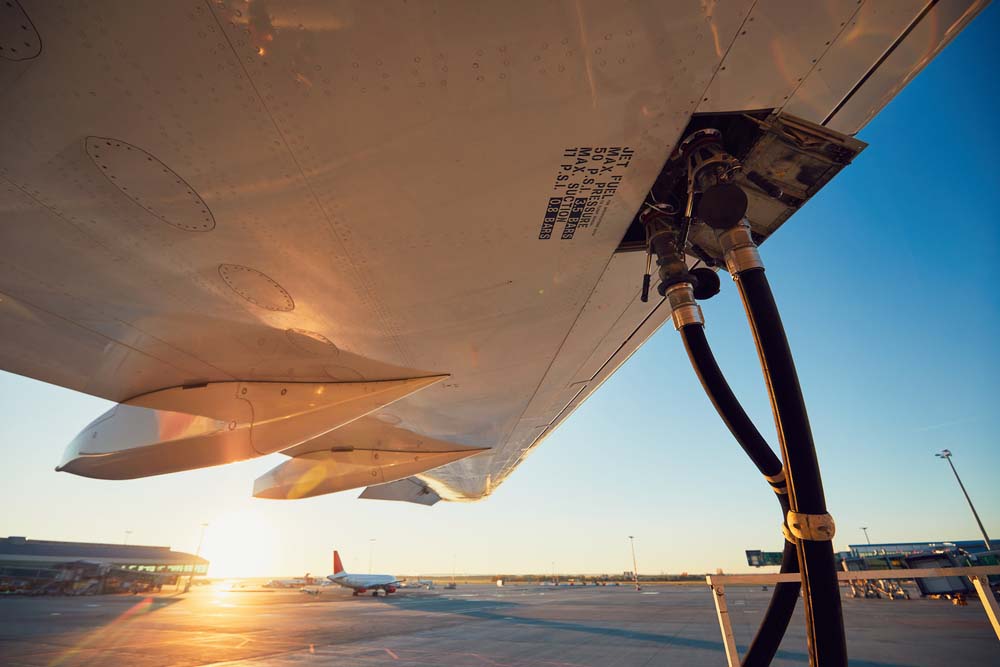
Fuel stored in the wings – what is SAF?
In 2024, global production of SAF (Sustainable Aviation Fuel) barely exceeded 1 Mt. Sounds modest? Indeed. But by 2026, it is expected to reach 2.4 Mt, and more importantly, starting in 2025, the ReFuelEU Aviation mandate will be in effect in the European Union: 2% SAF in every flight. This is the first time that legislation requires the use of this fuel on such a scale.
SAF is a so-called drop-in fuel. It may sound like a technical term, but it’s actually simple: you mix it with regular Jet A-1 (even in a 50:50 ratio) and pour it into the aircraft. No engine modifications, no new airport infrastructure. It just works.
Why is this accelerating right now
Because a specific deadline and penalty have been introduced. ReFuelEU Aviation requires 2% SAF from January 2025, then 6% in 2030, and as much as 70% in 2050 (including 35% e-SAF, meaning synthetic fuel from CO₂).
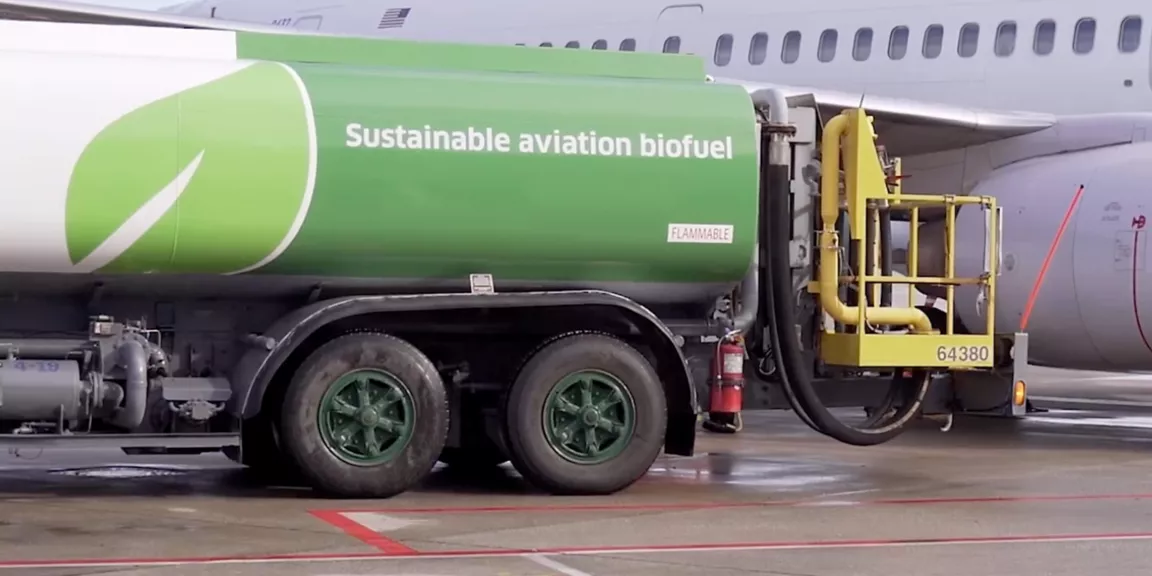
Climate impact? SAF from biomass or waste reduces emissions by 70-80% over its entire life cycle. E-SAF can achieve over 90%. Later in the article, we’ll see how this works technically and what these mandates are changing in the market.
How does SAF work?
SAF is a “drop-in fuel,” meaning fuel you can pour directly into the tank of a modern aircraft. You don’t need to modify the engine, airport infrastructure, or systems. The key lies in ASTM D7566 and D1655 standards, which define 11 approved production pathways. Typically, you blend SAF with traditional Jet A1 at up to 50% (some pathways allow only 10%).
Here are the main paths and what they entail:
| Path | Raw materials | Blend‑limit | Emission reduction |
|---|---|---|---|
| HEFA‑SPK | Vegetable oils, animal fats, UCO | 50% | 70-84% |
| FT‑SPK | MSW, agricultural/forestry residues | 50% | 70-90% |
| ATJ‑SPK | Sugars, alcohols | 50% | 70-85% |
| SIP/HFS | Sugars, residues | 10% | ~70% |
| PtL (e‑SAF) | CO₂ + H₂ from RES | 50% | >90% |
Neste specializes in HEFA (used cooking oil is their specialty), World Energy launched the first commercial SAF production in 2016 (Paramount, CA), and LanzaJet is focusing on ATJ.
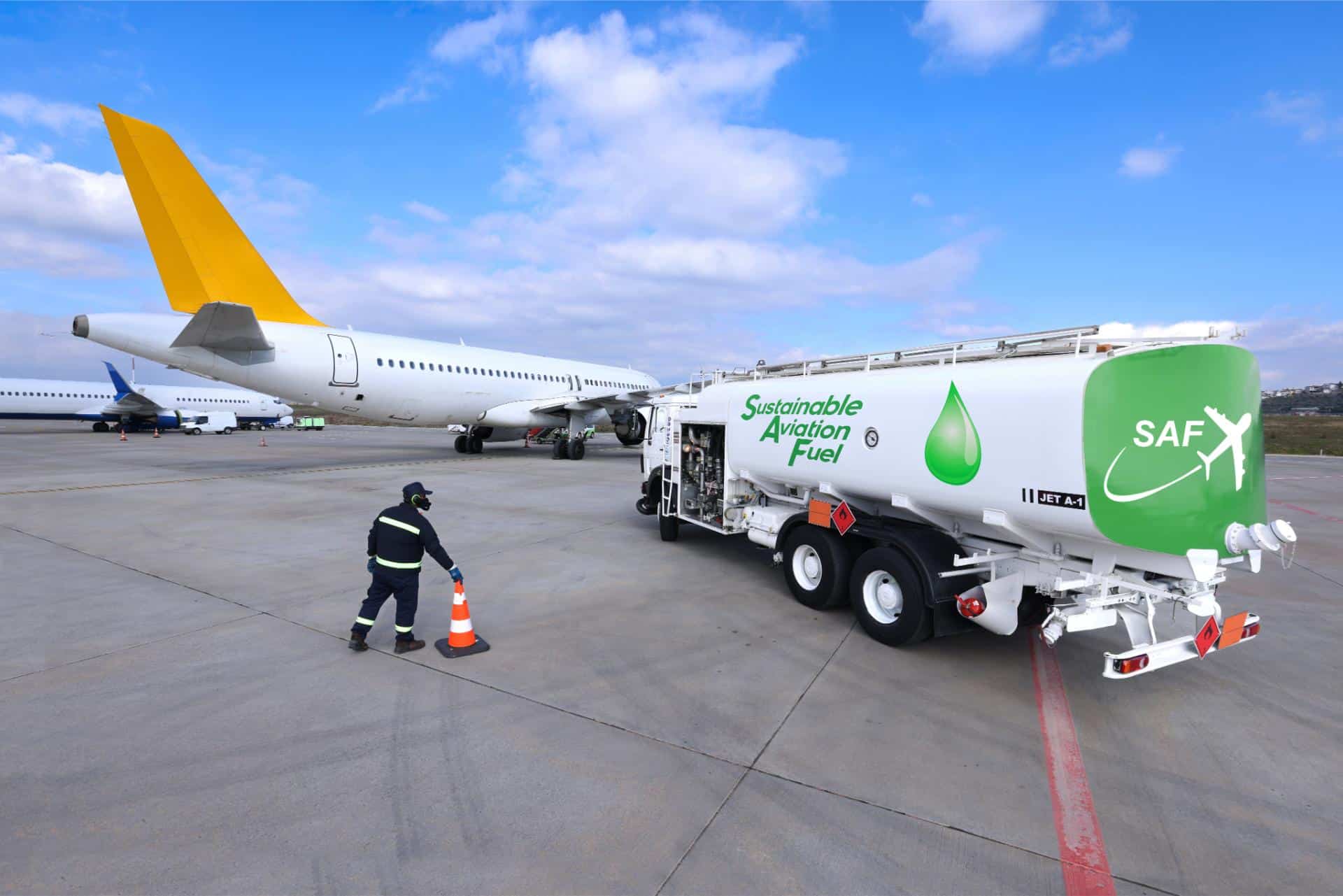
Quality parameters and compatibility
SAF must meet the same requirements as Jet A1. The most important are: flash point ≥38°C, freezing point ≤−47°C, energy 42.8 MJ/kg, density 775-840 kg/m³, and sulfur content <0.3%. Thanks to this, the pilot does not notice any difference, and airport logistics operate without changes.
The next section will show how regulations and the market drive (or hinder) the implementation of these technologies in Europe.
Regulations and market
Regulations are actually the main driving force behind the entire SAF market, because without mandates the aviation industry would approach the more expensive fuel cautiously. The EU and USA are creating concrete frameworks that enforce increased supply and real demand.
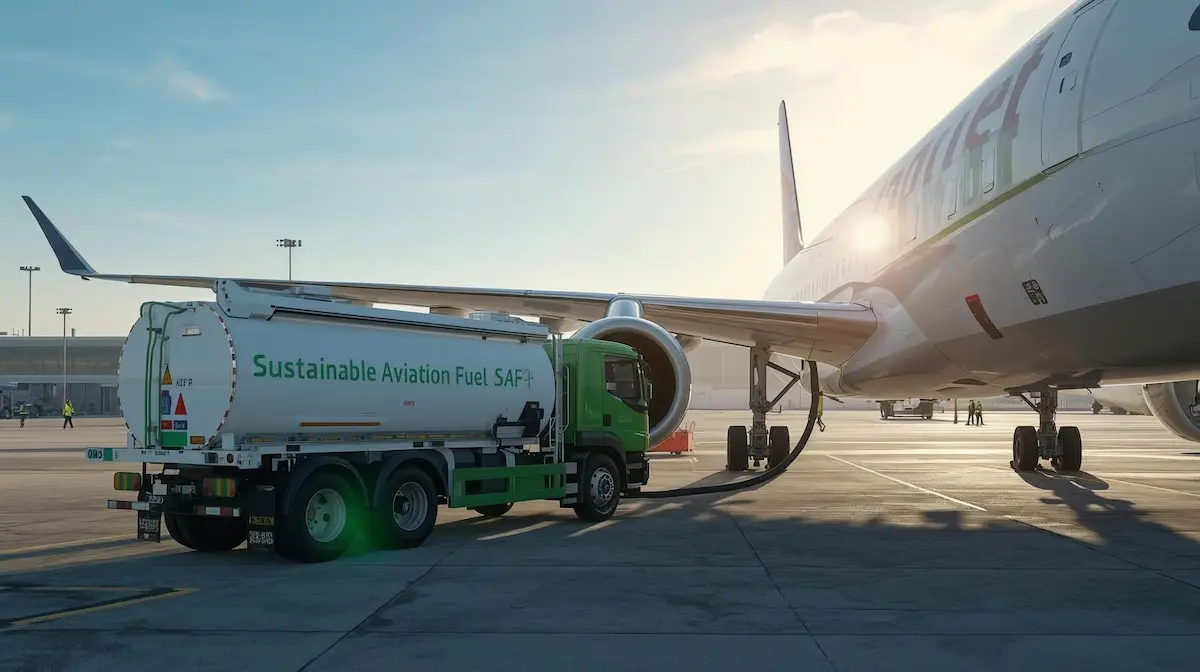
Mandates and objectives: EU, UK, and USA
ReFuelEU Aviation is the European foundation: starting in 2025, a 2% SAF blend will be mandatory at EU airports, with a target of 70% by 2050 (including 35% e‑SAF). This sounds ambitious, especially considering that in 2024 the share was only 0.53%.
| Region | 2025 | Goal 2030/2040/2050 |
|---|---|---|
| EU | 2% | 6% (2030) / 70% (2050) |
| UK | 2% | 10% (2030) / 22% (2040) |
| USA | ~1% | 3 billion gal (2030) / 35 billion gal (2050) |
Market
Estimates indicate global production at the level of 1.9-2.4 Mt in 2025, corresponding to a market value of around 2-3.7 billion USD. By 2030, the market is expected to grow to 25-26 billion dollars. The main limitations remain HEFA feedstocks (mainly waste oils) and the pace of plant construction.
Conclusion from cruising altitude
Sustainable aviation fuels are not some distant vision of the future, but a reality that is unfolding right now. Admittedly, they still need refinement in terms of cost and production scale, but the technology works, and the pressure to decarbonize aviation is only increasing. The question is no longer “if,” but “how fast.”
I see in this something reminiscent of the early days of renewable energy: first expensive and niche, later a standard solution. SAF is following the same path, only with greater urgency, because the aviation industry doesn’t have time for slow experimentation.
One thing is certain: a flight on a plane powered by fuel made from kitchen waste is no longer just a curiosity. It is becoming the new normal at ten thousand meters above the ground.
Jacky
Premium Journalist
