





You’re browsing your favorite online boutique, you click on the bags section – and suddenly you see two models side by side, both with the signature padlock closure, both in the same shade of powdery beige. One costs 8,000 PLN, the other 1,500 PLN. Both have the “Chloé” logo. What’s actually going on?
What is the difference between Chloé and See by Chloé, and why are they so often confused?
Chloé is a Parisian fashion house with over seventy years of experience, known for its boho-chic and feminine, relaxed silhouettes. See by Chloé is the younger diffusion line—more affordable, more casual, yet still designed by the same brand. These are not two competing companies, but rather two “faces” of one maison. The shared DNA—the same romantic references, openwork details, pastel palettes—means that at first glance, they can look very similar.
The problem is that today “accessible luxury” is everywhere. In Poland, both lines appear in multi-brand online stores, perfumeries, and on vinted platforms. Social media is flooded with styling sessions under the hashtag #bohochic—and the algorithm doesn’t distinguish whether the blogger is wearing original Chloé or See by. That’s why the confusion is growing: what am I really buying? Is the more affordable line a well-hidden bargain, or a compromise in quality?
In the following sections, we’ll show how both brands have evolved, where the concrete differences in price and craftsmanship lie—and how to consciously choose the line that truly suits you.
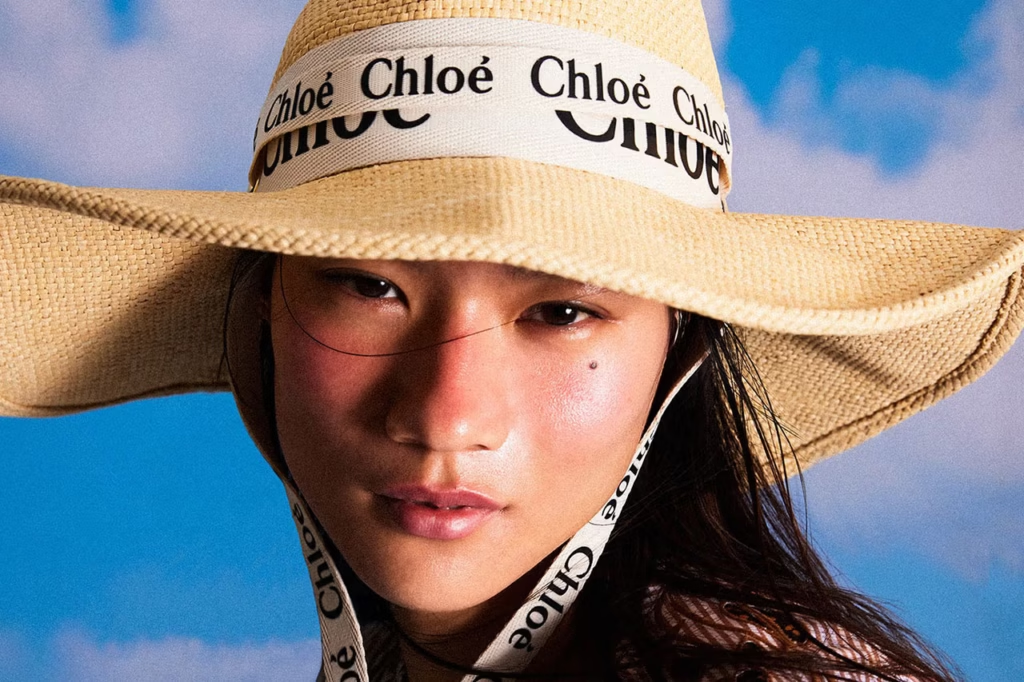
History and development of both lines – from a café in Paris to Gen Z
To truly understand what sets Chloé apart from See by Chloé, you have to go back to the 1950s—to a Parisian café where it all began. The story explains more than all the branding descriptions combined.
From Café de Flore to Richemont: the birth of Chloé
In 1952, Gaby Aghion decided it was time for a change. She founded Chloé as the first fashion house to offer luxury prêt-à-porter —an alternative to made-to-measure haute couture. The first show was organized in 1953 at Café de Flore, which was already a statement: fashion should be lighter, more accessible, and more… free-spirited. Over the years, Chloé was led by great names—Gerard Pipart, then Karl Lagerfeld, who popularized romantic, girlish collections. In 1985, the brand was acquired by the Richemont group, and later directed by Stella McCartney, Phoebe Philo, and Natacha Ramsay-Levi. Each brought her own touch, but always with a commitment to sustainability and ecology.
Start of See by Chloé and the road to Generation Z
See by Chloé was born in 2001—during Stella McCartney’s era—as a response to the need for “accessible luxury.” The younger customer wanted the spirit of Chloé, but at a lower price. The campaign featuring Chloë Sevigny gave the line a streetwear, boho character. Today, under the eye of Chemena Kamali, Chloé emphasizes sustainability and collaborates with LE SSERAFIM to reach Gen Z. See by Chloé is also evolving—it has become more casual, easier to wear every day, but still remains under the Richemont umbrella.
SEO, client, and style: luxury vs accessible luxury
Luxury doesn’t always mean the same thing – and that’s exactly what Chloé and See by Chloé are about. They share the same name, they both love boho, but when you see them on a hanger (or in someone’s closet), you immediately sense the difference.
Who is Chloé for, and who is See by Chloé for?
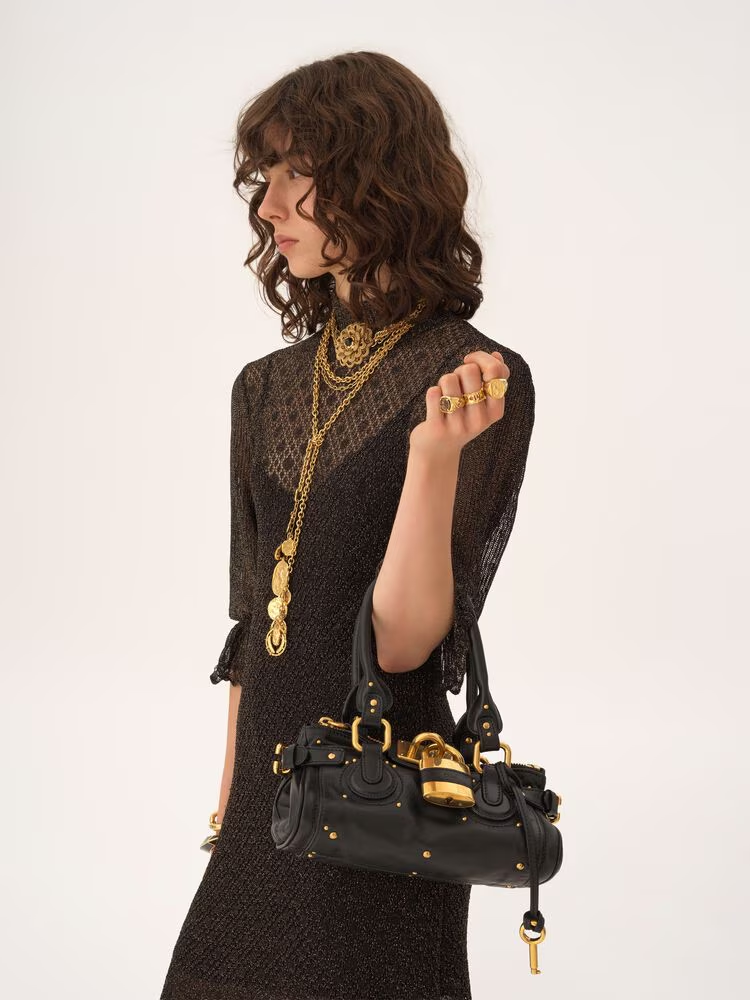
The main Chloé line is high fashion in its purest form. Romantic, timeless dresses, investment bags that you keep for years and wear on special occasions—weddings, galas, red carpets, those moments when you want to look truly stunning. This is boho-chic in a “quiet luxury” version: delicate draping, natural colors, no loudness, but maximum prestige. The client? Often 35+, quality-conscious, looking for “investment pieces”.
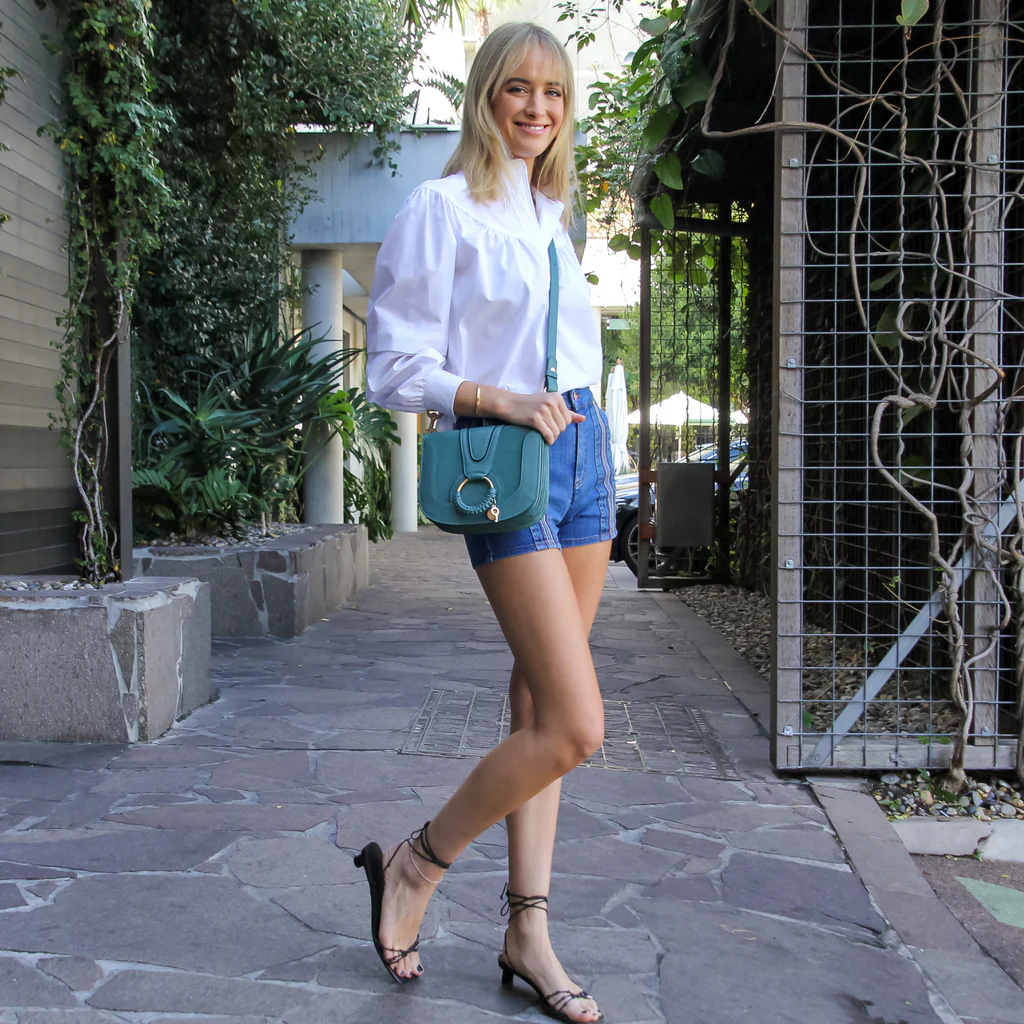
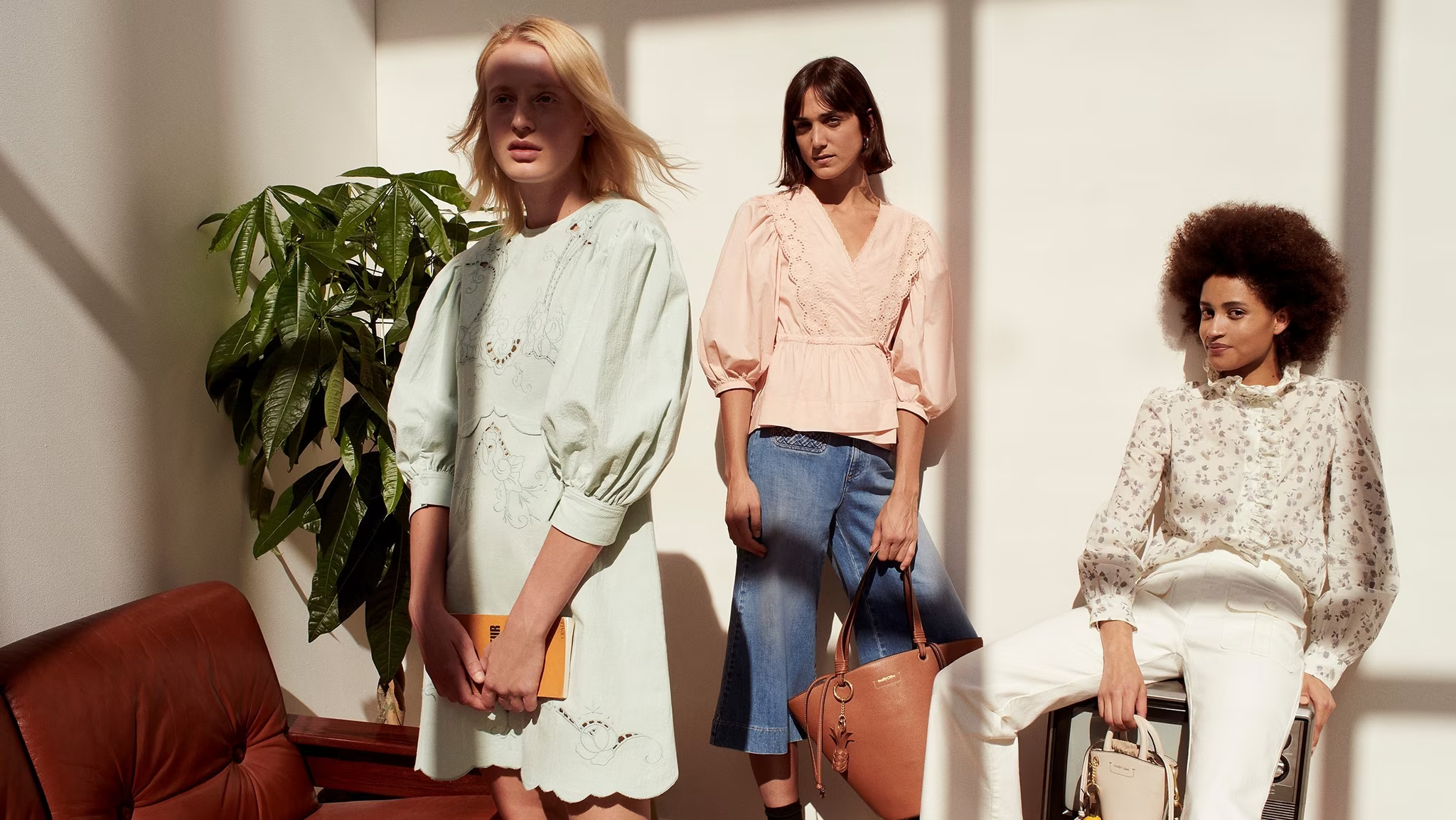
See by Chloé speaks to a different person. Younger (20-35 years old), she needs something cool for everyday life – office, university, a weekend coffee outing. Here, boho meets streetwear, there’s a relaxed vibe, there’s “accessible luxury,” but you can still sense a touch of originality. This is a “young contemporary” line, where you can build a capsule wardrobe without taking out a mortgage.
| Chloé | See by Chloé | |
|---|---|---|
| SEO | Premium luxury, high fashion | Accessible luxury, young contemporary |
| Client | 35+, looking for investment | 20-35, looking for everyday life with an edge |
| Deals | Weddings, galas, important meetings | Work, studies, casual weekends |
| Style | Boho-chic, romantic, timeless | Everyday boho, casual, with a touch of streetwear |
For some people, Chloé represents “real” luxury and a status symbol, while See by is seen as “the cheaper Chloé, but still cool.” It’s also sometimes perceived as a tier between high street and couture: too good for Zara, too ordinary for haute couture. These differences in positioning are then reflected in the materials and quality of craftsmanship.
Quality, materials, and production: what’s behind the label
Do you really see a difference in quality when you place a Chloé bag next to a See by Chloé one? Yes — and not just in the price. The biggest differences are hidden in places you don’t notice at first glance: under the label, in the seams, and in how long the product will last you.
Premium materials at Chloé versus everyday fabrics at See by
The main Chloé line focuses on silk, cashmere, and leathers from Italian tanneries—the same ones that supply houses like Hermès and Bottega. Finishes are partly done by hand, which means more time (and cost) for each piece. See by Chloé, on the other hand, uses organic cotton, viscose, and premium synthetics—still decent quality, but designed for mass production. Vegan leather replaces natural leather, and simple topstitching eliminates the need for hand-finishing.
| Aspect | Chloé | See by Chloé |
|---|---|---|
| Materials | Silk, cashmere, Italian leathers | Organic cotton, viscose, premium synthetics |
| Share of manual labor | ~80% of products | ~40% of elements |
| Production locations | France, Italy (ateliers) | Portugal, Turkey (factories) |
| Sustainability | 70% sustainable materials (SS2026) | 60% organic cotton, but 30% plastic (2024) |
Greenwashing or real change?
Chloé is speaking out more and more about sustainability, but Richemont—the brand’s owner—faces accusations of greenwashing. In 2024, See by still contained 30% plastics, despite promises of eco-friendliness. Here, differences in concept directly affect what you get—and how long it will last.
Prices, product categories, and availability in Poland
The first thought with both of these brands is always: “Alright, but how much does it actually cost?” After all, the difference in name should translate into a price range somewhere, right?
How much does Chloé luxury cost, and how much does See by Chloé cost
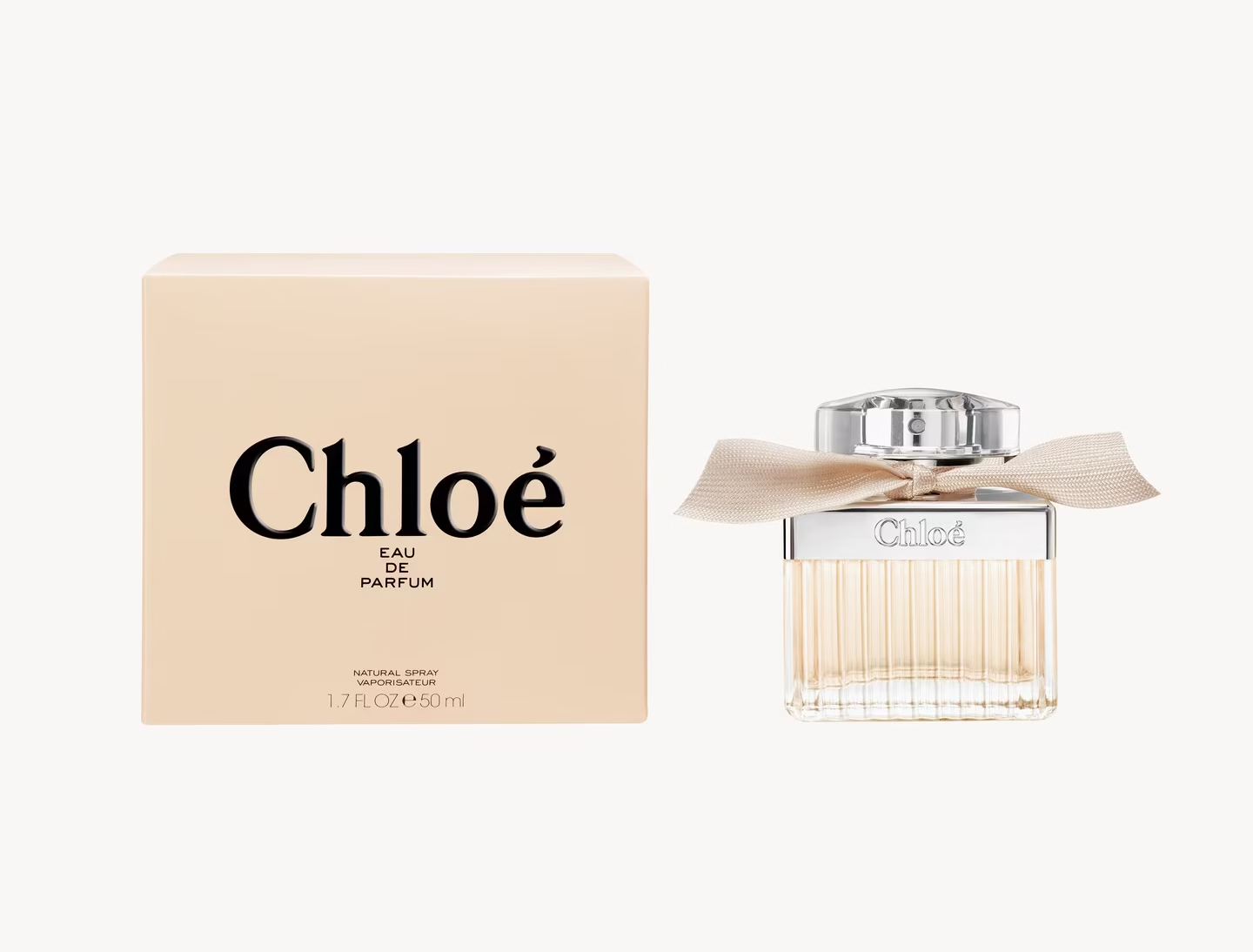
The main Chloé line is true high-end. Clothing starts at several thousand PLN, iconic handbags — like Drew or Marcie — often exceed the 10,000 PLN mark, and individual pieces from the collection can reach tens of thousands. And of course, perfume: the flagship Chloé Eau de Parfum (50 ml) costs around 400–500 PLN in Poland. This is a segment where purchases are made consciously and infrequently.
See by Chloé? Lower, but still far from high street brands. Clothing ranges from several hundred to several thousand PLN, while bags are most often priced between 1,500 and 4,000 PLN. In practice, we’re talking about “accessible luxury”—a lowered entry threshold, not mass production. Important note: See by Chloé does not have its own fragrances —all perfumes bearing the Chloé logo belong to the main line.
| Category | Chloé | See by Chloé |
|---|---|---|
| Clothes | from ~3,000 PLN | from ~600 PLN |
| Handbags | 10,000–50,000+ PLN | 1,500–4,000 PLN |
| Perfume | 400-500 PLN (50 ml) | – |
| Footwear | from ~2,500 PLN | from ~1,200 PLN |
An increasing share of shopping is moving to e-commerce—especially See by Chloé is gaining a reach there that would be difficult to achieve in physical boutiques.
How to choose between Chloé and See by Chloé in practice
Simple test: which line are you closer to
Before you reach for your wallet, it’s worth answering a few simple questions. First: how often do you wear high-end pieces? If that iconic handbag is going to sit in your closet “for special occasions,” maybe it’s better to choose See by Chloé, which you’ll use every day. Second: in what situations do you need luxury — for the office, for going out, or maybe for daily wear? And finally: what is your budget comfort level, and do you prefer one big investment for years, or several smaller ones that are easier to swap out after a season?
The main Chloé line is usually an investment purchase — especially icons like the Nomad or Faye, which hold their value and serve you for years. On the other hand, See by Chloé is the “working” part of your wardrobe: you wear it every day, you don’t worry about every scratch, and after a few seasons you can refresh your collection with something new without any guilt.
How to smartly combine Chloé and See by Chloé in one wardrobe
Interesting how opinions on both lines are strongly divided. Clients who have been buying Chloé for years see See by as something “lower”—a younger sister, cool, but not the same. On the other hand, younger customers treat See by as cool and more affordable Chloé, the perfect entry into the world of luxury. The question is: which approach is closer to you, and what are you really looking for—prestige, practicality, or maybe a balance between the two?
A reasonable compromise can be an investment in one item from the main line—a coat or a bag that you’ll wear for years—and building your everyday outfits around See by Chloé. This way, everything stays consistent with your values (ecology, minimalism, status), and your wallet doesn’t suffer too much. It’s worth making decisions with the thought of how both brands might evolve—and more on that in a moment.
Which direction are these brands heading, and what does it mean for us
When you buy Chloé or See by Chloé, you’re choosing not just a handbag —you’re also choosing the direction in which the brand will evolve in the coming years. Chloé, as a pillar of premium luxury within the Richemont group, will remain synonymous with classic elegance and craftsmanship, with an increasing focus on production transparency. See by Chloé is a way to reach a younger, digital-savvy clientele—and that’s where the most is happening right now.
Trends that will define the future of both lines
Richemont is already investing in digitalization: NFT collections, virtual showrooms, collaborations with TikTok and K-pop stars (remember the campaign with LE SSERAFIM?). See by Chloé is becoming a testing ground for these experiments—which is great news for us, as it means more limited editions, interactive launches, and more accessible prices during online pre-orders. Sustainability? Both brands are increasing their share of certified materials, but See by Chloé is going further—with repair programs, resale policies, and even plans to introduce rental options. Growth forecasts indicate a potential +20% increase in See by Chloé sales in the EU thanks to Gen Z, so it’s possible that in a few years this line will become even more independent—just as other diffusion brands have done.
Think long-term: classic pieces from Chloé are an investment, trends from See by Chloé are conscious experiments.
Xenia
Luxury Reporter
Fashion & Lifestyle
