




More and more people are wondering whether it’s worth investing in a cask of young whisky—not just for the prestige, but also as an alternative way to allocate capital. But what exactly does the term “young whisky in a cask” mean, and what do you actually become the owner of when you decide to make such a purchase?
Young whisky in a barrel – what are you actually buying
What is young whisky in a barrel
When talking about “young whisky in a cask,” you are dealing with an alcoholic distillate – the so-called new make spirit – which is placed in an oak cask (most often ex-bourbon or ex-sherry) and typically matures for up to 3 years. During this period, the spirit is stored in a bonded warehouse, where the right conditions allow for a natural interaction between the alcohol and the wood. Importantly, by law, the name “whisky” can only be used after a minimum of three years of maturation in an oak cask and reaching at least 40% ABV. By purchasing a young cask, you are entering the maturation process at an early stage – gaining control over the final flavor profile, but also taking on some risk.
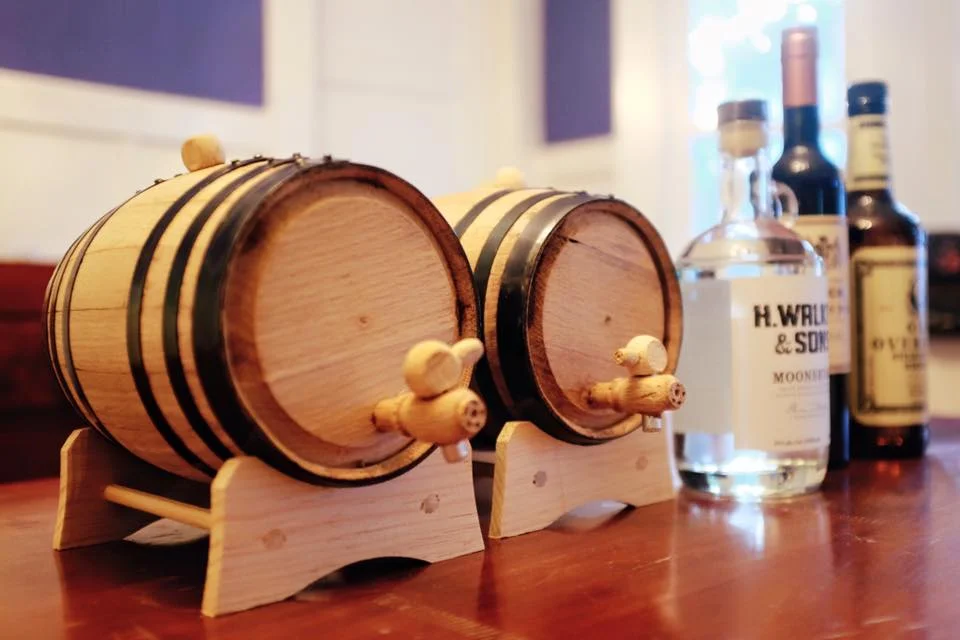
The main purchase motivations include:
- Personalized maturation – the option to continue finishing at your own pace,
- Prestige – your own label and a unique beverage for exclusive occasions,
- Alternative investment – potential value appreciation over the years,
- Private label – selling cylinders under your own brand.
Globally, the market is dominated by Scotland, although Ireland and USA are gaining importance. In Poland, it is still a small niche, but it is rapidly attracting enthusiasts and investors looking for alternatives to traditional assets.
How much does it cost and what kind of return can a cask of young whisky provide?
A cask of young whisky is like a mortgage: it requires an initial investment of several thousand zlotys, increases in value over the years, and a well-chosen purchase can yield a return of several percent annually. Let’s look at the specific numbers.
The cost of entering a cask of young whisky
A full cask of fresh distillate from a Scottish distillery usually costs 1,000-5,000 EUR, depending on the distillery’s reputation, the type of cask (hogshead, barrel, butt), and its capacity. On the Polish market, importers and brokers offer similar casks in the range of 8,000-20,000 PLN. For example: a 200-liter hogshead from the niche island of Islay costs around 12,000 PLN, while a cheaper Highland barrel can be purchased for 9,000 PLN.
Real profits, angel’s share, and main risks
The average annual return on whisky casks was 12.4% in the years 2015-2025—higher than collectible wine (approx. 8-10%) or gold (approx. 5-7%). After 12 years, a 10,000 PLN investment can grow to 35,000-40,000 PLN, especially if the distillery gains popularity.
“Angel’s share” – evaporation through oak staves – absorbs about 2% of the volume annually. A 225-liter hogshead after ten years will shrink to ~180 liters, meaning instead of 300 bottles you’ll fill about 240. You lose quantity, but you gain intensity of flavor and the prestige of a matured spirit.
Key risks:
- Price fluctuations: a drop of about 30% during the 2008/2009 crisis, a correction of -15% in 2022.
- Distillery reputation: closure or scandal can devalue a cask by half
- Liquidity: finding a buyer takes months; rare casks are harder to sell quickly
The following chapters will show you, step by step, how to buy a barrel, avoid pitfalls, and secure the transaction.
How to safely buy young whisky in a cask step by step
The decision to purchase a barrel is only half the battle—the other half is doing it safely and legally. Without verified channels, formal proof of ownership, and awareness of potential pitfalls, you risk not only your capital but also losing access to the product.
Where can you actually buy a cask of young whisky
Polish investors can take advantage of several options:
- Directly at the distilleries – some Scottish and Irish distilleries sell casks to private customers; this usually requires direct contact or a visit.
- Specialized brokerage platforms – Cask Trade, WhiskyInvestDirect, or Mark Littler handle online transactions, assist with selection, and provide documentation; most accept clients from Europe.
- Auction houses – Bonhams, Sotheby’s sell premium casks, but prices can be higher and are intended for connoisseurs.
Customs warehouse, excise duty, and transaction security
The barrel should remain in the customs warehouse (bonded warehouse) in the country of production – this way, you don’t pay excise duty until bottling or sale. Check:
- Certificate of ownership with barrel number, distillery, vintage, and barrel type.
- Warehouse data access – legal installations publish reports and allow inspections.
In Poland, the excise duty is 0 PLN as long as the alcohol does not leave the customs warehouse. After bottling in the country, the rate is 119 PLN per liter of 100% alcohol – which is why most investors bottle abroad or sell the entire cask.
Common scams: lack of access to the warehouse, promises of guaranteed profits, unclear legal status (“whisky washing”). Safety rules: verify the cask number, request a certificate, check the seller’s reputation on industry forums. If something sounds too good to be true, it usually is a scam.
What’s next for your barrel – exit strategies and trends through 2030
The decision to sell or bottle the cask should be made even before purchase—this is a key element of your investment strategy. After several years of maturation, you have a few exit scenarios to choose from, and their effectiveness will depend on market trends and technological changes in the coming decade.
Main exit scenarios for barrel investment
When the whisky reaches its intended maturity, you can choose one of four paths:
- Sale of the barrel to a broker or another investor – the simplest solution, minimal paperwork, quick return of capital
- Bottling at the distillery – on-site bottling in Scotland or Ireland, you receive a finished product with the distillery’s label
- Private label in Poland – importing whisky and bottling under your own brand, higher costs, but complete control over branding
- Further maturation – decision to extend from 10 to 15 years in hopes of increasing value (expect approximately 2% annual angel’s share)
Remember that the cooler climate of Poland slows down maturation – a barrel stored by the Vistula will develop its flavor profile more slowly than in the Scottish Highlands.
Trends until 2030 – what could increase the value of your whisky
The cask whisky market is growing rapidly: forecasts predict an increase of around 200% to approximately £3 billion by 2030. Poland is experiencing even faster growth – the estimated rise in interest reaches about 50%.
Observe these key phenomena:
- NFT casks and digital certificates – blockchain enables ownership tokenization and trading of barrel fractions
- Investment funds specializing in whisky – professional cask portfolio management
- AI for flavor prediction – algorithms predicting the organoleptic profile and the optimal bottling time
- Sustainability – the growing importance of oak origin, barrel recycling, and carbon footprint
Before making a purchase, align your exit strategy with your time horizon and capital—the market rewards a thoughtful, long-term approach.
Alex
editorial investments
Luxury Reporter
