




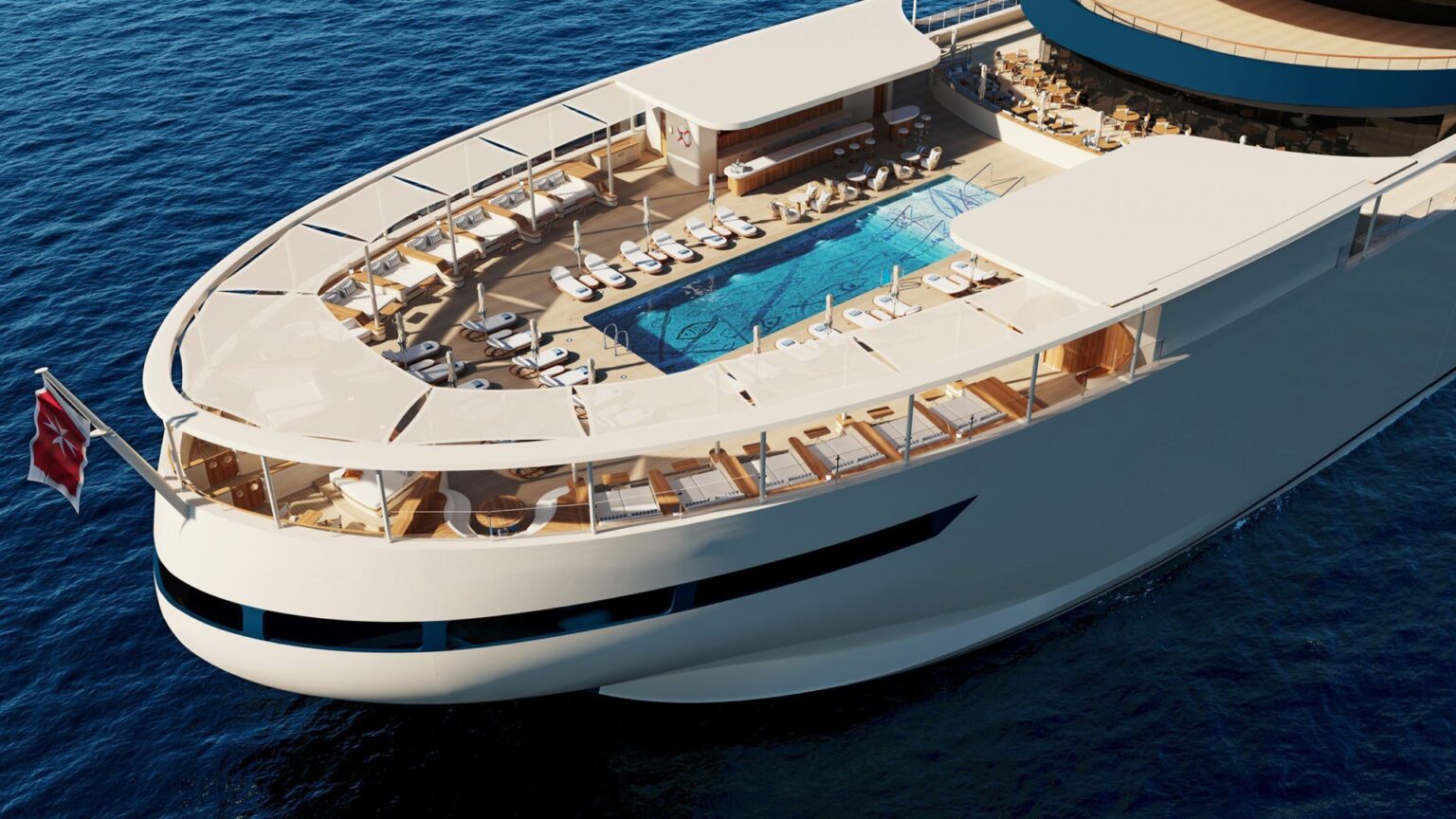
Four Seasons is entering the luxury cruise market with a product that has little in common with a classic cruise. Four Seasons I is a 207-meter yacht featuring 95 suites designed more like private residences than cabins. Each suite offers an ocean view and a private terrace, and some suites can be connected to create larger spaces for families or groups of friends. The brand emphasizes intimacy: the yacht accommodates around 190 guests, with a crew-to-guest ratio of approximately 1:1.
It is the apartments that are one of the strongest features of the project. Instead of a typical cruise ship cabin, Four Seasons offers a space with large windows, natural materials, and a terrace that is essentially an extension of the living room. The experience is meant to feel more like staying in a luxury apartment with constantly changing views than a traditional cruise.
The most spectacular is the Funnel Suite, spanning four levels and offering approximately 930 m² of space. The apartment features three bedrooms, a private pool, a fitness area, a kitchen, guest reception areas, and panoramic glazing. In this case, the term “apartment” is actually a convention. It is essentially a private residence placed within the structure of the yacht.
Luxury has its price
For the November The Lanserhof Reset cruise, taking place from November 8 to 16, 2026, prices start at around $18,000 per suite. The most exclusive categories are several times more expensive, with the top suites on this cruise reaching approximately $239,000.
In return, guests receive not only accommodation. Four Seasons I features 11 restaurants, bars, and dining venues, a spa, a fitness center, and a marina that allows direct access to the water from the deck. The yacht has been designed to visit smaller ports and bays that are inaccessible to the largest cruise ships.
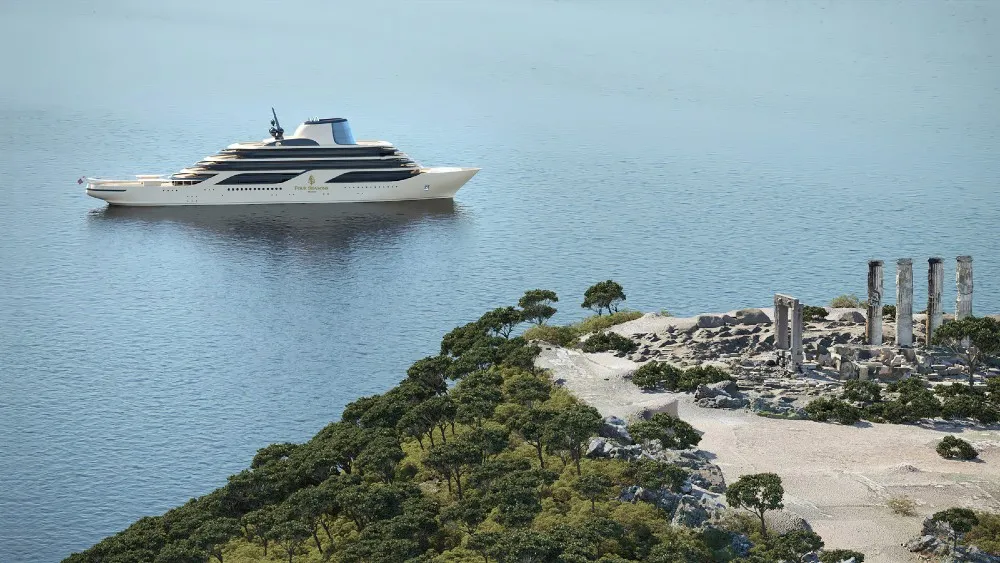
This is an important distinction. Four Seasons does not try to compete with large cruises in terms of the number of attractions or passengers. It primarily offers space, privacy, and service at the level of a luxury hotel, combined with the mobility of a yacht.
Eight days on the ocean and a longevity program
The most intriguing test of this concept will be the November transatlantic voyage from Europe to the Caribbean. Four Seasons I will combine it with The Lanserhof Reset program, prepared in collaboration with the Austrian Lanserhof group, specializing in medical wellness and longevity.
The program includes consultations, personalized nutrition and activity recommendations, breathing sessions, regenerative treatments, and wellness classes. The individual program costs an additional $5,000 per person.
This is an interesting direction for the luxury travel market. Onboard wellness is no longer limited to just massages and the gym. It increasingly includes diagnostics, regeneration, diet, sleep, and longevity programs. Four Seasons uses eight days at sea as a natural environment to create something akin to a floating health retreat.
A new category between a hotel and a superyacht?
Four Seasons is not the first brand to bring hotel luxury to the sea. Similar projects are also being developed by Ritz-Carlton, Aman, and Orient Express. The difference is that Four Seasons is very consistent in building its product around its own DNA: privacy, space, and service.
Is Four Seasons I really a yacht? At 207 meters long and with around 190 guests, it’s hard to compare it directly to a private superyacht. It’s more like something between a luxury ship and a large yacht, but this very hybrid form may be its greatest advantage.
For a client who does not want to buy their own yacht, hire a crew, or deal with its maintenance, Four Seasons offers a much simpler model: book a suite, step on board, and spend a few days living in a private space, while not only the view but the entire address changes outside the window.
This is probably the most interesting thing about this project. Four Seasons isn’t just selling a cruise. It’s selling the idea of a hotel with no fixed address. For the ultra-luxury segment, where it’s increasingly difficult to offer something truly new, it’s a simple concept, but exceptionally well executed.
