




Krakow, May 27, 2026 – This year’s edition of the Michelin Guide in Poland has brought one of the most significant changes in the history of this ranking’s presence on the Vistula. For the first time, inspectors evaluated restaurants across the entire country, not just in the largest culinary hubs. What do the Michelin stars for 2026 in Poland look like?
The result is a clear expansion of the map of distinctions. That is why there is a greater representation of smaller cities. This confirms that Polish gastronomy is increasingly present in the European fine dining scene.
Highest honors – two Michelin stars
In the 2026 Michelin edition in Poland, only one restaurant retained its two-star status:
Bottiglieria 1881 (Kraków)
It is still the only venue in the country with such a distinction, which in itself highlights how high and selective the standard is in this category.
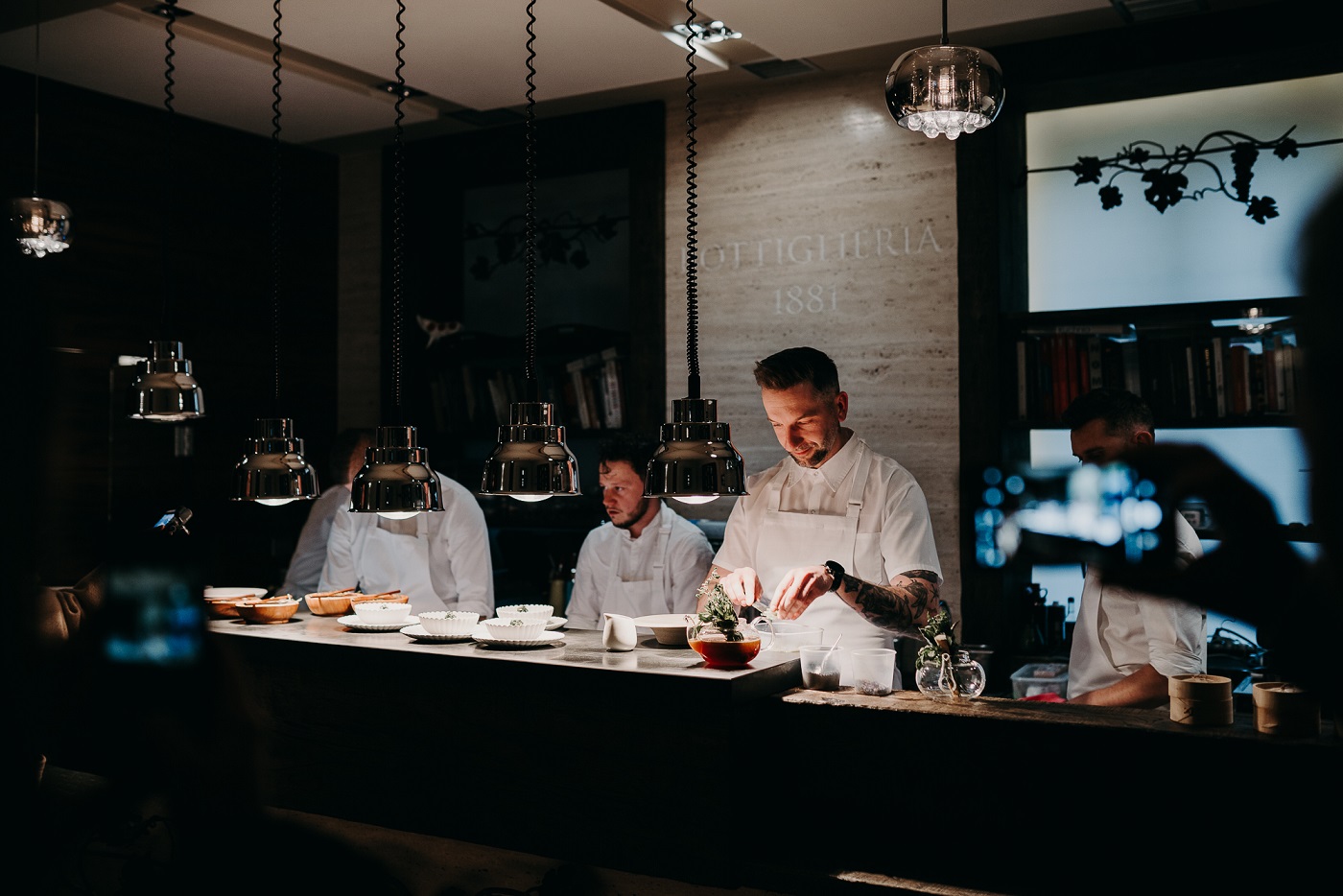
According to the guide’s standards, two stars signify “excellent cuisine, worth a detour.” In practice, Bottiglieria 1881 maintains this position thanks to:
- to a highly precise tasting menu,
- consistent work with high-quality products,
- consistency of experience between inspector visits,
- to a refined, signature culinary style that combines technique and flavor.
One Michelin star – established leaders and new names
In 2026, Poland has a total of 10 restaurants with one Michelin star. This segment best reflects the market’s dynamics. That’s why it features both established leaders and new, rapidly growing concepts.
Restaurants retaining one star:
- NUTA (Warsaw)
- Rozbrat 20 (Warsaw)
- hub.praga (Warsaw)
- Muga (Poznań)
- ARCO by Paco Pérez (Gdańsk)
- Giewont (Kościelisko)
Warsaw remains the most concentrated fine dining hub in the country, yet at the same time, the strong presence of Poznań, the Tri-City, and tourist regions is also evident.
New Michelin Stars 2026:
The biggest change in this year’s edition is the addition of four new restaurants to the guide with one star:
- BABA (Wrocław)
- MOST (Wrocław)
- Alon Omakase (Warsaw)
- STEAMPUNK (Pszczyna)

That is why it is particularly important that:
- Wrocław is becoming one of the key new spots on Poland’s culinary map,
- Pszczyna appears in the Michelin ranking for the first time,
- the omakase kitchen segment and original formats with high technical precision are developing.
Bib Gourmand – the growing power of “good cuisine at a reasonable price”
One of the most important elements of the guide remains the Bib Gourmand category, which highlights restaurants offering very good quality at a moderate price.
In 2026 in Poland:
- 38 restaurants have received the Bib Gourmand distinction,
- this category has become one of the main drivers of recognition for local restaurants,
- an increase in the number of places outside the largest cities is noticeable.
Bib Gourmand is increasingly serving as a “first step” into the world of Michelin – although it is not an automatic path to stars, it significantly increases a restaurant’s visibility.
Green Michelin Star – sustainable gastronomy
In the 2026 edition, restaurants were also recognized for their ecological approach and responsible kitchen management.
The Green Michelin Star was awarded to the Eliksir restaurant (Gdańsk).
This distinction is awarded to places that:
- reduce food waste,
- they work with local and seasonal products,
- they implement the principles of sustainable gastronomy.
A broader view of the Michelin 2026 edition in Poland
This year’s selection highlights several clear trends:
First of all, Polish gastronomy is expanding beyond traditional centers. In addition to Warsaw, Krakow, and Gdansk, new locations are emerging that were not featured in the guide just a few years ago.
Secondly, the importance of signature cuisine and thematic concepts—such as omakase or modern tasting restaurants—is growing.
Thirdly, maintaining Michelin stars remains just as challenging as earning them. Consistent quality is crucial, as inspectors regularly assess the restaurant’s standards.
Michelin 2026 in Poland – major changes
Michelin 2026 in Poland is a breakthrough edition not because of individual awards, but because of the scale of change. The full inclusion of the country in the selection has made the map of distinctions more diverse. As a result, Polish gastronomy has gained a noticeably broader representation.
At the same time, it remains clear that the hierarchy is still highly concentrated: one restaurant with two stars, a small group with one star, and a growing Bib Gourmand segment create a structure that still demands consistency and long-term quality from Polish restaurants.
