




For years, the world of luxury watches was defined by caution. Changes were slow, designs conservative, and experimentation was more symbolic than revolutionary. This makes it all the more surprising what two completely different brands—Rolex and Louis Vuitton—are showcasing in 2026. Both are embracing color, emotion, and forms that until recently would have been unthinkable in this industry. The new watches from Rolex and LV boldly break the rules and set new trends!
Rolex Oyster Perpetual 36 Jubilee Dial – a classic that suddenly stops being calm
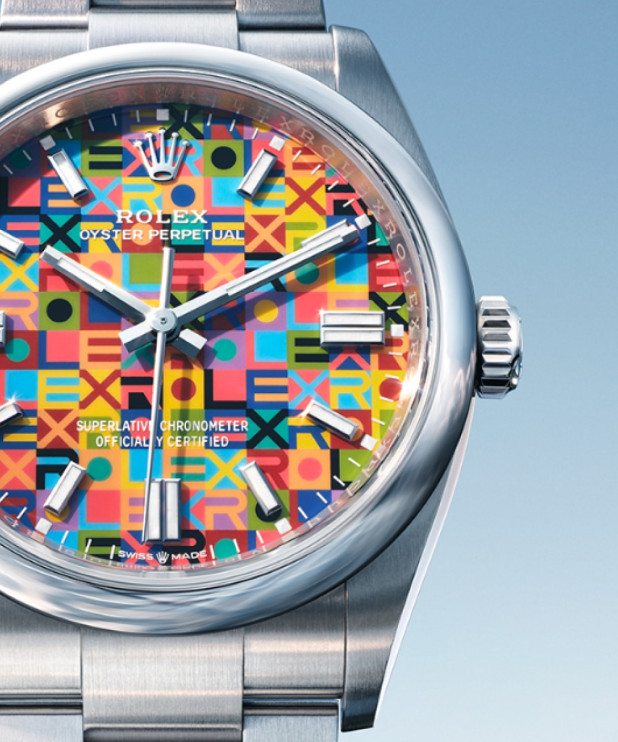
The new Rolex Oyster Perpetual 36 Jubilee Dial is a watch that, at first glance, breaks its own rules. Instead of the brand’s typical restraint, we get a dial full of color, featuring the repeated inscription “ROLEX.” The inspiration goes back to designs from the 1970s and 1980s, but the end result is far more vibrant than anything the brand has showcased in recent decades.
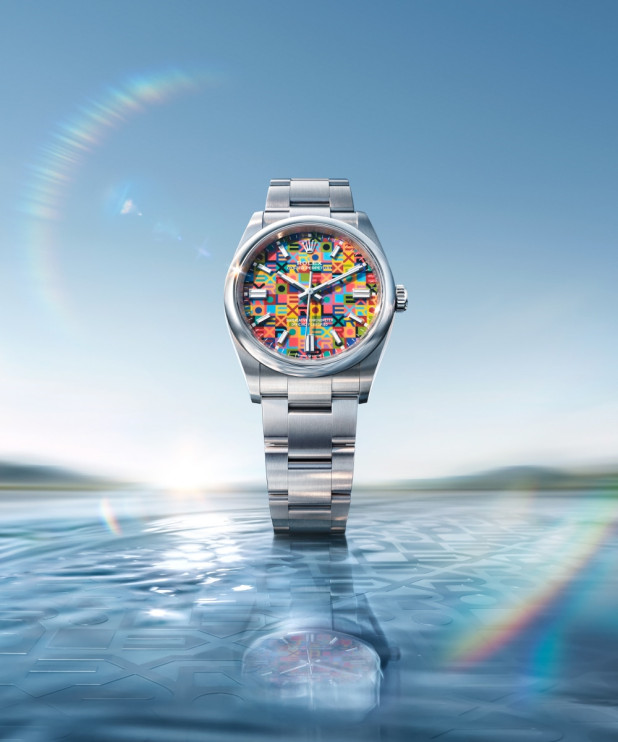
However, beneath this visual change, there is no technical revolution. Inside beats the proven Rolex Caliber 3230 movement, an automatic mechanism without a date display, offering around 70 hours of power reserve and high precision. It’s a classic Rolex on the inside, but a completely different narrative on the outside.
The 36 mm case remains true to the Oyster Perpetual line, as does the steel bracelet and high water resistance. The difference lies in the fact that everything has been subordinated to the dial, which is no longer just a background but becomes the main protagonist.
The price of the model remains at around $6,750, which formally makes it an “entry-level” Rolex. In practice, however, availability will be limited, and demand will far exceed supply, which has already become the norm for the brand’s more distinctive variants.
Louis Vuitton Tambour Taiko Arty Automata – a watch that doesn’t show the time, but a spectacle
Louis Vuitton Tambour Taiko Arty Automata goes even further. This is a design that essentially ceases to be a classic watch and becomes a mechanical performance activated on demand.
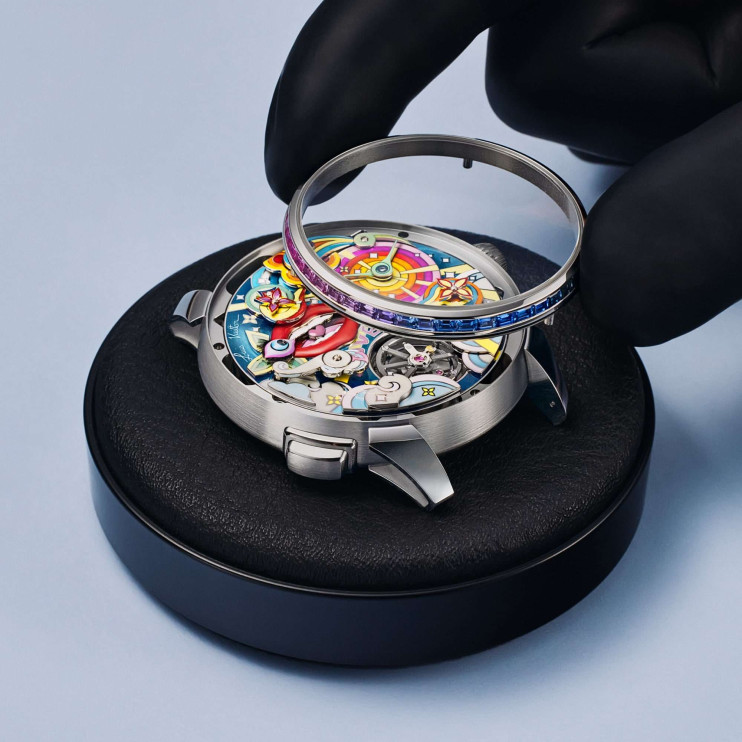
When the button on the envelope is pressed, an animation sequence begins: the dial elements move, the flowers rotate in opposite directions, and the inscriptions change their form. The entire piece has been designed as a miniature theater, where time serves merely as a pretext to showcase movement.
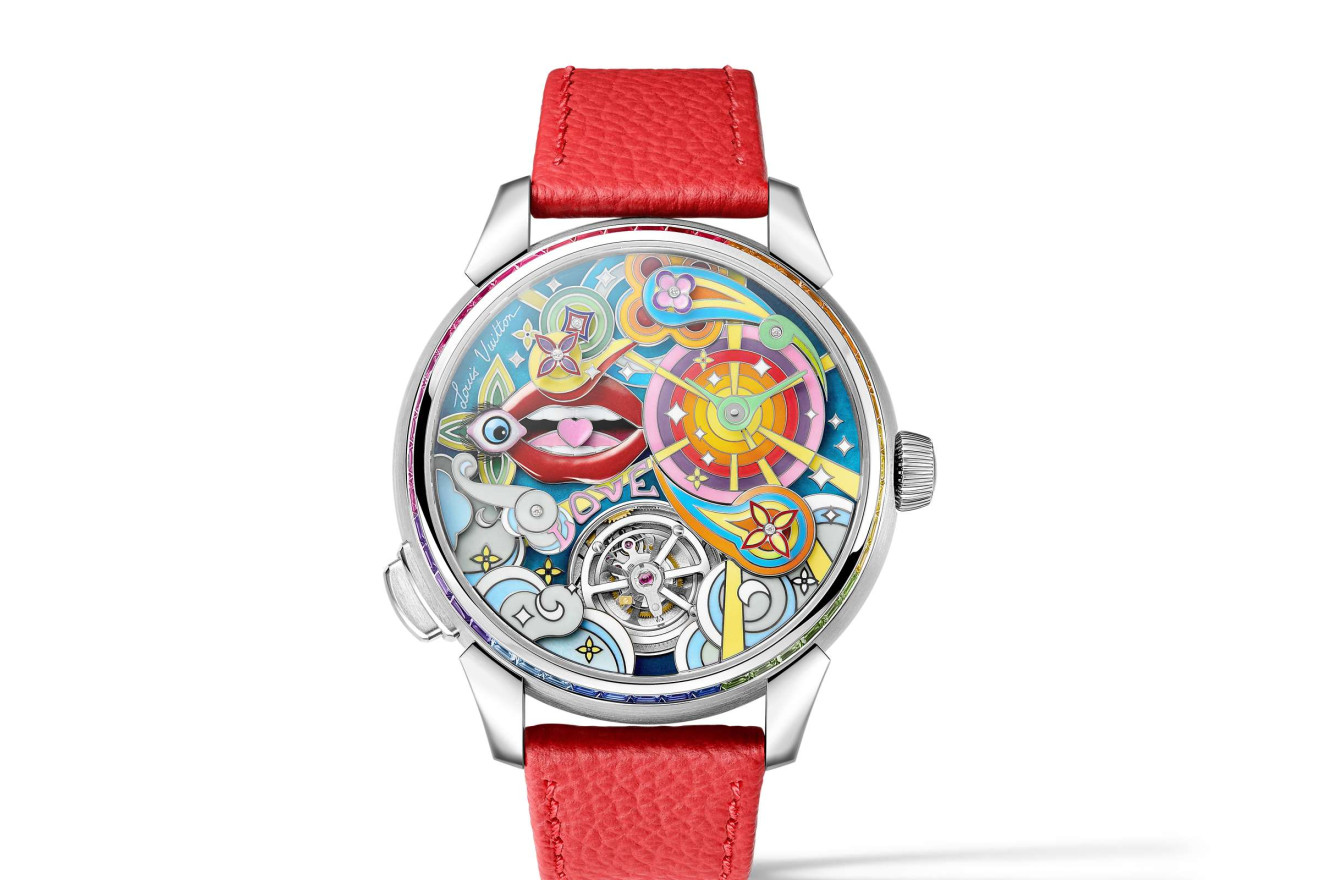
The heart of the construction is the LFT AU05.01 caliber with a flying tourbillon and over 360 components. The mechanism is complex, but its role differs from that in classic watches. It’s not just about precise timekeeping, but about enabling the creation of animations that are purely artistic in nature.
However, the most impressive feature is the dial. It consists of multiple layers, handcrafted using enamel and jewelry-making techniques, and the creation process takes hundreds of hours. Some elements even incorporate natural materials, such as feathers, which brings the design even closer to the world of art than watchmaking.
A price of around 490,000 euros and very limited production mean that this is not a market product in the classic sense. It is a collector’s item, made to order and intended for a very select group of customers.
Why do these watches break the rules
Both models, although they belong to completely different worlds, share one thing: a departure from the traditional understanding of a watch as a tool.
Rolex, a brand associated with discipline and restraint, suddenly allows itself a visual experiment. Color and pattern are no longer just an addition. Instead, they become the main focus of the design. We still have a reliable mechanism and practical character, but the form is no longer safe.
Louis Vuitton goes even further. In this case, the watch loses its primary utilitarian function and becomes a carrier of emotion and movement. The mechanism not only measures time but also “plays” it visually.
Is this a return of the ’90s aesthetic?
In this trend, one can sense an echo of the 1990s, when luxury and design were bolder, less restrained, and often experimental. Today’s creations do not directly copy that aesthetic, but they capture its spirit: greater freedom, courage, and a desire to stand out.
The difference is that contemporary luxury is much more controlled. It’s not chaos, but precisely designed extravagance.
New Rolex and LV watches. Two different responses to the same moment
Rolex shows that even the most conservative brand can embrace color and playful forms without losing its identity. Louis Vuitton, on the other hand, proves that a watch can be treated like a small theatrical stage, where mechanics become a performative art.
Both approaches are different, but they lead to the same conclusion. In 2026, luxury will no longer be quiet. It becomes visible, bold, and increasingly unpredictable.
