




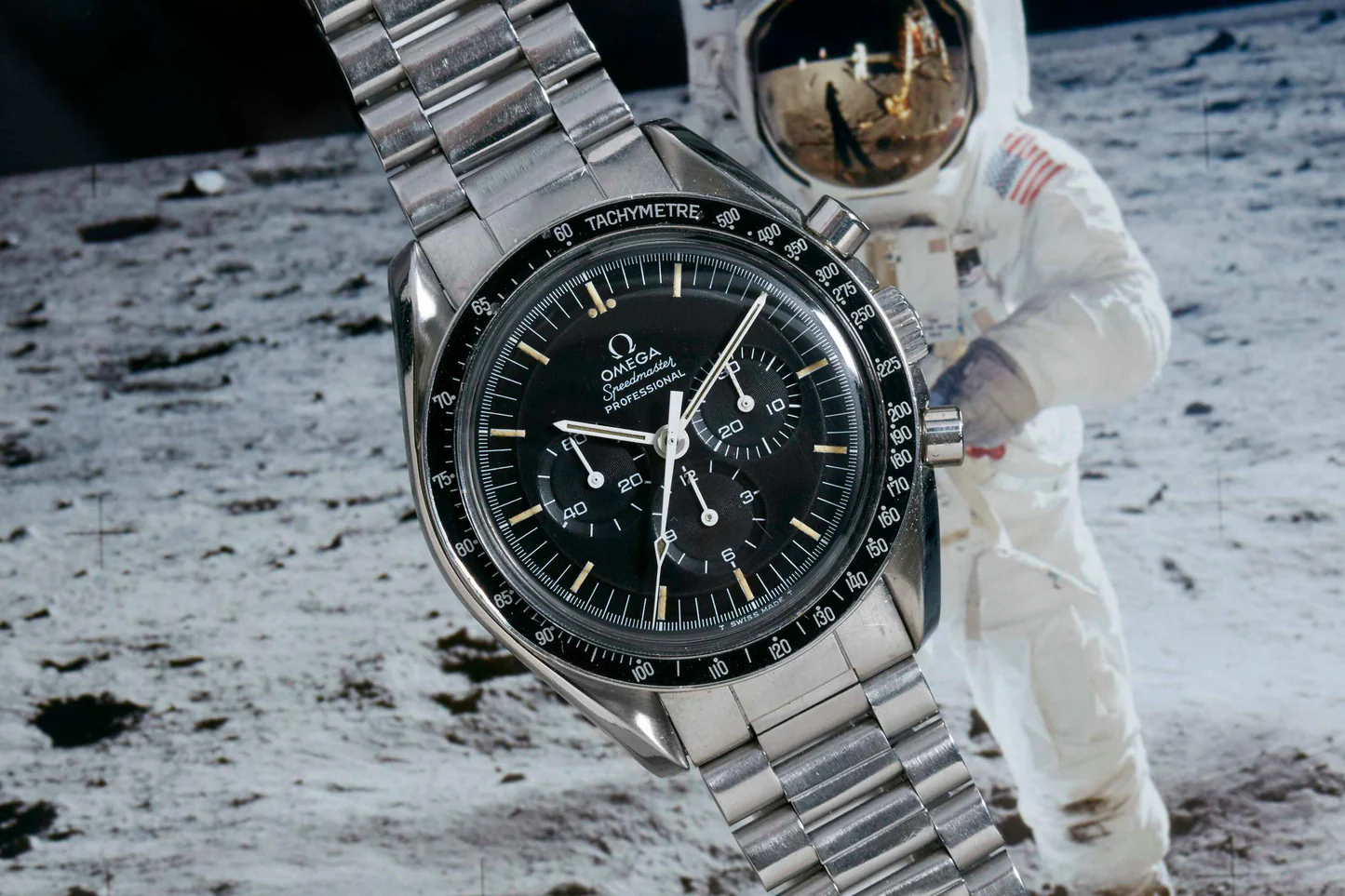
Fifty-first, the first watch on the Moon. It sounds like a marketing slogan, but it’s simply a fact. On July 21, 1969, Neil Armstrong stepped onto the surface of the Moon, and on his wrist—more precisely, on the sleeve of his spacesuit—ticked the Omega Speedmaster. NASA tested several models, but only one survived the trial by fire and received the official badge:
“Flight Qualified for all Manned Space Missions”
Omega Speedmaster Moonwatch
Interestingly, the Speedmaster was not designed with space in mind at all. Omega released it in 1957 as a racing chronograph—hence the name, hence the tachymeter on the bezel. It was meant to measure laps, not the time to the Moon. It wasn’t until a few years later that NASA engineers put it to the test, and it turned out that the “Speedy” performed just as well in a vacuum as it did on the track.
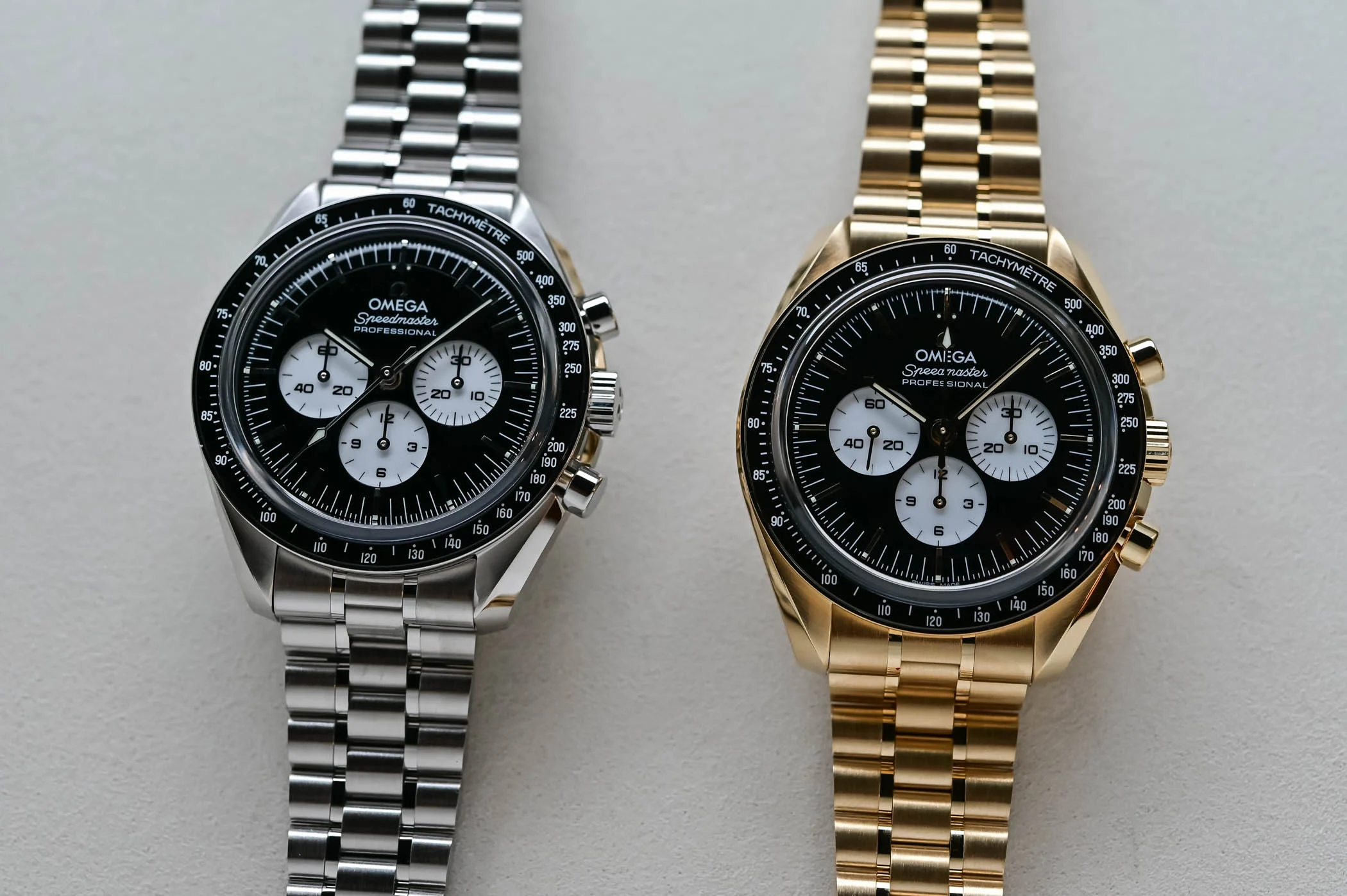
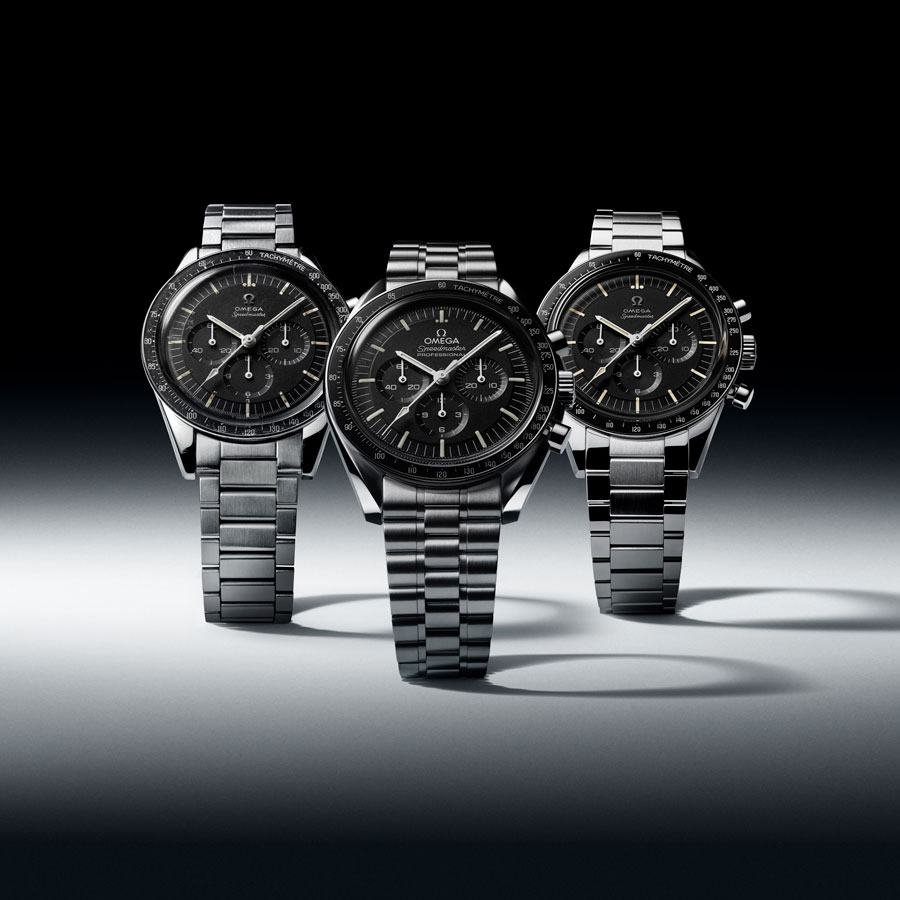
Today, the Moonwatch is still part of the Omega catalog. The latest version, featuring the Master Chronometer 3861 caliber, combines the original DNA (appearance, manual winding) with modern standards of magnetic resistance and precision. This is not an archival exhibit—it’s a living piece of history you can wear on your wrist.
How exactly did this watch make its way from Italian asphalt to the Sea of Tranquility? More on that in a moment.
History and Evolution
Omega released the first Speedmaster in 1957. It was the reference CK 2915 with the caliber 321, a column-wheel chronograph, and a steel bezel with a tachymeter scale. Crystal? Hesalite, and the hands had the distinctive ” broad arrow ” shape. Even then, it was clear that this was more than just another sports watch.
| Year/Ref. | Event |
|---|---|
| 1957 (CK 2915) | Start of production, caliber 321, steel bezel |
| 1959 (CK 2998) | Aluminum black bezel |
| 1962 | Wally Schirra in space (Sigma 7) – the first Speedmaster in orbit |
| 1963-1965 | ST 105.002/003/012: asymmetrical case with crown guards, “Professional” inscription |
| 03/01/1965 | Official NASA qualification |
| 1965 | Ed White – the first spacewalk with ref. 105.003 |
| 1969 | Apollo 11: Buzz Aldrin on the Moon (Armstrong’s watch was left in the LM as a backup) |
| 1968/1969 | Switch to caliber 861, later 1861 (ref. 145.022) |
| 1970 | Apollo 13 – countdown to the critical maneuver (~14 s), Silver Snoopy Award |
| 2021+ | Caliber 3861 Master Chronometer, return of details: “dot over 90”, “step dial” |
The transition from 321 to 861 was controversial at the time, but today both calibers have their fans. And the modern 3861? It’s essentially a return to history, only now with METAS certification.
What can the Moonwatch really do?
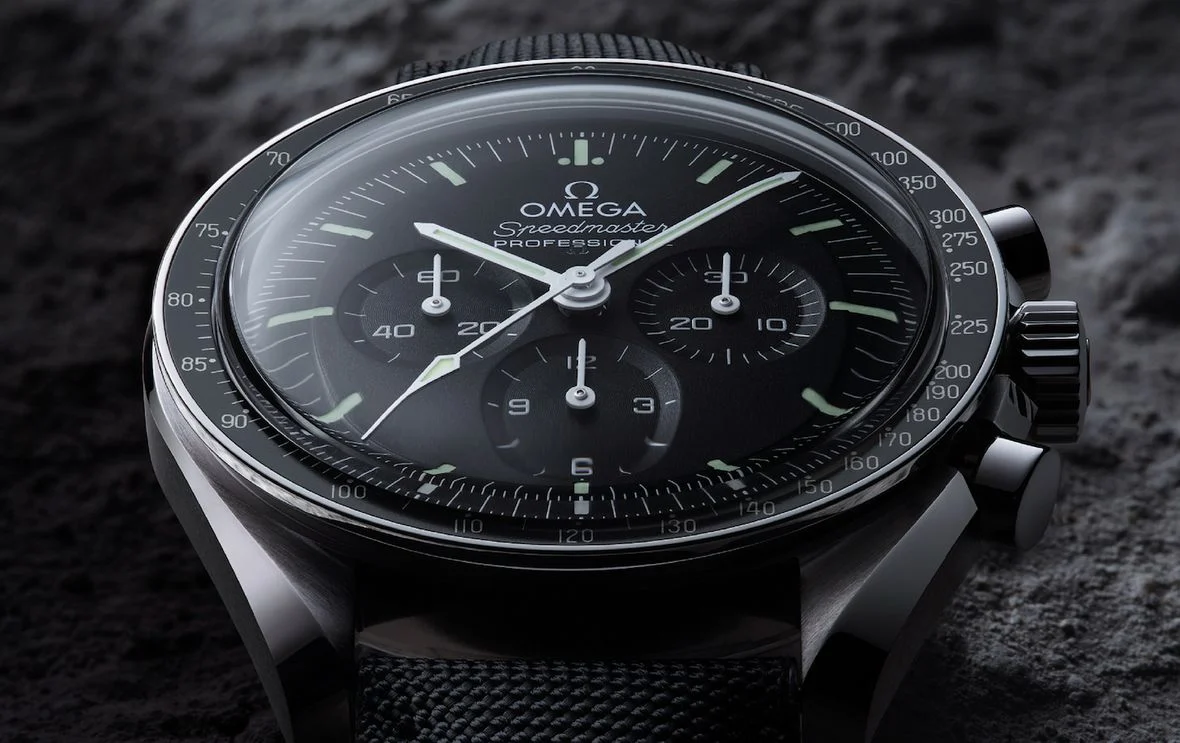
Moonwatch Professional was created as a tool, not an ornament. The 42 mm construction is a compromise between legibility and ergonomics. The asymmetrical case (about 13.5 mm thick, 20 mm between the lugs) protects the movement from shocks on the left side, while the Hesalite or sapphire crystal won’t shatter at the first impact. The black step dial with three subdials, tachymeter bezel with “DON” detail, 50 m water resistance, and no date to keep things simple. This is equipment designed to perform.
Calibers that have survived
| Caliber | Technology | Frequency | Special features |
|---|---|---|---|
| 321 | column wheel, manual winding | 18,000 vph | original Moonwatch movement |
| 861/1861 | cams | 21,600 vph | production from the 60s/90s |
| 3861 | Co-Axial, silicon Si14 | 21,600 vph | 50 h power reserve, 15,000 gauss, METAS |
Caliber 3861 is more than just an upgrade. Magnetic resistance of 15,000 gauss and the Master Chronometer certification mean that the modern Speedmaster actually surpasses what went to the Moon.
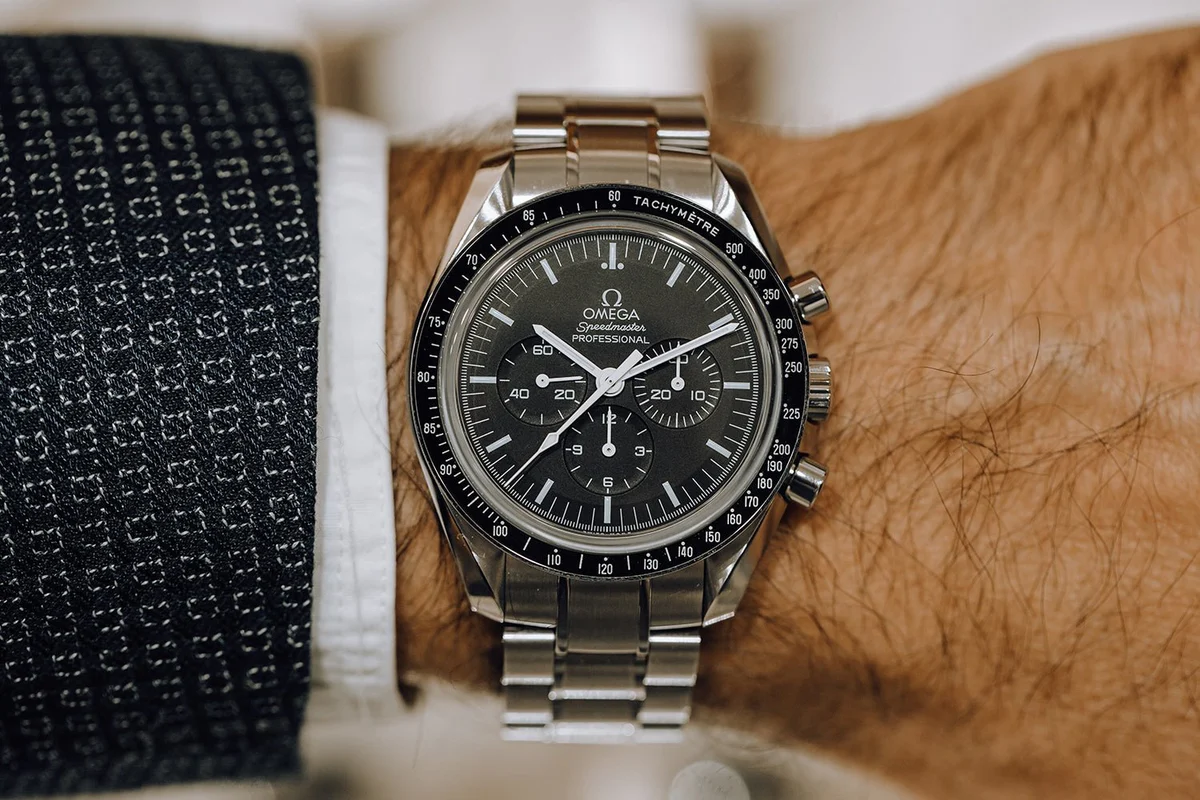
NASA tests, trial by fire (and vacuum)
In 1964-1965, NASA took several watches and put them through hell. Temperatures up to 93°C, then down to −18°C, vacuum, pressure, humidity. Shocks of 40 g (six times), accelerations up to 7.25 g, vibrations, noise that tears your ears apart. The Speedmaster was the only one that survived everything and received official approval for EVA. This is not a marketing legend, it’s a test protocol.
A legend that still measures courage
Speedmaster has outlasted the fashion for smartwatches, successive trends in watchmaking, and countless attempts at dethronement by newer models. It is still chosen by astronauts, fighter pilots, and people who need a timepiece they can rely on when there’s no room for error. This isn’t sentimentality—it’s practicality.
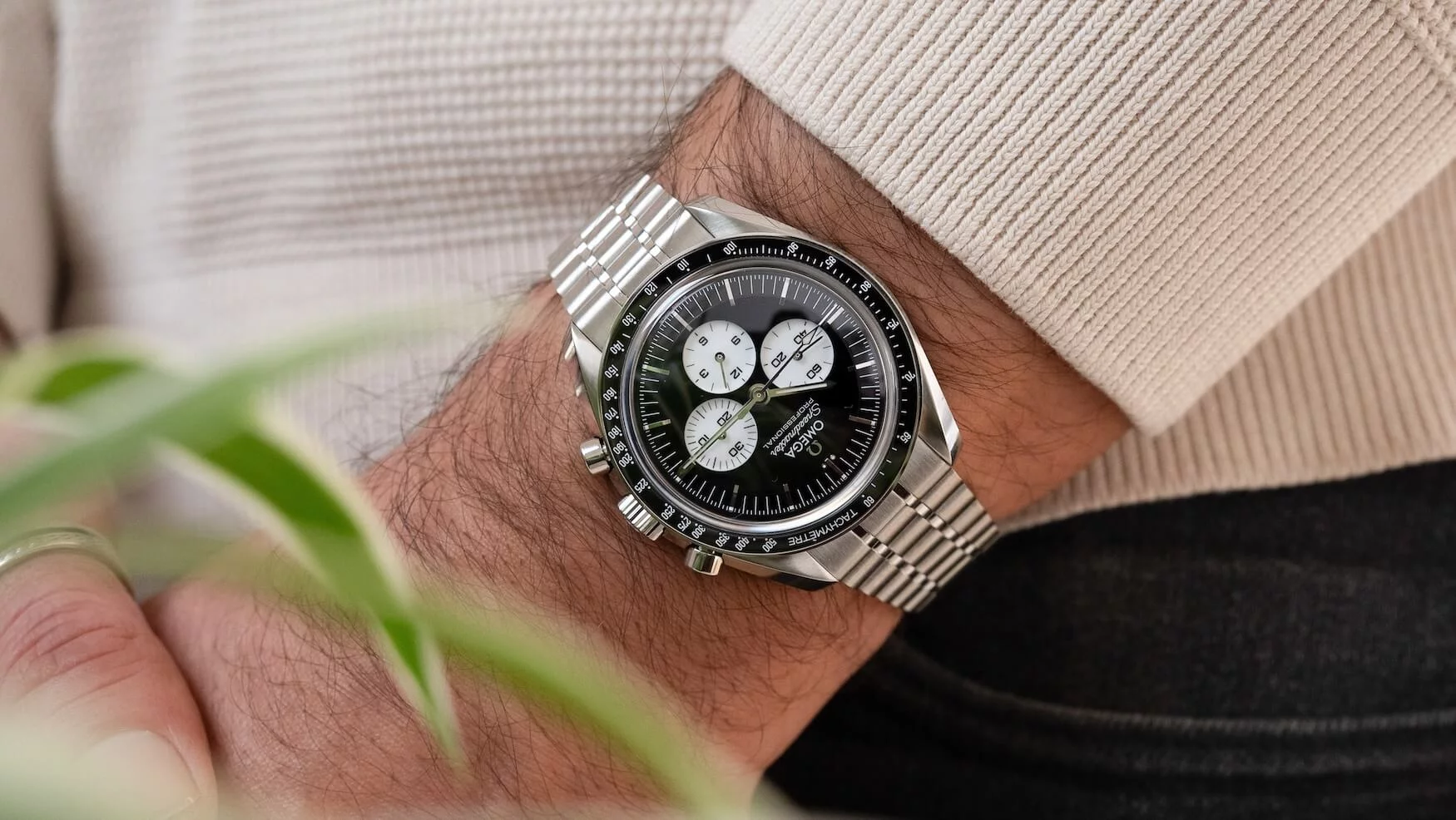
Because, after all, a legend is not just a story. It’s an object that works just as well today as it did when Neil Armstrong looked at it in a place where no smartwatch would survive even the first minute. And that’s exactly why the Moonwatch remains what it has always been: a watch for people who measure more than just hours.
Lucyy
Luxury Reporter editorial team
