




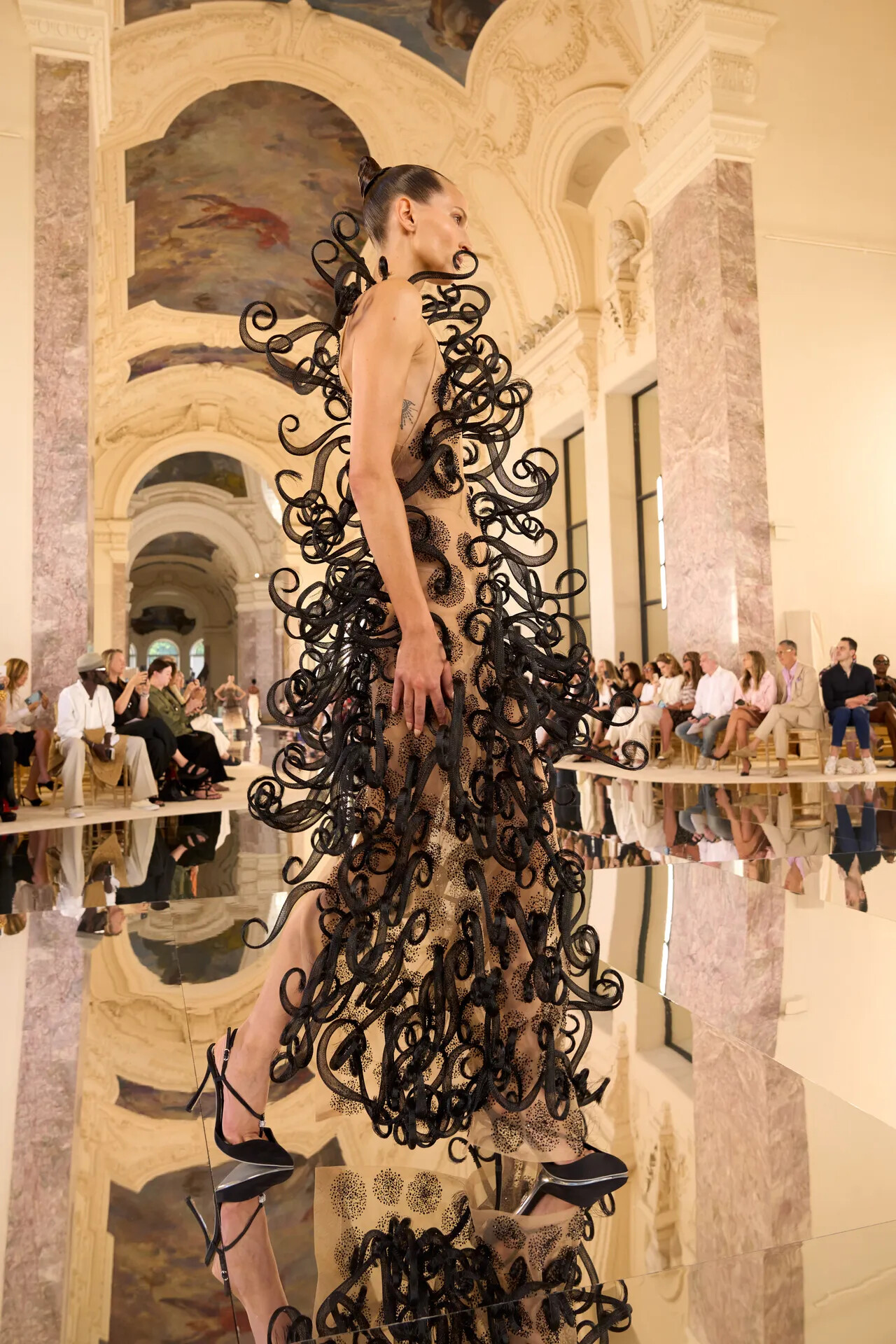
In a world where algorithms can generate thousands of designs in seconds, Daniel Roseberry decided to respond in the most spectacular way possible. Not with a presentation of new technologies, but with a display of human imagination. The Schiaparelli haute couture collection for Fall/Winter 2026/2027, titled “The Abyss”, which opened Paris Haute Couture Week, was not just a fashion show. It was a manifesto. A question about the future of creativity. And a reminder that couture remains the last bastion of things that cannot be programmed.
Couture as a Response to the Age of AI
Roseberry did not hide his inspiration from contemporary times. He himself admitted that he increasingly comes across portfolios from young designers in which it is difficult to distinguish talent from the capabilities of artificial intelligence. Instead of fighting against technology, however, he decided to prove that there is still a realm inaccessible to AI—emotions, intuition, chance, and the craftsmanship of human hands.
That’s why the runway featured creations that looked like organisms from the future. Latex blazers with inflatable tentacles, silicone corsets resembling living tissue, dresses pulsating with light, and anatomical details gave the impression that the human body was undergoing another phase of evolution. Critics unanimously noted that the collection did not attempt to be beautiful in the classical sense. Its aim was to unsettle, fascinate, and provoke thought.
From Golden Lungs to Silicone Gills
Daniel Roseberry has been consistently building his own Schiaparelli language for several seasons. Just a few years ago, the world was captivated by monumental gold necklaces, surreal jewelry, and distinctive anatomical details. Then came collections inspired by astronomy, mythology, and sculpture, which turned the fashion house into a red carpet favorite.
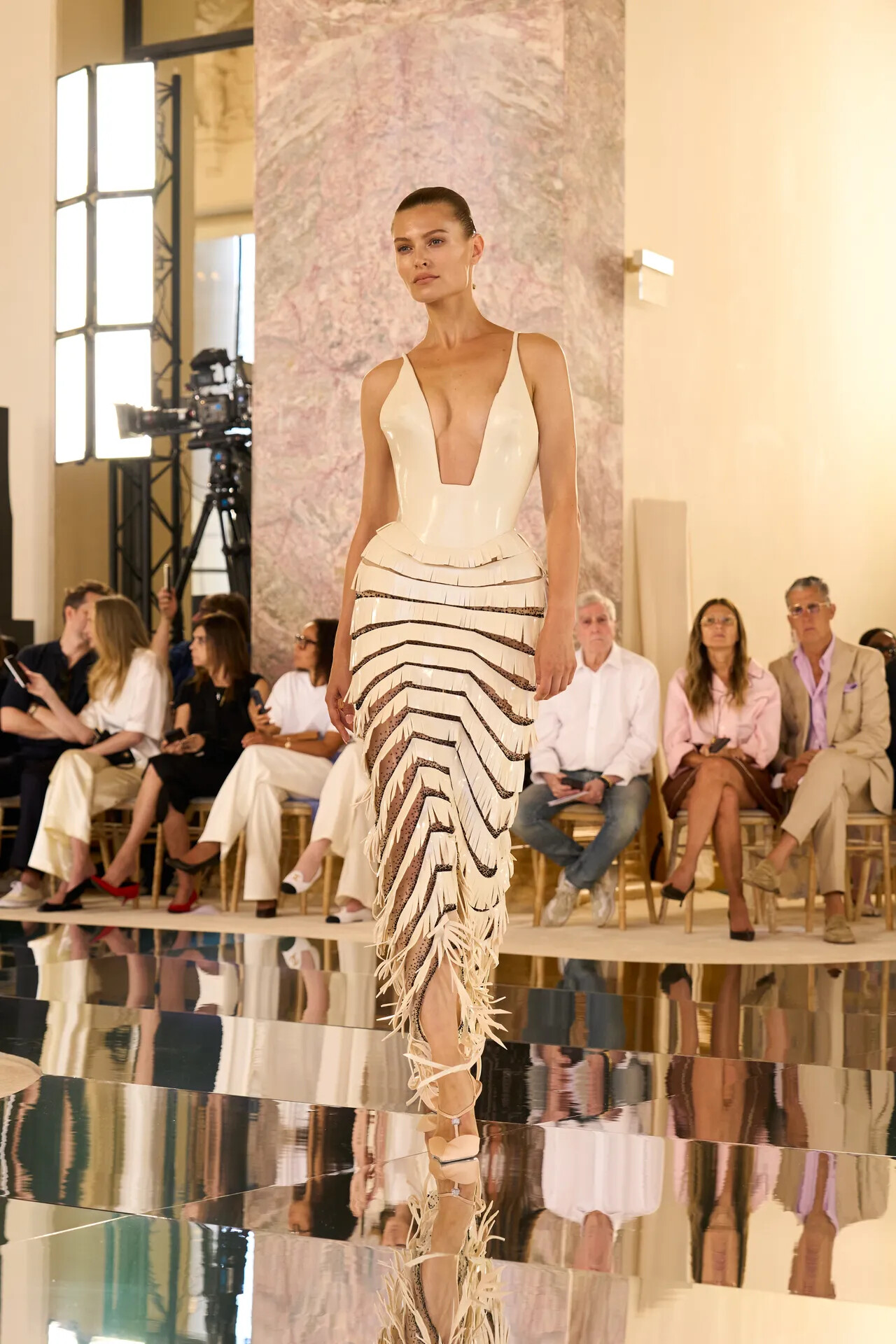
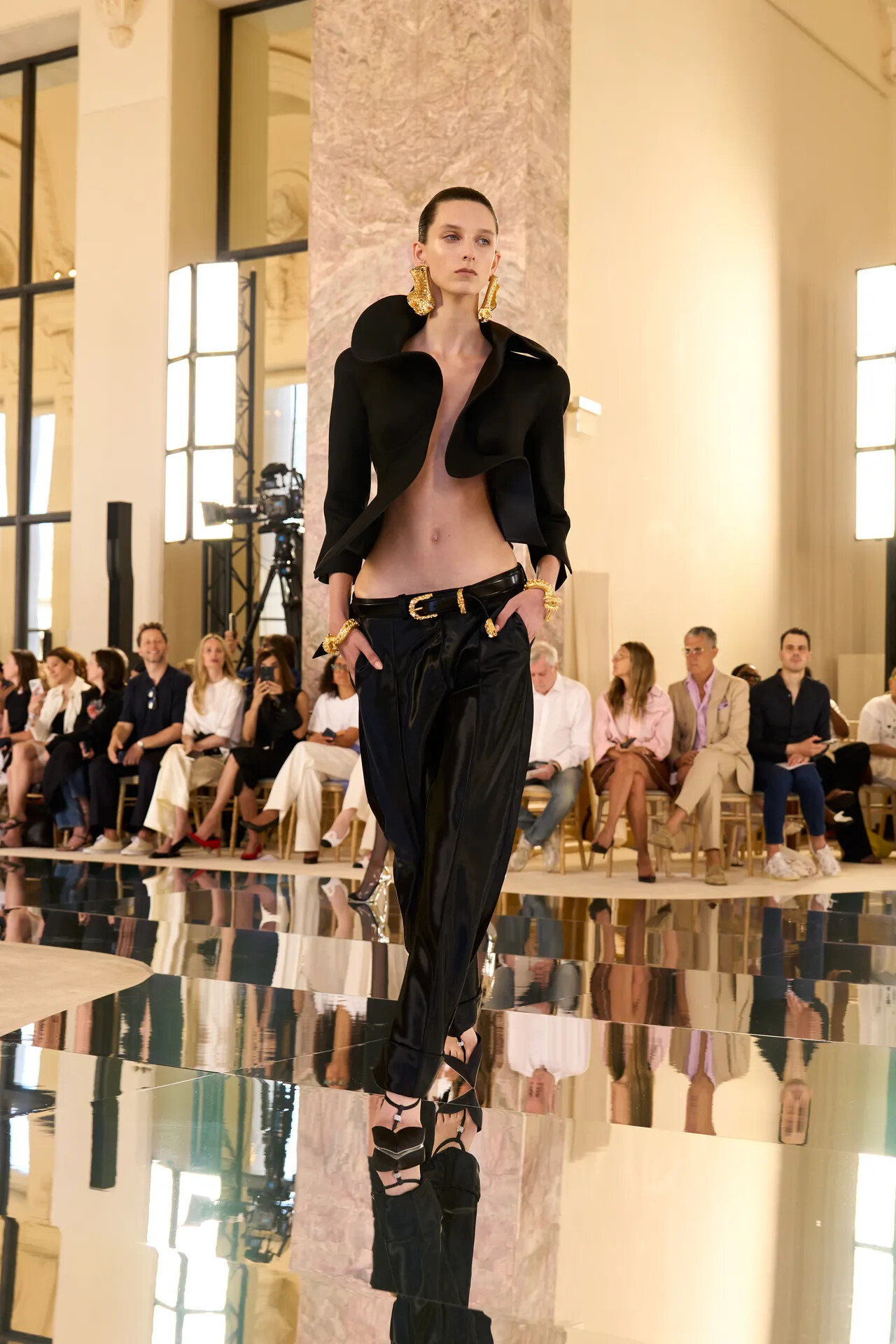
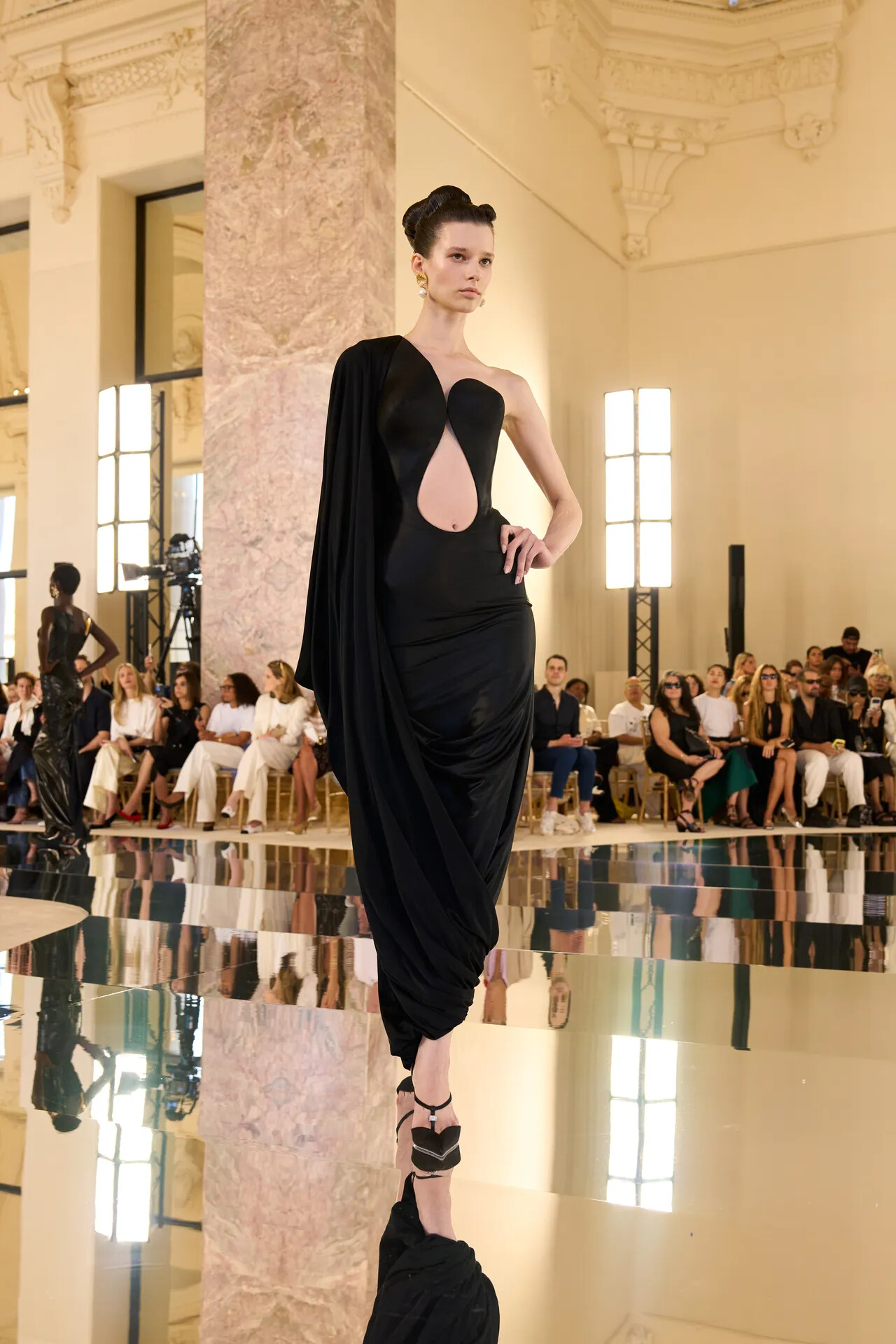
Autumn/Winter 2025/2026 was considered by many critics to be a breakthrough moment—a collection in which Roseberry perfectly combined classic tailoring with optical illusion and surrealist references. The designer himself later admitted that he felt he had found the perfect formula for Schiaparelli. Paradoxically, it was for this very reason that he decided to abandon it completely.
The new collection does not build on the previous one. It makes an abrupt turn. Instead of elegant surrealism, it offers biological mutations, artificial skin, silicone, fish scales, shells, and materials that are more reminiscent of a laboratory than an atelier at Place Vendôme.
The most artistic fashion house? More and more suggests that it is
Since taking on the role of creative director in 2019, Daniel Roseberry has not tried to copy Elsa Schiaparelli. He continues her way of thinking.
The founder of the fashion house collaborated with Salvador Dalí, Jean Cocteau, and Leonor Fini. She created dresses with lobsters, hats resembling shoes, and collections inspired by surrealism long before fashion began to treat the runway as an art gallery. Today’s Schiaparelli remains true to this philosophy—fashion is not meant to be merely a luxury product, but an artistic commentary on reality. In this sense, this year’s show was exceptionally faithful to the brand’s DNA. Instead of nostalgia, a question arose about humanity in the age of algorithms.
Not fashion to wear. Fashion to remember
Unlike many fashion houses that increasingly design with social media and the red carpet in mind, Schiaparelli still treats couture as a laboratory of ideas. Most of the looks presented will never be sold in their original form. They serve as a starting point for individual orders and a demonstration of the atelier’s capabilities.
That’s why every Schiaparelli season sparks a discussion that goes far beyond fashion. People talk about sculpture, biology, anatomy, artificial intelligence, psychology, or contemporary visual culture. Few brands today can turn a fashion show into an intellectual event as effectively.
Against the backdrop of the entire couture week, Schiaparelli once again set the direction
Although Pierpaolo Piccioli’s debut for Balenciaga, Dior’s romantic creations, and Iris van Herpen’s experiments with modern materials also captivated audiences during Paris Haute Couture Week, it was Schiaparelli that once again reignited the discussion about the boundaries of contemporary couture. Critics noted that the entire season focused on craftsmanship, innovative materials, and the redefinition of the human body, yet it was Roseberry who most fully combined all these themes into a cohesive narrative.
Fashion that doesn’t seek approval
Perhaps Schiaparelli’s greatest strength today is its courage. In an era when luxury is increasingly subordinated to sales and viral trends, this fashion house still allows itself to experiment. It doesn’t try to please everyone. It doesn’t design for algorithms.
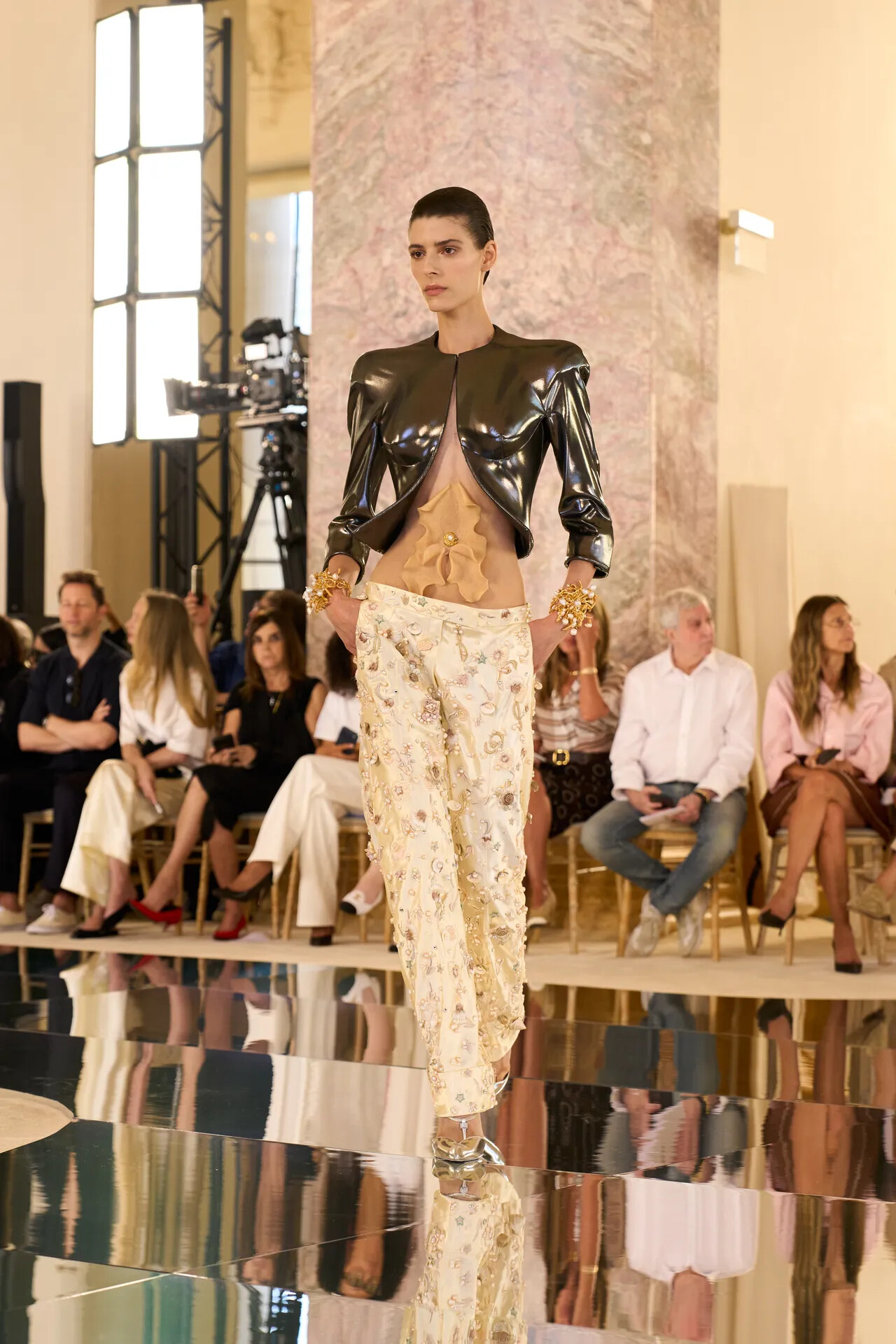
And that is precisely why it remains one of the most fascinating, most artistic, and most unpredictable fashion houses in the modern world. Elsa Schiaparelli believed that fashion should surprise more than reality itself. Daniel Roseberry proves that almost a hundred years later, this idea is more relevant than ever.
