




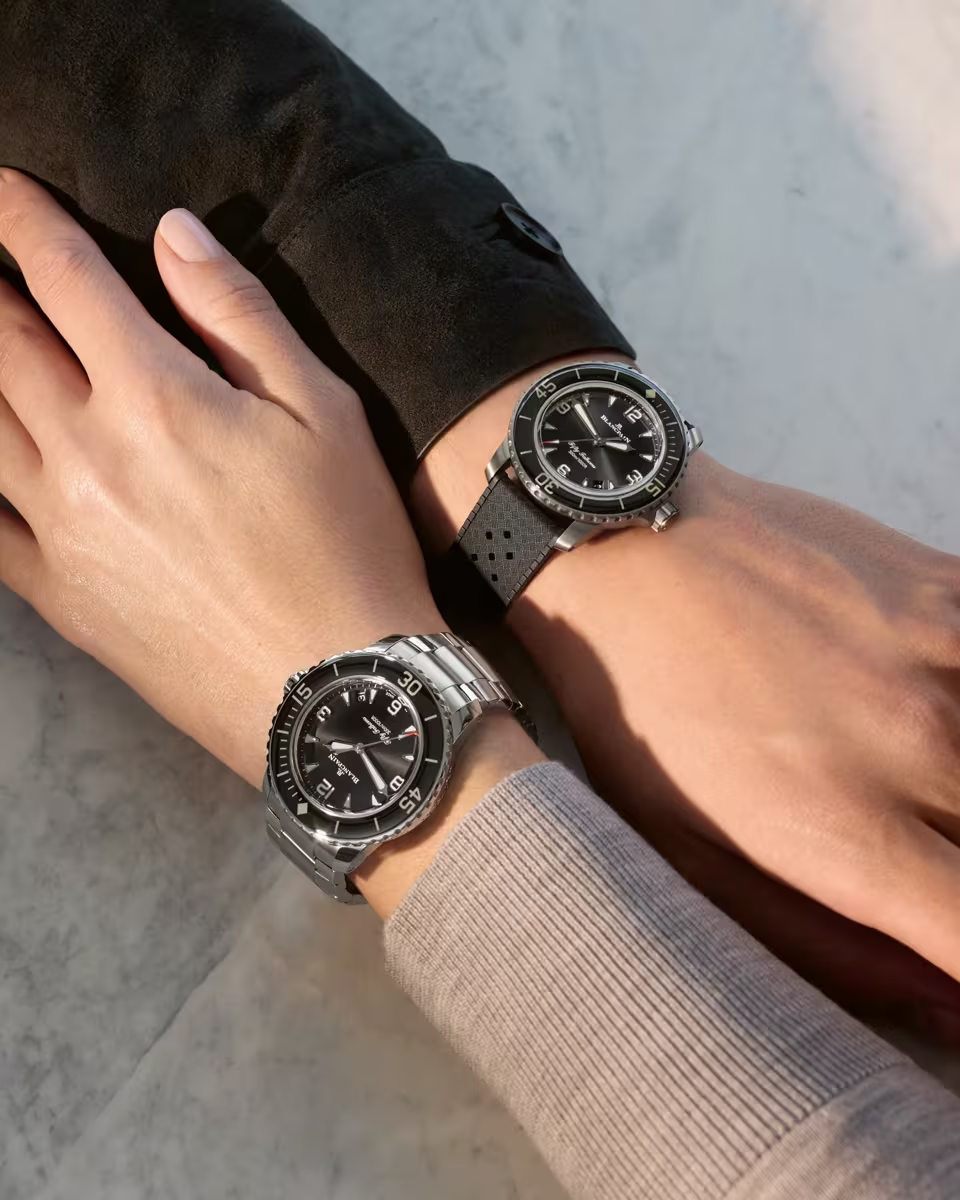
Blancpain officially started in 1735, making it the oldest continuously operating watchmaking manufacture in the world. But the founding year is actually the least interesting fact about this brand. What really matters is something else: since 1983, when Marc A. Hayek took over the brand, Blancpain has produced only mechanical watches. Zero quartz. Never.
The essence of the brand at a glance
We are talking here about haute horlogerie in its purest form. Tourbillons, minute repeaters, perpetual calendars—these are complications that require hundreds of hours of handcrafting. Production? Fewer than 30 pieces a day. This is not a factory, this is craftsmanship.
The brand icon is the Fifty Fathoms from 1953, considered the benchmark for the modern dive watch (yes, even before the Submariner). Today, Blancpain is part of the Swatch Group (since 1992), based in the heart of Switzerland’s Vallée de Joux (Le Brassus and Le Sentier), but has maintained complete independence in its approach to production.
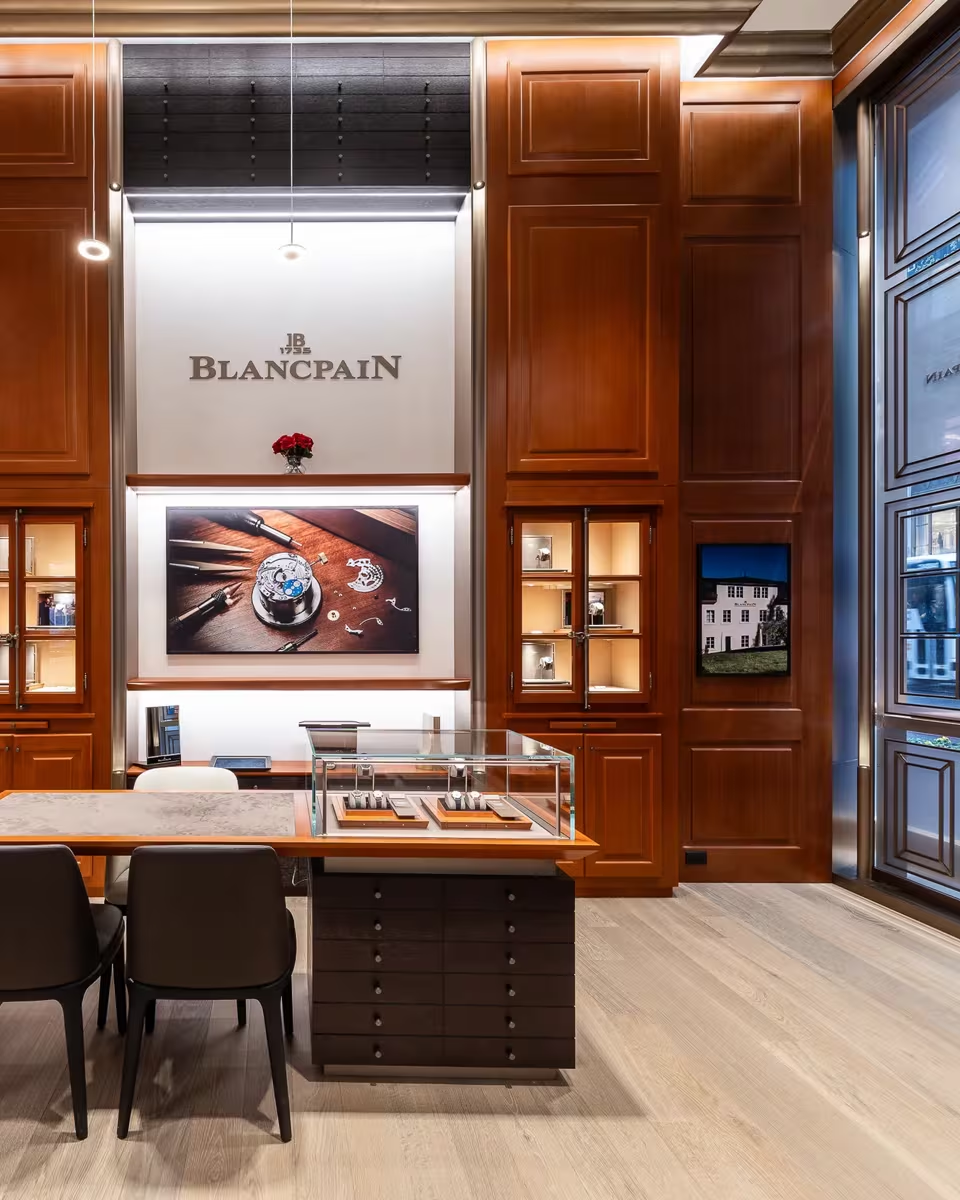
Relevance? The 2024 Blancpain × Swatch collaboration has put the brand back in the spotlight. Plus, there are constant innovations in the Villeret, Ladybird, and Tech Gombessa lines within the Fifty Fathoms collection. And the commitment to ocean conservation is not just a marketing ploy, but a genuine mission.
From Villeret to Le Brassus
Indeed, the history of Blancpain is quite an interesting blend of tradition and survival. It began in 1735, when Jehan-Jacques Blancpain established a workshop in Villeret. Frédéric-Louis’s grandfather modernized production from 1815, and in 1865 his son built a factory on the banks of the Suze River. However, let’s remember that the real breakthrough came only in the 20th century.
| Year | Event |
|---|---|
| 1735 | The establishment of the workshop by Jehan-Jacques Blancpain |
| 1815 | Modernization under Frédéric-Louis |
| 1865 | Construction of the factory on the Suza |
| 1932 | The end of the family era, the founding of Rayville S.A., Betty Fiechter at the helm |
| 1953 | Co-creating Fifty Fathoms with Nageurs de Combat (unidirectional bezel, double O-ring) |
| 1961-1971 | Integration with SSIH, peak production |
| 1982/83 | The revival of the brand by Biver and Piguet in Le Brassus |
| 1992 | Acquisition by Swatch Group |
| 2002 | Marc A. Hayek takes the helm |
| 2010/2022 | Integrations Frédéric Piguet and Simon & Membrez |
The quartz crisis of the 1970s nearly put the brand to sleep, but the Biver-Piguet team brought it back into the game.
Disputes over origins and precedence
Is Blancpain really the “oldest watch brand”? It depends on who you ask. The year 1735 marks the founding of the workshop, but the continuity is sometimes questioned (especially after the name disappeared in the 1970s). The same goes for the Fifty Fathoms: officially 1953, though some point to 1954 or 1955 as the date of the first deliveries. Such nuances remind us that marketing and history do not always go hand in hand.
Collections, technologies, and today’s distinguishing features
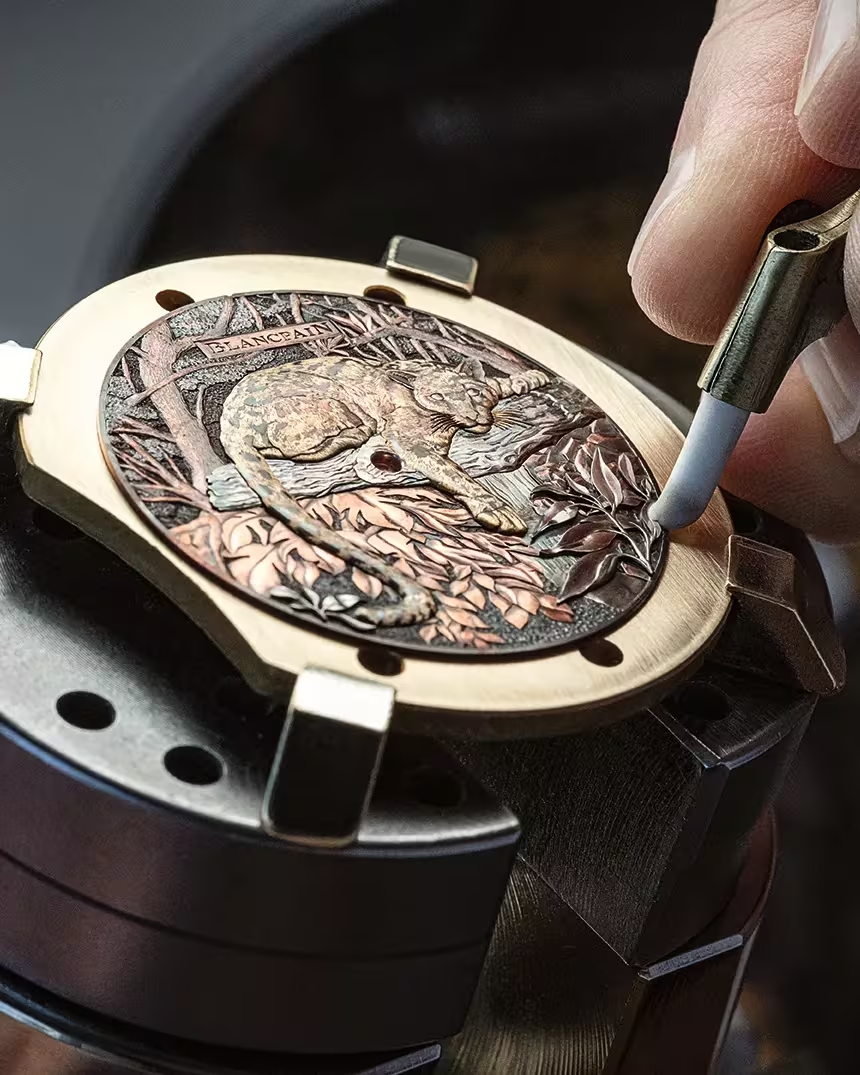
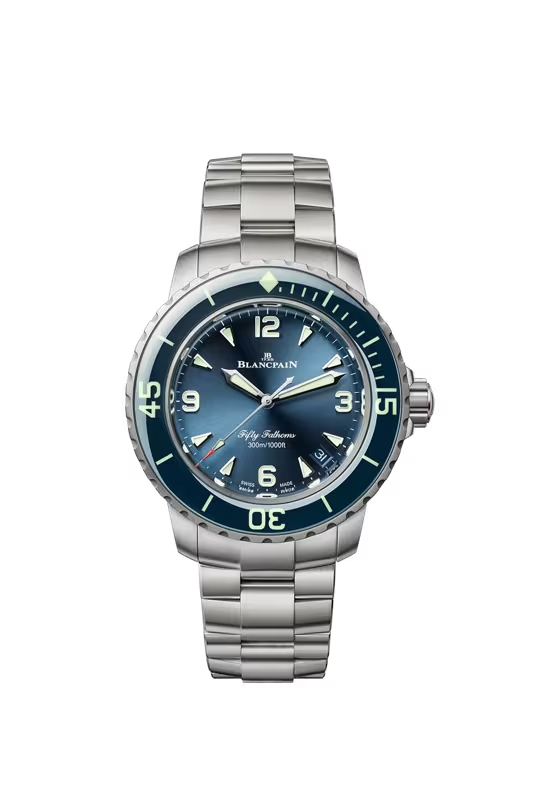
Blancpain’s offering is divided into five distinct families. Fifty Fathoms is the legendary diver (often with 300 m water resistance, caliber 1315 or newer variants) available as a classic model, the more everyday Bathyscaphe, and the sportier Tech, which has moved from limited editions to the permanent collection. Villeret represents classic style, ultra-thin calibers, perpetual calendars, and even a Chinese calendar—elegance in its purest form. Ladybird draws inspiration from women’s watches from 1956, with a special Tribute model set to debut in 2026. Air Command offers a flyback chronograph in 42.5 mm and the newer 36 mm, blending vintage and aviation influences. Métiers d’Art is pure artistry: engraving, enamel, shakudō.
Technique, manufactures, and innovations
Blancpain is all about mechanics. They use silicon balance springs, many calibers offer a power reserve exceeding 100 hours, and correctors are hidden under the lugs (to preserve symmetry). Production? Less than 30 pieces a day, with annual output below 10,000 watches. The manufacture in Le Sentier handles the series, in Le Brassus (the old farm known as “The Farm”) the grand complications are created, and finishing takes place in Delémont.
New for 2025- 2026 include, among others, polished steel in the Fifty Fathoms, new sizes for Villeret, Ladybird Colors, and Tribute. The collaboration with Swatch (Bioceramic Scuba Fifty Fathoms) sparked queues and brought brand recognition to a new audience. Blancpain is committed to Ocean Commitment and partnerships with Relais & Châteaux, PADI 30×30.
Prices start from a few thousand dollars, with the average hovering around $10,000, while complications can reach hundreds of thousands. Sales are conducted through boutiques and authorized dealers.
Mechanics instead of fashion
Blancpain has accomplished something that seems impossible in the world of luxury brands: it has built its position not on flashy campaigns, but on a clear philosophy. No quartz watches, no concessions to mass production. It’s a bit like watching someone who has consciously chosen a narrow mountain path instead of a wide highway.
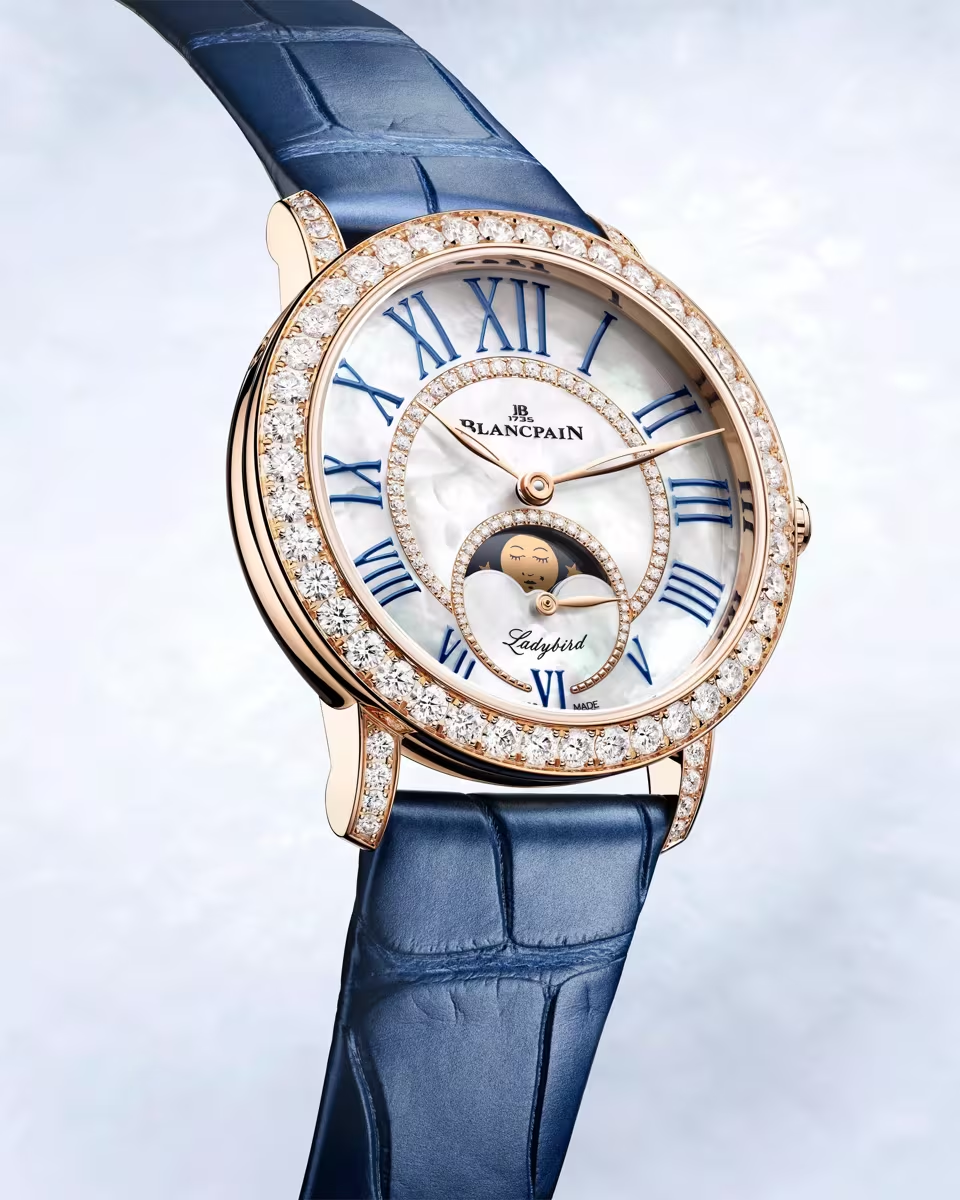
And this is precisely what sets the Swiss manufacture apart in an ocean of brands competing for attention. While others chase trends, Blancpain simply does its own thing. Each movement ticks almost exactly as it did 200 years ago, and new releases appear when they are ready, not when the Basel fair calendar demands it. This approach builds customer loyalty, as people buy a watch not because it is fashionable now, but because it will always hold its value.
Maxx
Luxury Reporter
