




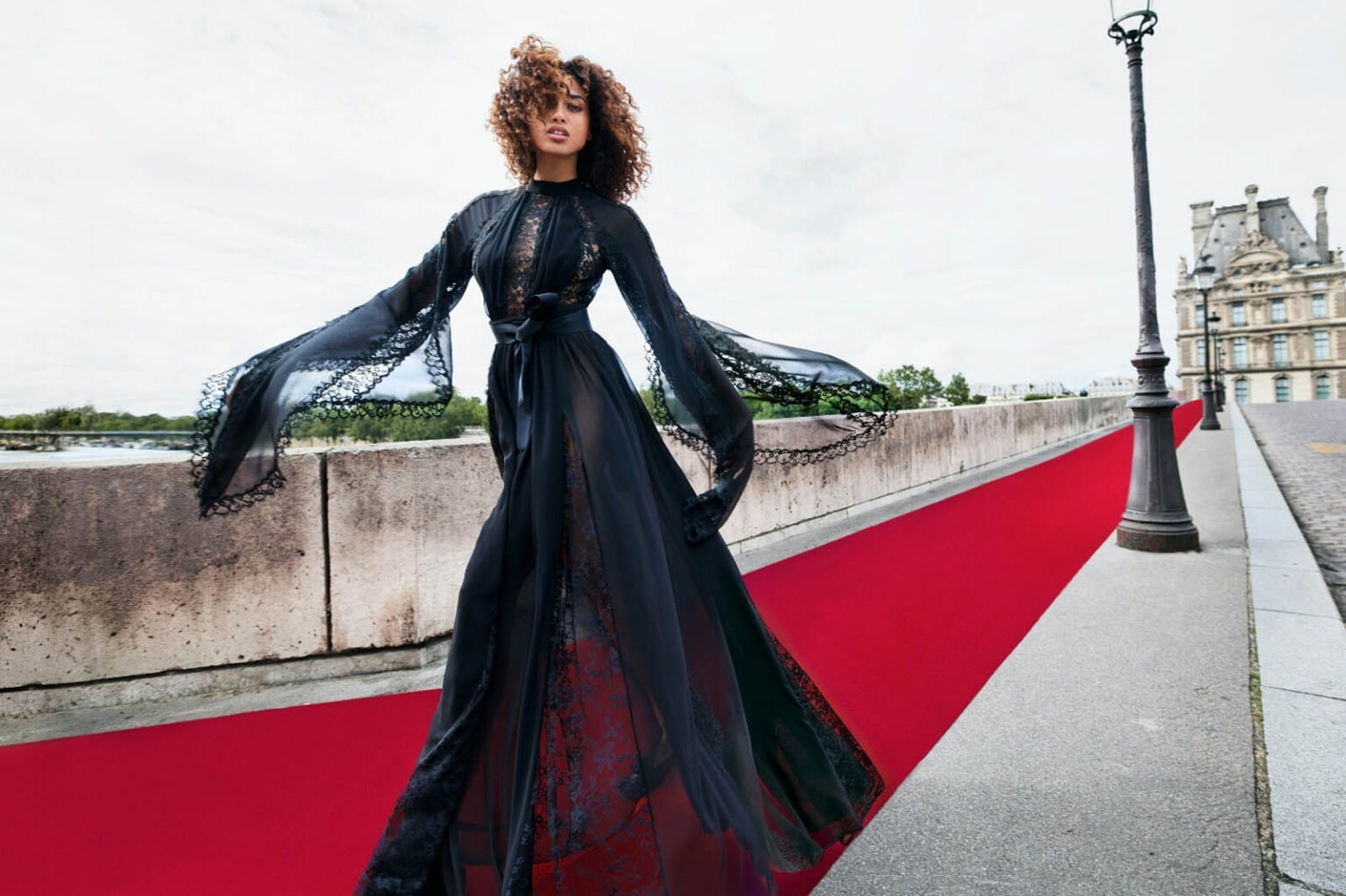
On October 22, a collection will arrive in H&M stores that could be more than just another high-profile designer collaboration with a fast fashion brand. Elie Saab brings his world of sequins, lace, draping, and evening opulence to the mass market. After years of quiet luxury and the “less is more” aesthetic, it’s hard to imagine a clearer sign that fashion is once again eager “to be fashionable.”
Elie Saab doesn’t need H&M. For over four decades, his name has existed in a completely different realm: between the atelier, haute couture, the red carpet, and the wardrobes of women for whom a gown is not just clothing, but an event. That’s precisely why the collaboration with H&M feels like a controlled earthquake. One of the most recognizable creators of evening glamour meets a brand that has specialized for years in democratizing fashion. The launch on October 22 will therefore be not just another date on the shopping calendar, but also a meeting of two worlds that for years seemed almost diametrically opposed.
There will be no “Elie Saab light”
The collection will include around 55 women’s and men’s designs, as well as accessories. It will feature everything the designer’s brand is best known for: lace, sequins, draping, shine, sharply defined silhouettes, and distinctive color gradients. The palette is built around black, gold, and emerald green. Among the most striking pieces are a bustier dress transitioning from green to black and a sequin blazer in a gold-to-black gradient. The most expensive item in the collection, a leather jacket in a chocolate shade fading to black, is set to cost 399 euros. The most affordable accessories start at 29.99 euros.
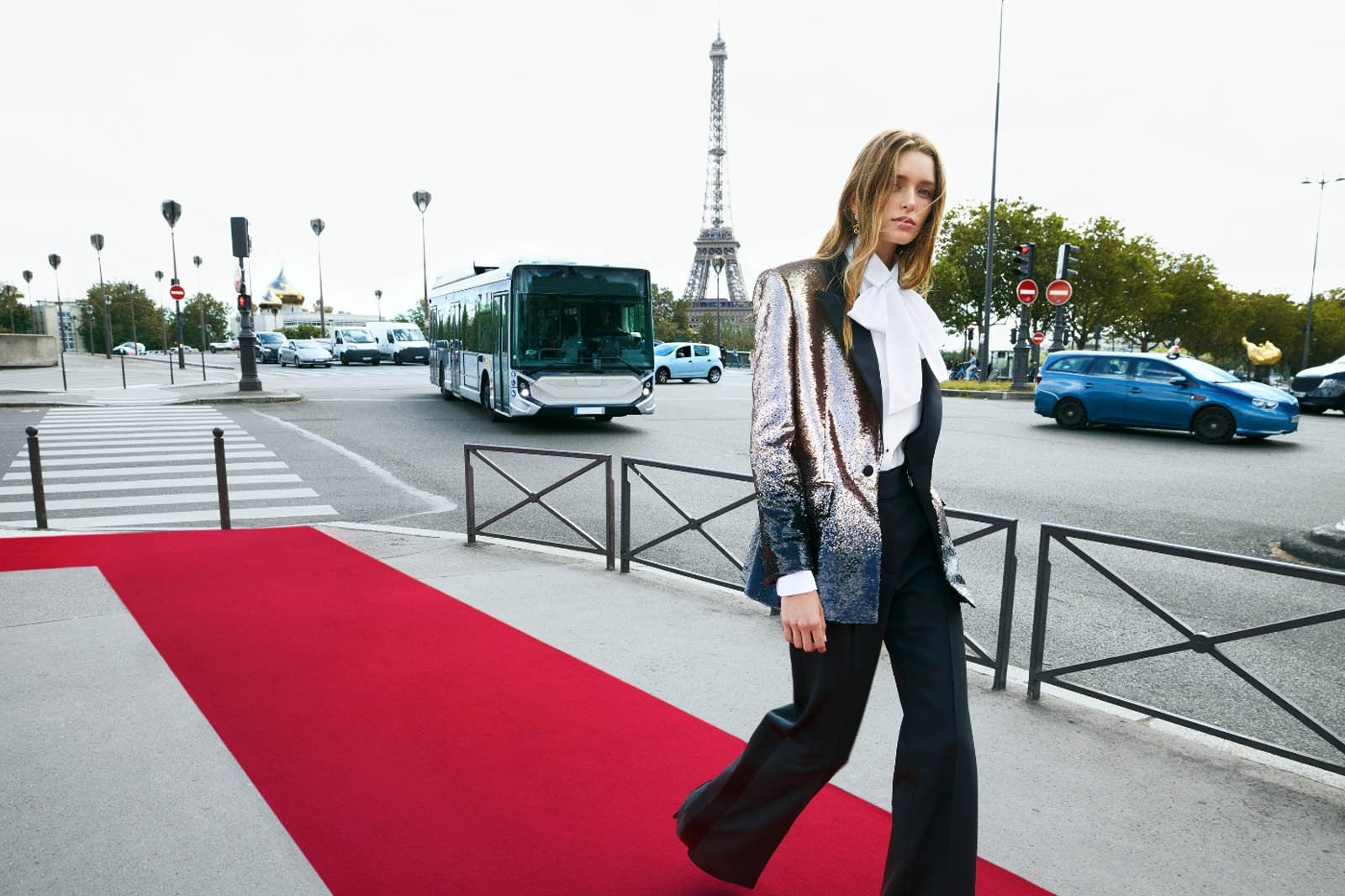
This price range is, of course, at the heart of the collaboration. Elie Saab does not pretend that H&M is haute couture. Likewise, H&M does not pretend that couture can simply be discounted. It is more about translating the language of one world into the language of another. Saab emphasizes that he did not want to create a basic collection. “No one wants basics from Elie Saab,” he said in an interview with Vogue. Every piece was meant to retain something of his character, even if it was created with a completely different scale of production in mind.
On the side of beauty
The choice of Saab is not accidental also because his aesthetic emerges at a time of clear fatigue with fashion asceticism. In recent years, luxury has often been photographed in beige, gray, and black. It was meant to be quiet, discreet, and devoid of ostentation. Ideally, the label remained invisible, the cut spoke for itself, and the outfit looked as if the owner hadn’t paid much attention to her styling.
Elie Saab represents almost the exact opposite of this philosophy. His fashion never apologizes for its decorative nature. It doesn’t hide the process of shaping the silhouette, doesn’t pretend to be accidental, and never gives up the “wow” effect. If quiet luxury said, “you don’t have to show it,” Saab replies, “but what if I actually want to?”
And that is precisely why his collaboration with H&M is so perfectly timed. The Swedish brand is also offering collections this autumn based on calm, luxuriously minimalist looks, featuring wool, leather, tailoring, and wardrobe essentials. Alongside this, however, comes Saab—with lace, sequins, evening gowns, and theatrical silhouettes. This is no coincidence, but rather a reflection of contemporary fashion: minimalism isn’t disappearing, but it is no longer the only accepted way to look “expensive.”
The end of minimalism? More like the end of its monopoly
The most interesting thing about this story is that Elie Saab is not coming to H&M with a simple message: “maximalism is back.” In his case, it’s about something more subtle. The designer has long built his brand around a specific language rather than seasonal trends. In an interview with Vogue, he points out the consistency visible in his archives. Masterful craftsmanship that remains more important than fleeting fashion.
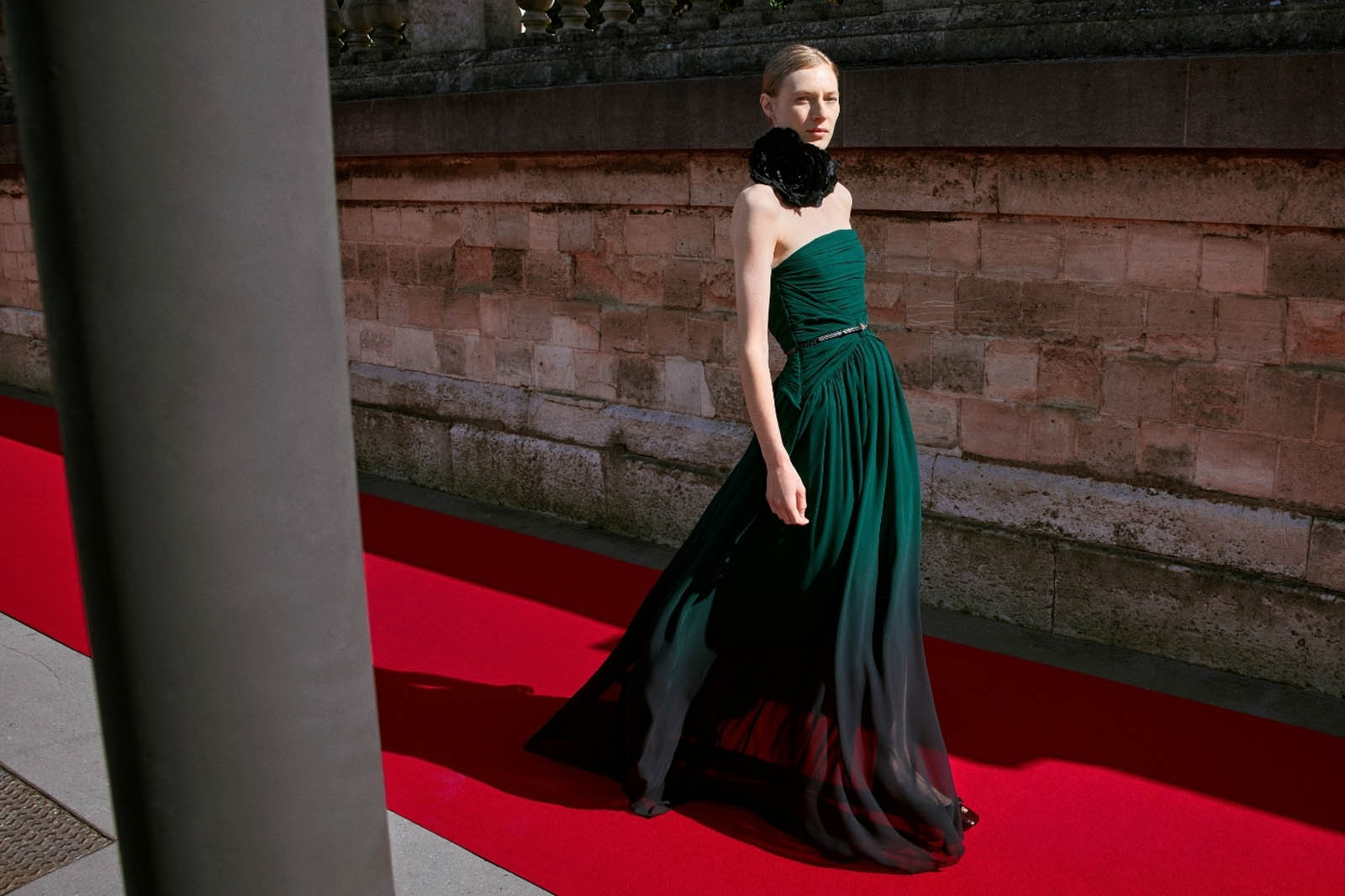
This is a significant difference. The return of ornamentation does not have to mean a return to chaotic consumerism. On the contrary: you can have one spectacular dress, a perfectly tailored blazer, or a sequin jacket and wear them for years. You can treat a statement piece just as seriously as a minimalist coat. In this sense, maximalism becomes not the opposite of quality, but another way of expressing it.
Sam Saab has also been expanding his own repertoire for some time now. His collections feature more practical silhouettes, tailoring, leather garments, and elements of everyday wardrobe, although lace, embroidery, and the designer’s signature sparkle still remain. The autumn 2026 haute couture collection, in turn, juxtaposed spectacular gowns with perfectly tailored tuxedos for both women and men.
Luxury today wants to be an experience
In H&M’s statements about the collaboration, another theme recurs: the need for beauty in a world dominated by technology. Ann-Sofie Johansson, H&M’s creative director, speaks of a longing for things that can only be created by human hands. She recalls the moment when Saab, working in the atelier, took a piece of black fabric and began draping it directly on a mannequin, building the structure of the dress. Only later did the H&M team have to break down this gesture into technical elements and find a way to recreate it.
In this sense, the collaboration is also interesting as a story about technology. The more fashion becomes digital, automated, and subordinated to algorithms, the more valuable something that appears handmade may become: irregular draping, intricate embroidery, the weight of sequins, hand-finished details. This is the paradox of contemporary luxury. In a world where almost everything can be generated, luxury is not only about rarity, but also about the trace of human labor.
Return to the pleasure of dressing up
Elie Saab x H&M could therefore mean more than just a seasonal fling between luxury and the high street. It’s a sign of a changing mood. After the era of capsule wardrobes, neutral tones, and an obsession with “investment” pieces, fashion is reclaiming the right to pleasure. It’s not about throwing out your beige coat and replacing it with sequins. It’s about stopping the habit of treating one as inherently smarter than the other.
Because perhaps the biggest change today is not the move away from minimalism, but the move away from the belief that fashion must be rational.
For several years, clothing was expected to be universal, timeless, and easy to style. Now, more and more often, it is also meant to be exciting. It should have character, tell a story, remind you of the occasion for which it was worn. It should give you a reason to dress up, not just get dressed.
That’s why the collaboration between Elie Saab and H&M is an exceptionally fitting event for autumn 2026. Not because minimalism has truly died. It hasn’t, and it probably won’t for a long time. It’s just no longer the only definition of good taste.
On October 22, a designer whose fashion has been saying something completely different for decades is coming to H&M: that a woman may want to look spectacular, that sequins need no justification. Beauty doesn’t have to be quiet to be luxurious.
Perhaps that’s why Elie Saab and H&M aren’t so much declaring the end of minimalism as giving it a very stylish farewell.
