




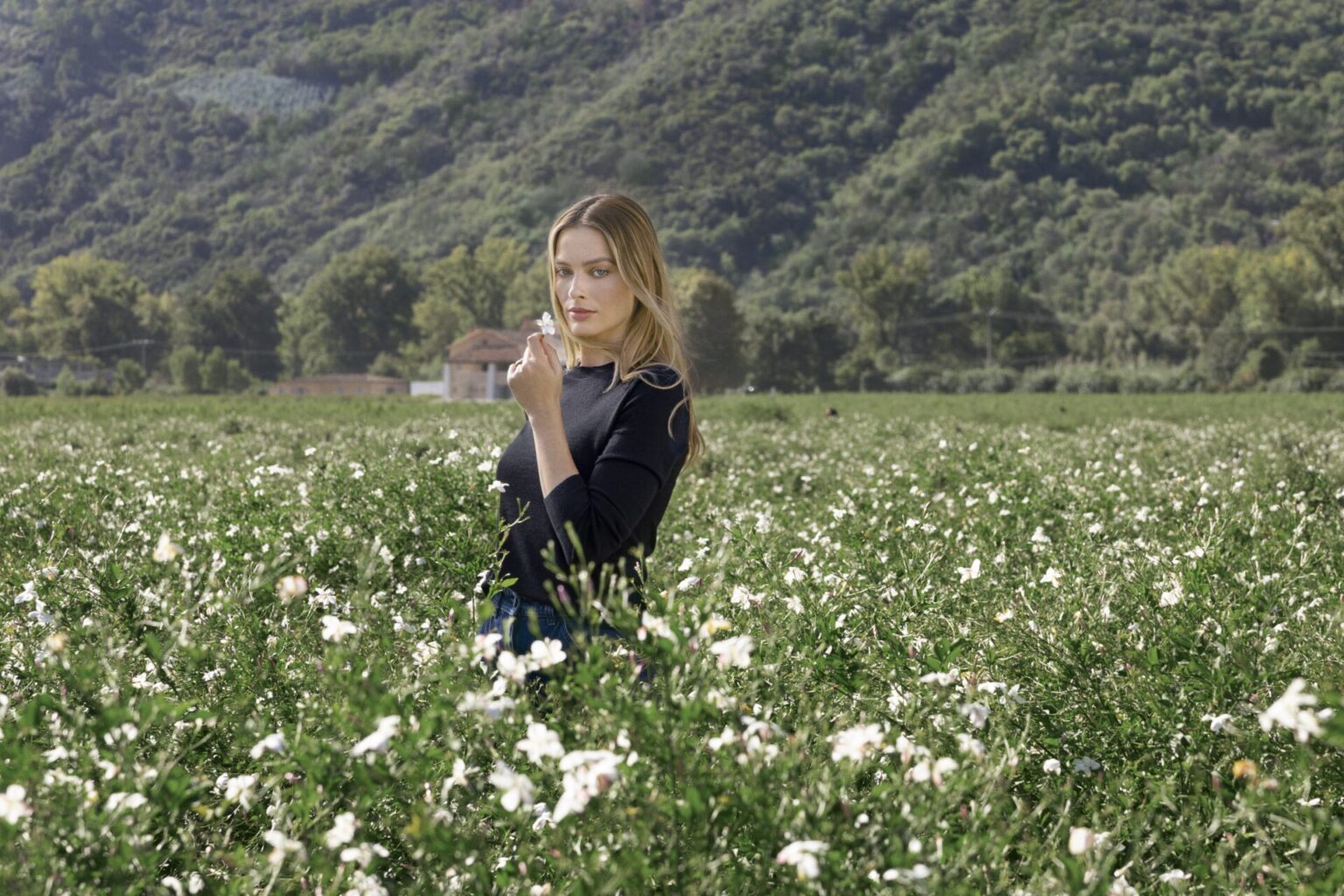
Margot Robbie in Grasse, the French heart of perfumery. Together with Olivier Polge, Chanel’s perfumer-creator, she uncovers the secrets behind the making of one of the most iconic fragrances in history. The new film and accompanying photo series showcase a place that has been a vital part of the Chanel N°5 story for over a century. Grasse is the fragrant heart of Chanel. We discover it from jasmine cultivation to the work with the raw material that becomes part of the fragrance composition.
Grasse – the beginning of the N°5 story
Grasse is not a random location in this story. It was the jasmine from here that was chosen in 1921 by Ernest Beaux to create N°5. The fragrance, which was made for Gabrielle Chanel, stood out from the very beginning by departing from the classic perfume structure based on a single dominant note. Beaux combined floral ingredients such as jasmine and rose with aldehydes. In this way, he created a composition with a more abstract character.
Over a hundred years later, Grasse remains one of the most important places on Chanel’s perfumery map. Here, the story of N°5 is intertwined with a specific landscape, the seasonality of crops, and the knowledge passed down through generations of growers. You could say that this spot on the map is the heart of Chanel’s fragrance history.
Margot Robbie in Grasse: Jasmine picked at dawn
Robbie’s visit offers a glimpse of N°5 from a perspective that usually remains a secret. Before the fragrance finds its way into the bottle, it lives on the plantation. There, workers handpick jasmine flowers. At dawn, from August to October. That’s when the flowers have the right quality and intensity of aroma.
After harvesting, the raw material requires rapid processing. According to Chanel, the flowers should be weighed within three hours of being picked to best preserve their properties. The scale of demand is equally significant. To produce a 30-milliliter bottle of N°5, as many as around one thousand jasmine flowers may be used.
Five generations of expertise in jasmine, rose, and perfumes
Behind this process also stands the multigenerational knowledge of local producers. Since 1987, Chanel has been collaborating in Grasse with the Mul family. In their case, the tradition of flower cultivation goes back five generations. The partnership was established at a time when local fields of jasmine and other plants used in perfumery began to give way to development and cheaper production in other regions.
Collaboration with growers has provided Chanel with access to high-quality raw materials. Today, the brand dedicates five exceptional flower harvests exclusively to the production of its fragrances. The proximity of the fields and the processing facility is also of particular importance. This is because delicate jasmine cannot wait long for further processing.
Is craftsmanship the foundation of Chanel’s luxury?
The meeting between Margot Robbie and Olivier Polge is another chapter in the actress’s longstanding relationship with Chanel. It is also a story about what lies behind the finished bottle of N°5. Robbie, who has been associated with the French house as an ambassador for eight years, this time discovers the place where one of the most important chapters in the brand’s history was written over a hundred years ago.
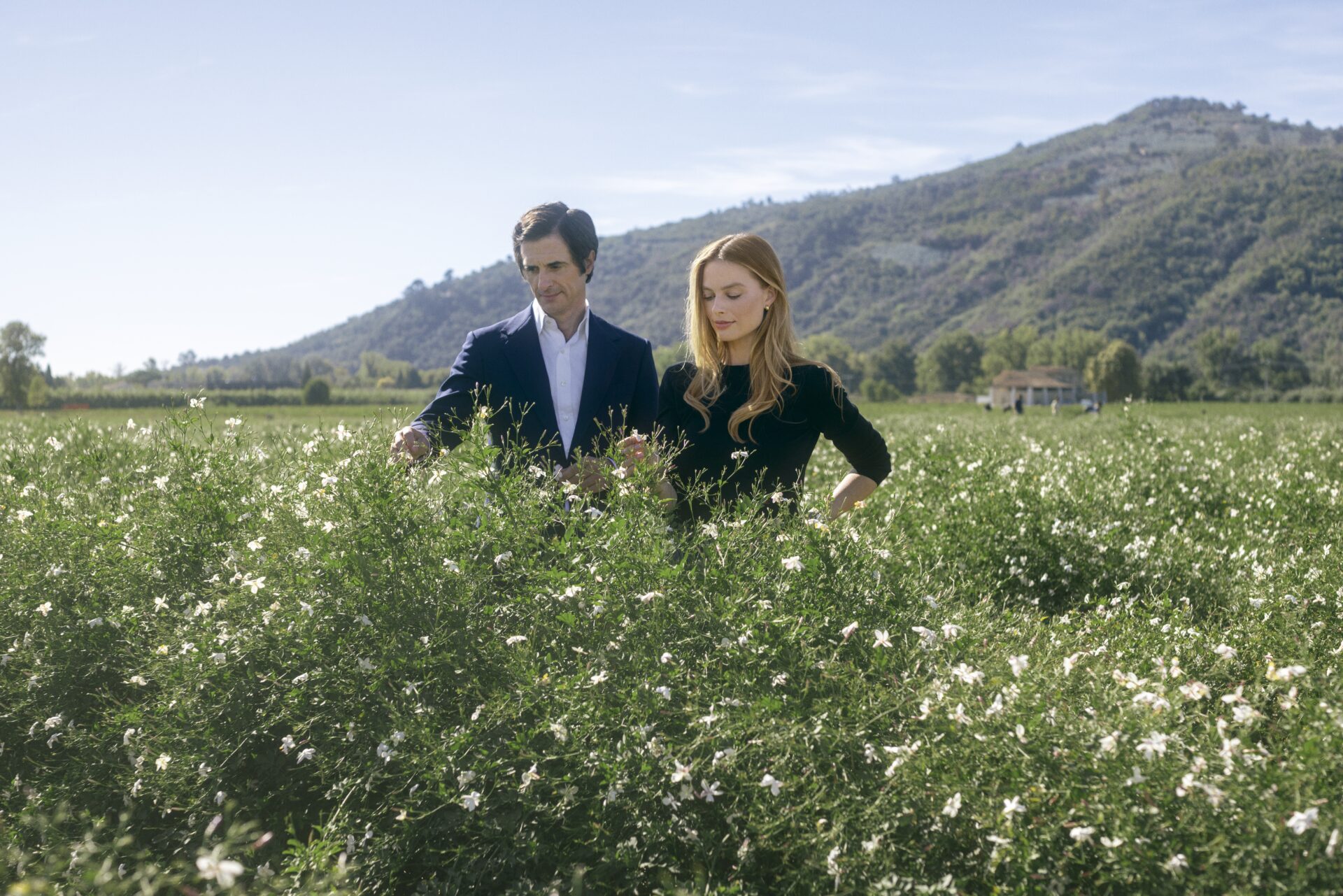
A new film and photo series serve as a reminder that behind the legend of N°5 are real people, places, and skills. Growers working in the fields of Grasse, the hand-picking of flowers, the precise processing of raw materials, and the expertise of the perfumer responsible for the character of the composition. At a time when luxury goods production increasingly relies on automation and global supply chains, the story of N°5 presents a different definition of luxury—one in which value is also created through local heritage, patience, and work carried out with extraordinary precision.
