




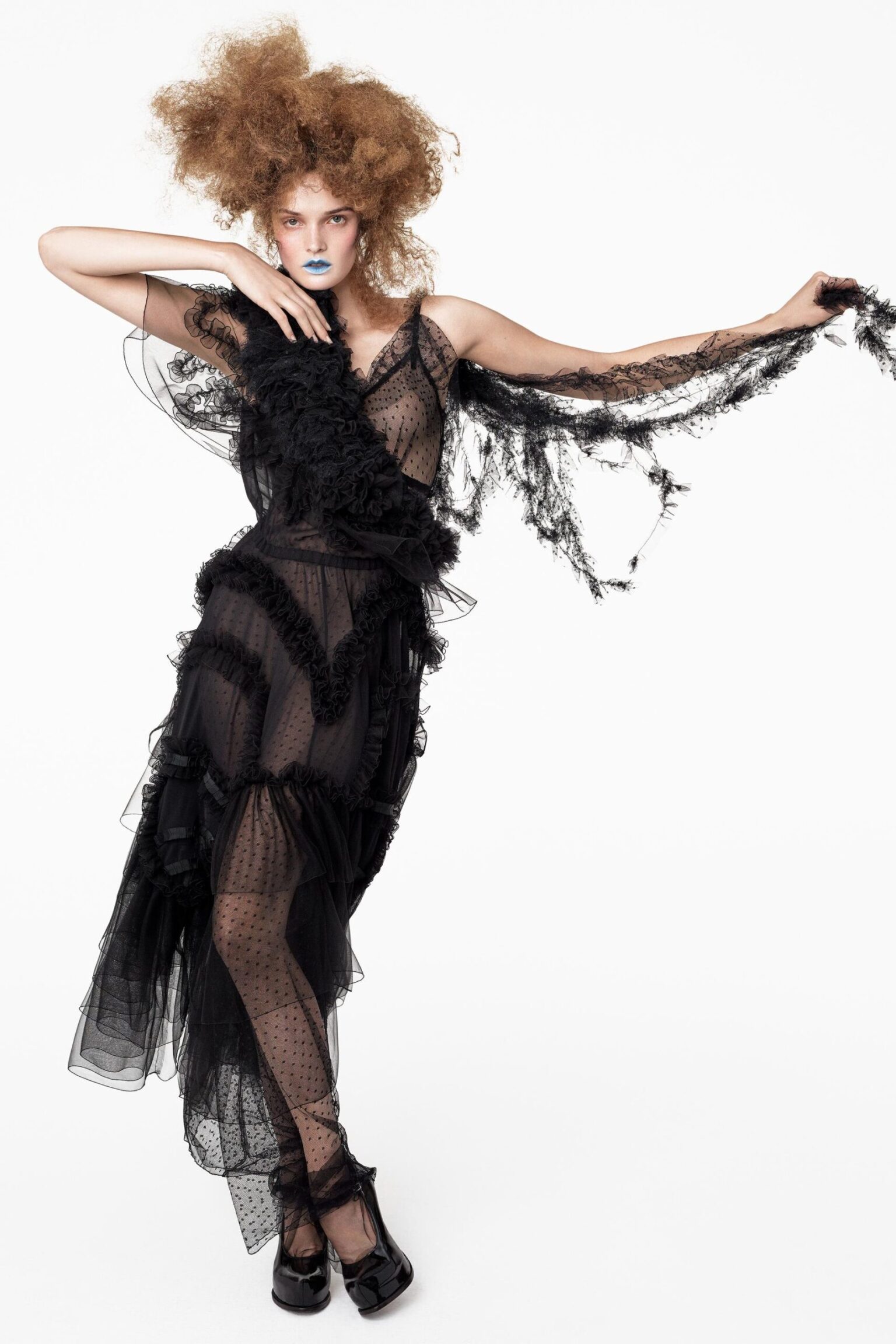
The Re{form} Zara Collection (Vol. 1) by John Galliano goes on sale today and from the very first hours, it’s causing exactly what one would expect from the meeting of one of the most distinctive designers of his generation with one of the biggest high street brands. In London, queues have formed outside the Zara store on Bond Street. Meanwhile, photos of the collection have started circulating online at lightning speed. The discussion is not only about prices or availability, but above all, whether Galliano has managed to preserve his own language within Zara’s mass-production world.
After watching the first installment, the answer is interesting: yes, and definitely so. This is one of the few collaborations between a renowned designer and a high street brand where the result is not a simplification of high fashion. Here, the direction is reversed. This, in turn, is an exceptionally bold and unconventional move.
Zara as a material, not as a limitation
Re{form} is not a classic collaboration where the designer creates a few spectacular pieces and the brand takes care of the rest. Galliano treated Zara as creative material. That’s why he analyzed existing cuts, deconstructed them, reversed the construction, and changed the proportions and functions of individual elements. Only from these experiments did new designs emerge, which were then produced using new materials.
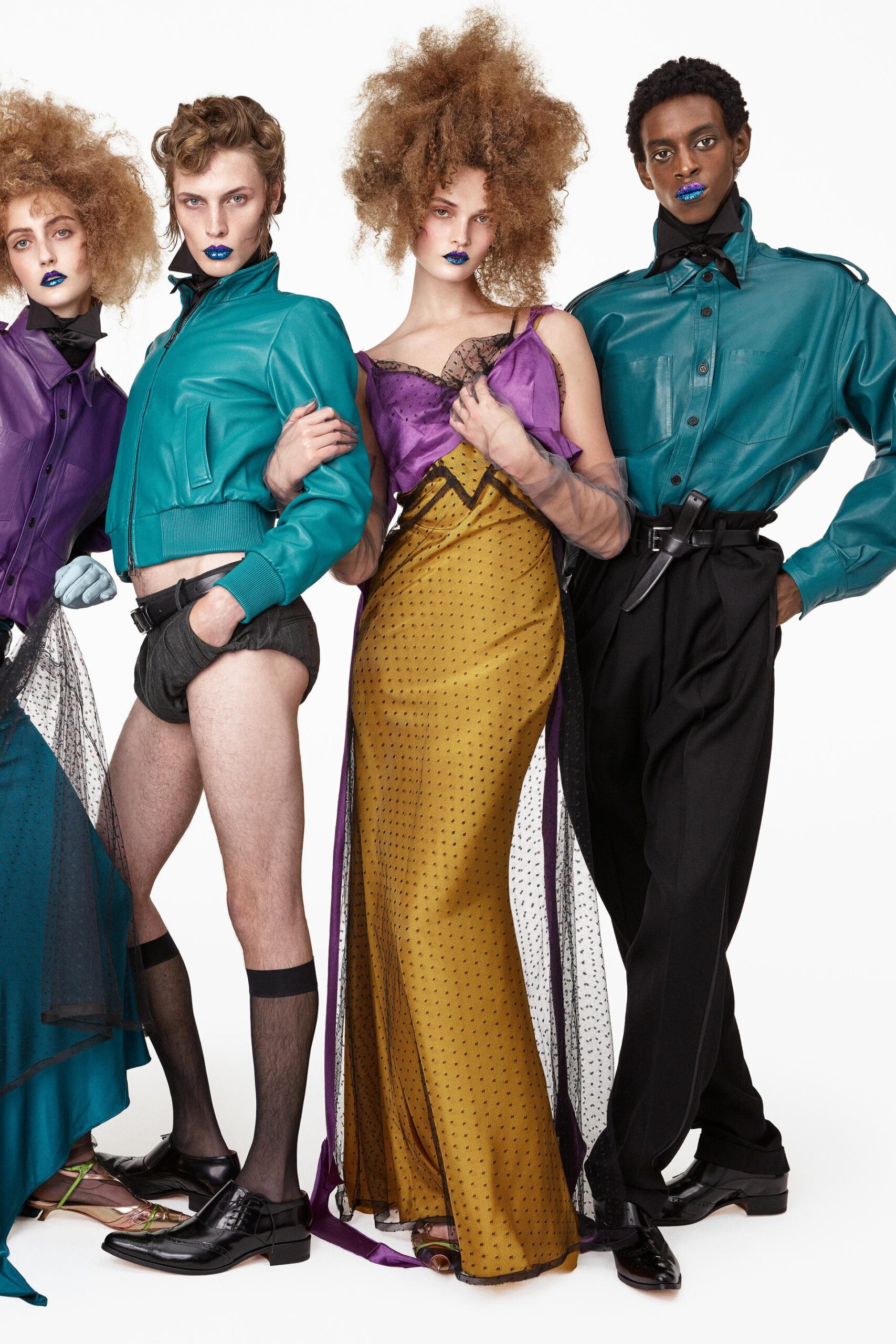
This method is very characteristic of Galliano. Instead of starting with a blank page, he begins with something that already exists and explores how far its meaning can be shifted. In this sense, Re{form} is more “authorial” than the Zara label would suggest.
And this is precisely where the greatest value of the collection lies. Galliano doesn’t try to turn Zara into Dior or Margiela. He makes Zara into Galliano.
Re{form} Zara Collection (Vol. 1): Historic Galliano, but without museum nostalgia
The inspirations include Les Incroyables and Les Merveilleuses, the eccentric fashion of post-revolutionary France, which was already present in the designer’s famous graduation collection from 1984. There are also echoes of Victorian London, punk, film noir, and his own archives. This collection continues the themes from Galliano’s acclaimed collection for Maison Margiela.
However, these are not direct quotations. Galliano takes a historical silhouette and shifts it toward modernity: he elongates the shoes, deforms the coats, creates exaggerated shoulders, and uses tulle, lace, sheer fabrics, and theatrical headpieces.
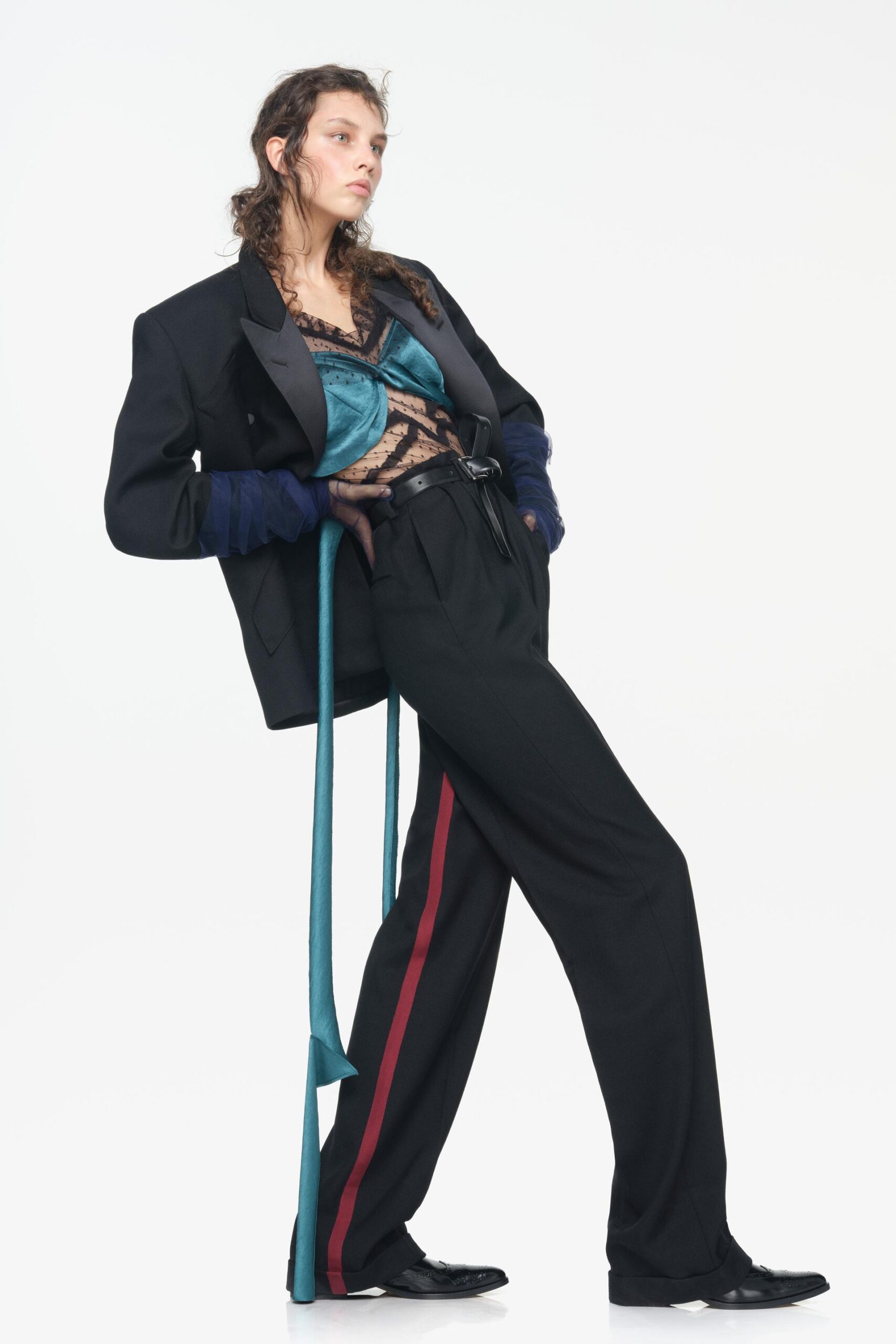
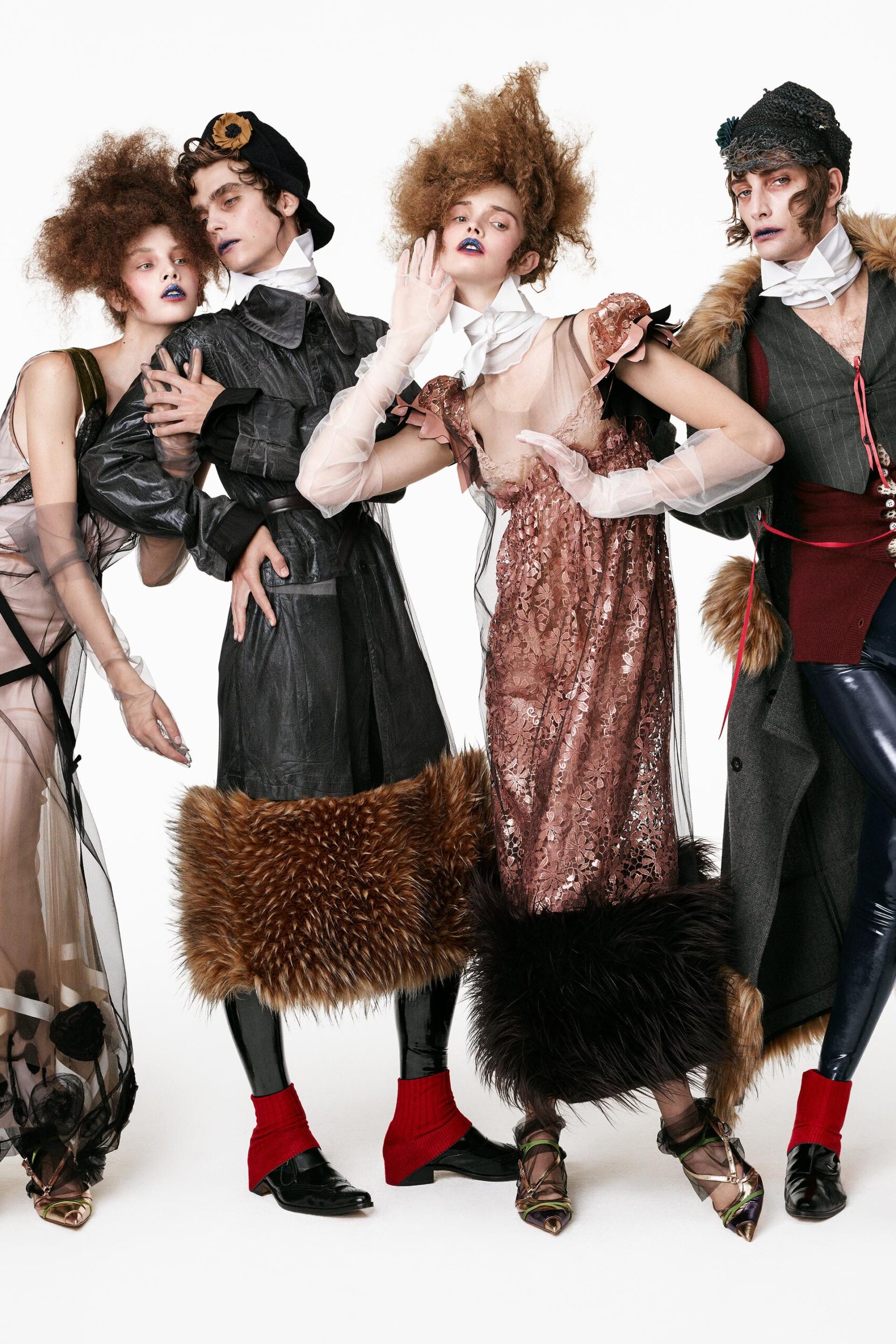
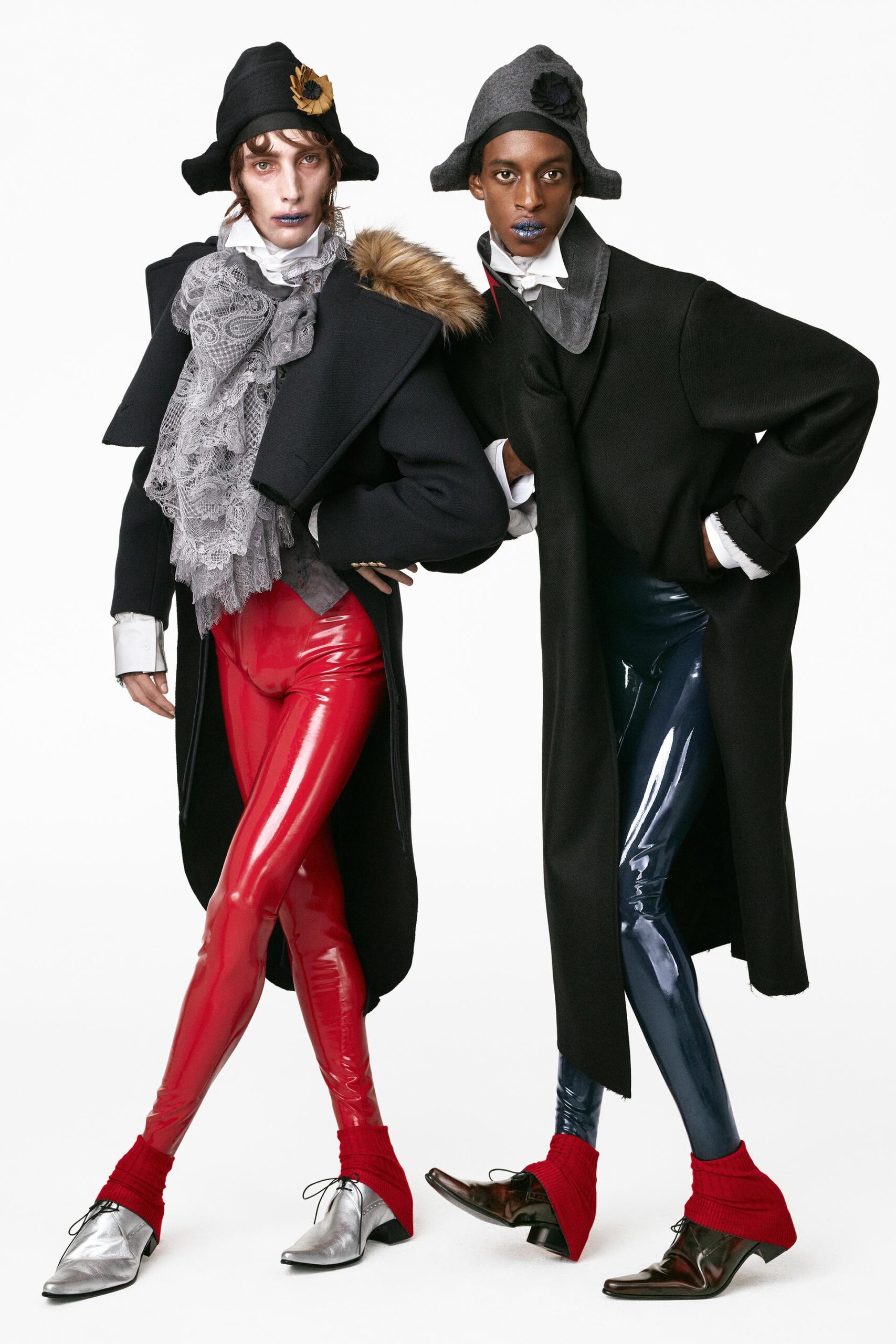
As a result, the clothes possess something that has always been essential in Galliano’s fashion: they create a character, not just a look.
The most interesting things are created at the intersection of beauty and strangeness
Tri-Chic is a good example of this method. A bag inspired by a garbage sack is transformed into a multifunctional accessory that can be worn in several ways. This is not just a striking concept. Galliano once again takes an object devoid of prestige and changes its code.
Similarly, long gloves, bonnets and hats created with Stephen Jones, winklepickers with absurdly elongated toes, or coats with deliberately distorted proportions work in the same way. Their power does not come from ornamentation, but from shifting a well-known element several steps beyond its original function.
This is exactly what sets Re{form} apart from most designer collaborations with high street brands. Here, the name is not just an addition to the product. The name transforms the product.
London has already responded
Queues at Bond Street show that Re{form} is not just a project for the industry. The collection has sparked genuine interest among customers, and the limited availability of some models further gives it the allure of a coveted item.
This is, in fact, another paradox of the project. Galliano reaches a mass audience, but does so through a collection that in many ways follows the logic of collectible fashion: limited quantities, a strong signature style, distinctive pieces, and prices that go beyond the standard Zara model.
The Re{form} Zara Collection (Vol. 1) as Galliano’s third act
The designer describes the collaboration as the beginning of his “third act” — after his own brand, Givenchy and Dior, and a decade at Maison Margiela. This is significant, because Re{form} does not look like a stopover between luxury fashion houses. It appears to be a conscious attempt to see what happens to his method when he is given access to the scale of Inditex.
The first collection suggests that the answer is quite fascinating.
In August, the planned Galliano exhibition at the Metropolitan Museum of Art was canceled, which once again reignited the discussion about his public comeback. This is a significant context for the premiere, but it does not change the fact that Re{form} should also be evaluated as a fashion project — for its construction, concept, and execution.
And here Galliano remains surprisingly consistent.
He didn’t create a “Galliano-style Zara.” He did something much more interesting: he treated Zara as a raw material. And he elevated mass-market, chain-store fashion to the level of art. Galliano doesn’t simplify high fashion for the mass customer, as is often the case in collaborative collections between famous designers and Zara or H&M. Instead, he raises the bar for the mass customer very high and confronts them with silhouettes known from Haute Couture.
That’s why Re{form} is worth attention not only as a collaboration between a big name and a high street giant. It’s an experiment on the boundary between designer fashion and mass production. And, at least in the first edition, it’s an experiment carried out with a distinctly personal touch.
Now it remains to be seen whether this bag works just as well outside the campaign, in the wardrobe, and for everyday use.
