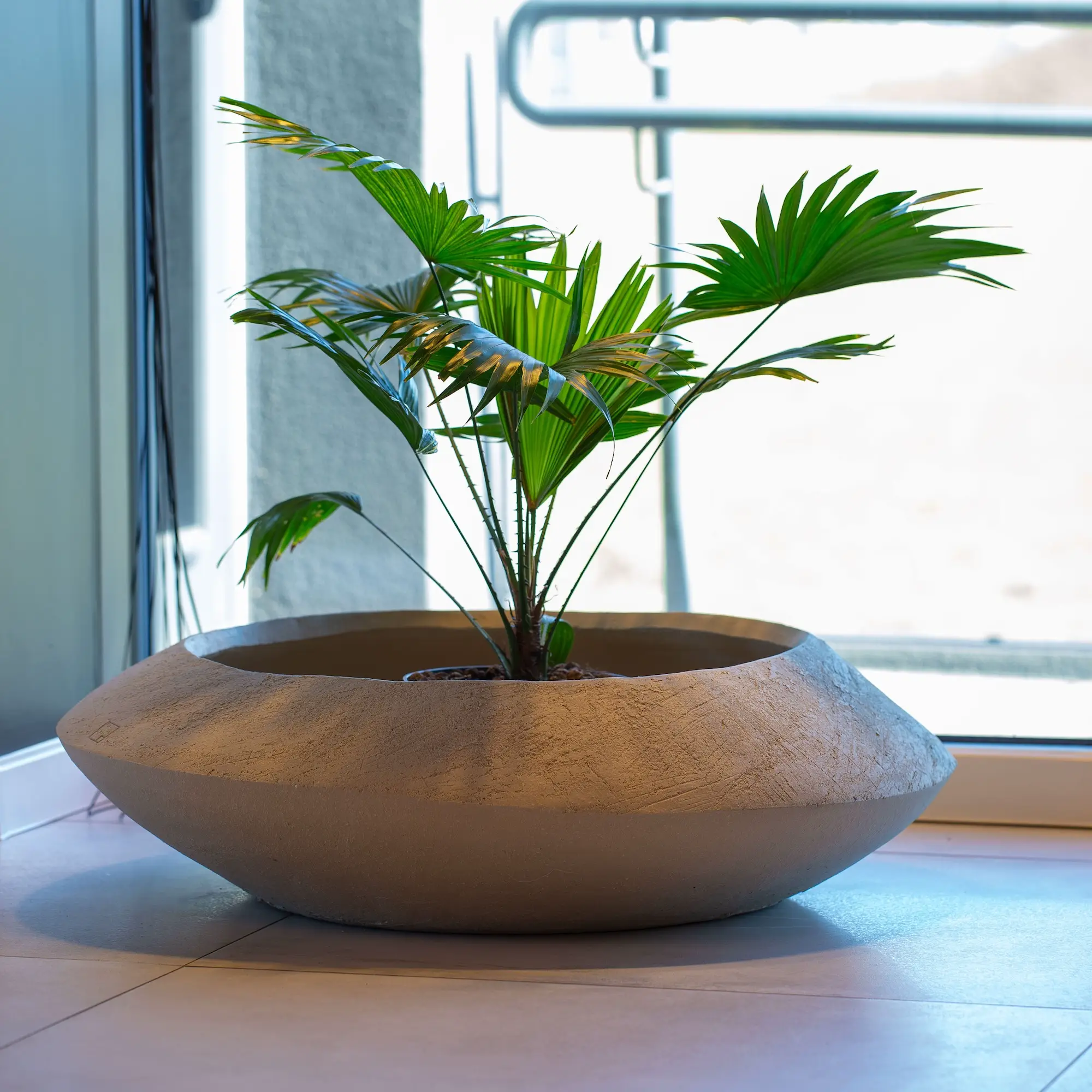
Imagine the lobby of a five-star hotel: marble flooring, six-meter-high ceilings, and at the center, a huge planter with monstera deliciosa, its leaves spanning up to two meters in circumference. This is no coincidence. Huge planters, we’re talking about dimensions of 50–150+ cm in height and diameter, with a capacity of 50–500+ liters, have become a premium code in interior architecture.
Biophilic design is no longer just a buzzword; now it means concrete projects and budgets. Large plants in monumental pots completely transform the perception of a space. Where does it work best?
Atria and lobbies of boutique hotels
Class A offices (especially reception areas and coworking spaces)
Private residences with high-ceiling living rooms
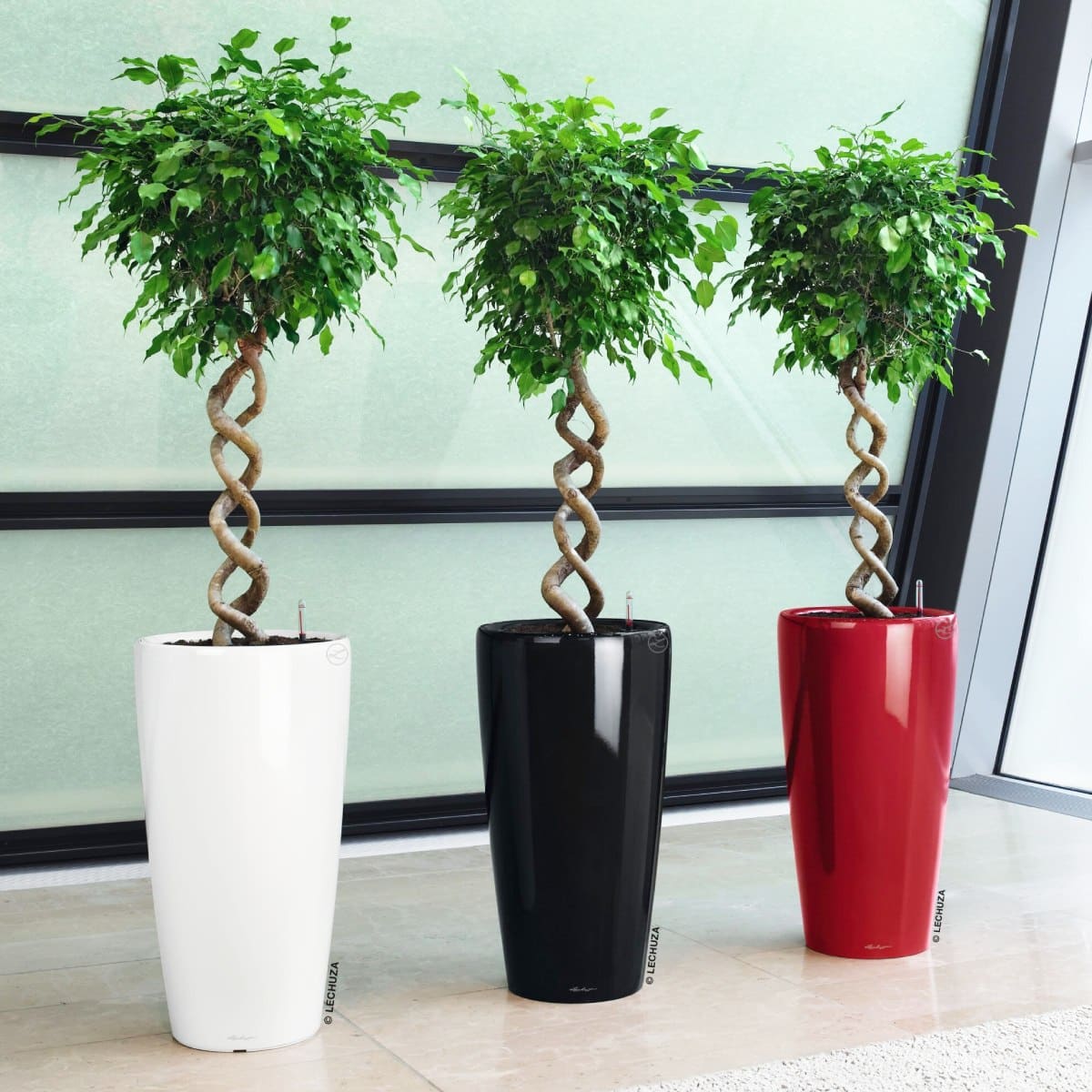
photo: lechuzaus.com
Importantly, the premium segment includes hand-glazed ceramics, mineral composites, PE/PP resins with a matte finish, and even metal constructions with self-watering systems. This solution: less work, more impact. Prices? From several hundred to tens of thousands of euros per piece, depending on craftsmanship and technology.
Next, we will look at how to properly choose such pots to make the investment worthwhile.
How to recognize premium quality in XXL indoor planters?
Real premium in large indoor planters is not just about impressive looks. It’s a combination of materials that truly withstand years of use, thoughtful features, and an honest approach to production. Sounds vague? Let’s get specific in a moment.
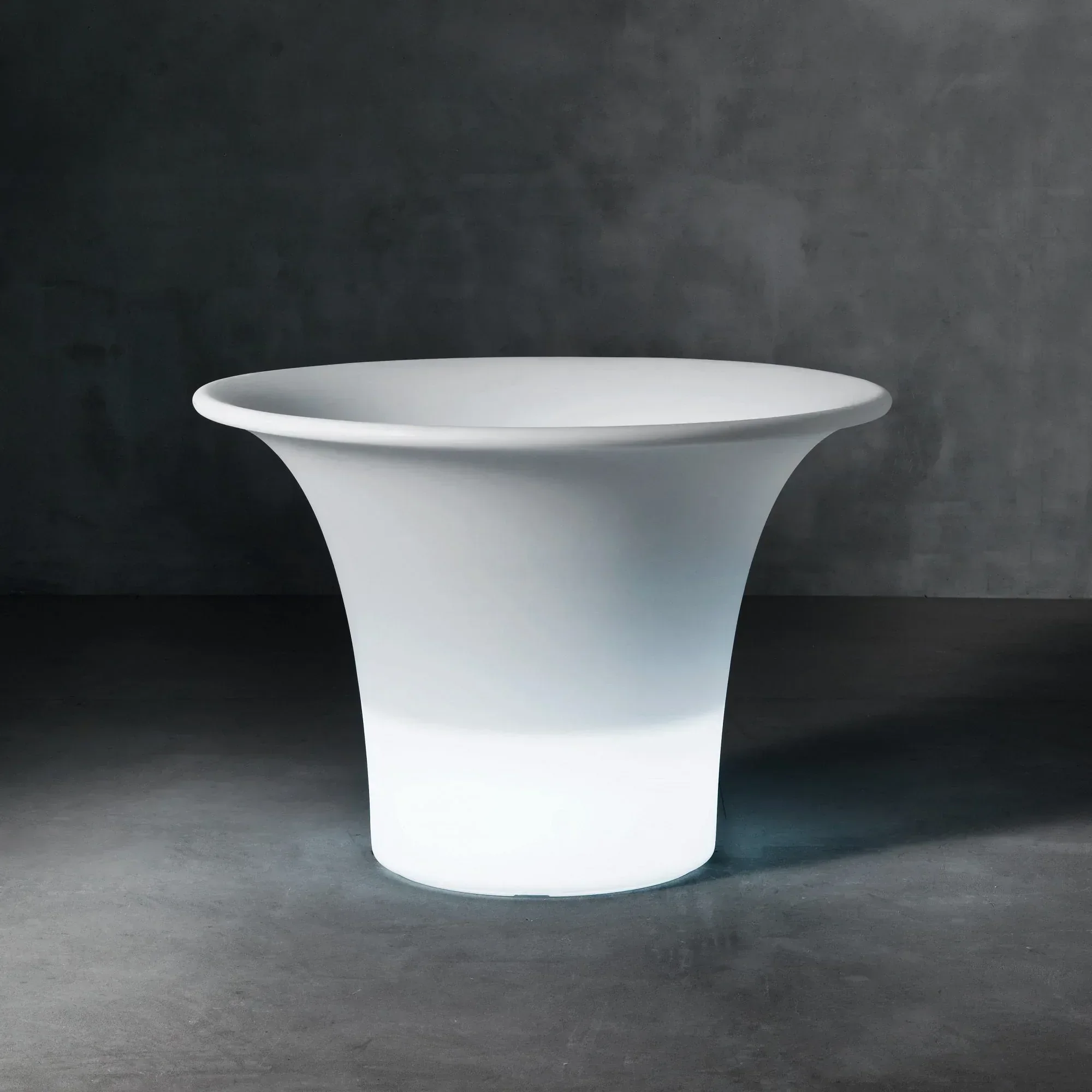
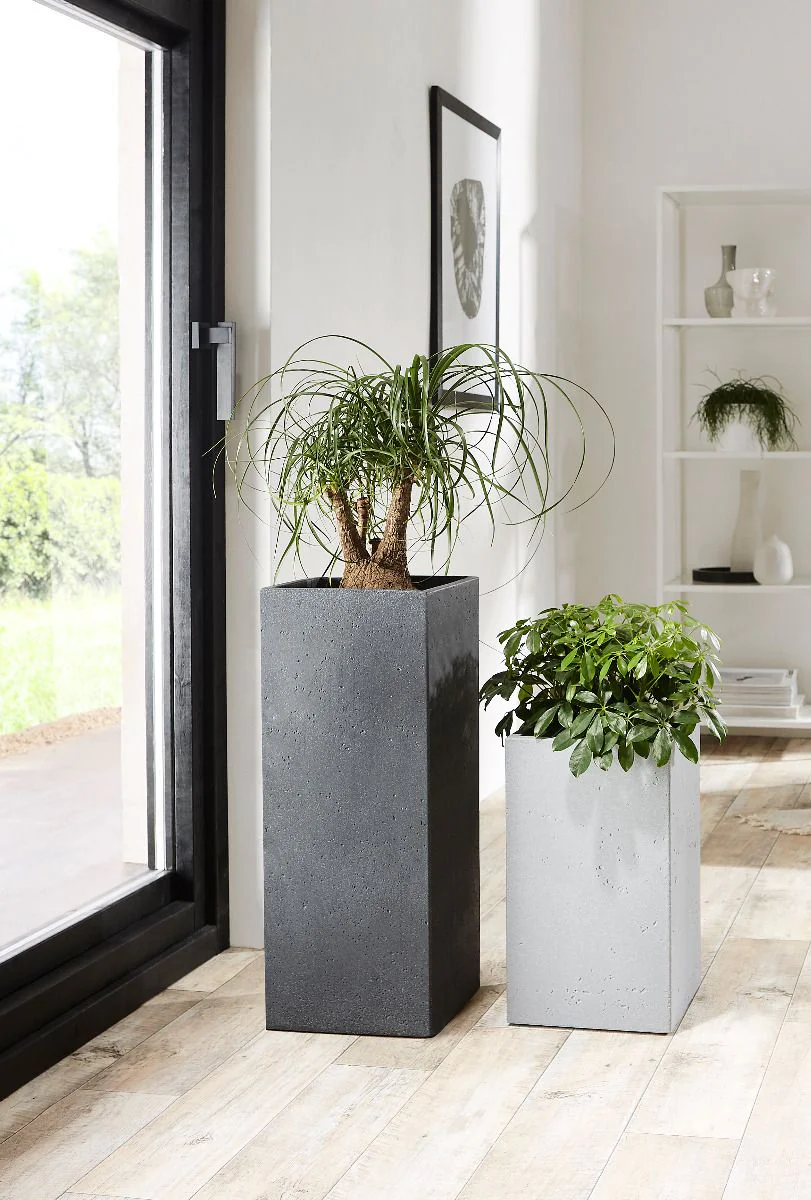
photo: serralunga.com
Materials and durability that matter
Top-quality ceramics feature low porosity (around 3%), which means a lower risk of salt efflorescence and easier cleaning, as the material simply absorbs less. Premium terracotta is breathable, but manufacturers balance this with proper firing. LLDPE resins or polypropylene with rotational molding provide lightness for diameters of 60-90 cm and sometimes weigh less than 8 kg, while through-body coloring ensures that scratches won’t reveal a different color underneath. Fiberglass and composites offer design without geometric limitations. Metal (stainless steel, corten) appears in hybrid projects, though usually as an accent.
Frost resistance down to -30 or -35°C is claimed by many, but indoors, UV stabilization (prevents fading in window light) and surface resistance to scratches during moving or cleaning are more important. Premium also means coatings that do not require special detergents.
Smart features and ergonomics in the interior
Self-watering systems with cartridges offering autonomy of “up to 12 weeks” (realistically 6-8, depending on plant species and temperature) are standard in the premium segment. Water level indicators eliminate guesswork. RGBW LED options turn the pot into a lighting element, although not everyone needs them.
Practically? Inserts on wheels or mobile platforms, because moving a 40-kilogram composition with a palm tree is quite a challenge. Modularity allows you to adjust the height or combine several smaller units into a larger structure. Drainage holes (diameter from 28 mm) and anti-leak inserts protect the flooring, and capacities of 50-500+ liters must suit the root systems of ficus or olive trees.
A sustainable choice without greenwashing
PCR recycling reaches up to 100% in some production lines. Certifications such as Blue Angel or transparent data on carbon footprint (not just marketing slogans) are signals that the brand takes ecology seriously. Today, premium includes the product life cycle, not just aesthetics.
Quick premium checklist:
5+ year warranty, not 2 years
Mass coloration or UV-stable coating
Self-watering system or at least an insert with a reservoir
Weight allowing relocation (max 15 kg for Ø80 cm)
Clear information about recycling and certifications
Drainage holes and protective inserts included
Now that you know what to look for, it’s time to take a closer look at specific brands from the European top tier.
Top 5 premium brands
Each of these European companies has chosen a different approach, so instead of lengthy descriptions, let’s get straight to the point. The table below shows how they differ and who they are designed for.
Brand
Country
Materials
Scale
Key features
Design icons
Atelier Vierkant
Belgium
Clay, terracotta
up to 100+ cm
Artistic glazes, handmade forms
Traditional craftsmanship
LECHUZA
Germany
PP, LLDPE
up to 2 m+
Self-watering systems, IoT
Eugeni Quitllet
Scheurich
Germany
HDPE, ceramics
up to 120 cm
Mobile modules, premium finishes
Functional classics
Serralunga
Italy
Polyethylene composites
up to 2.5 m
RGBW LED, rotary molds
Zaha Hadid, Rodolfo Dordoni
Vondom
Spain
Composites, resins
up to 2 m+
RGB lighting, UV resistance
Philippe Starck
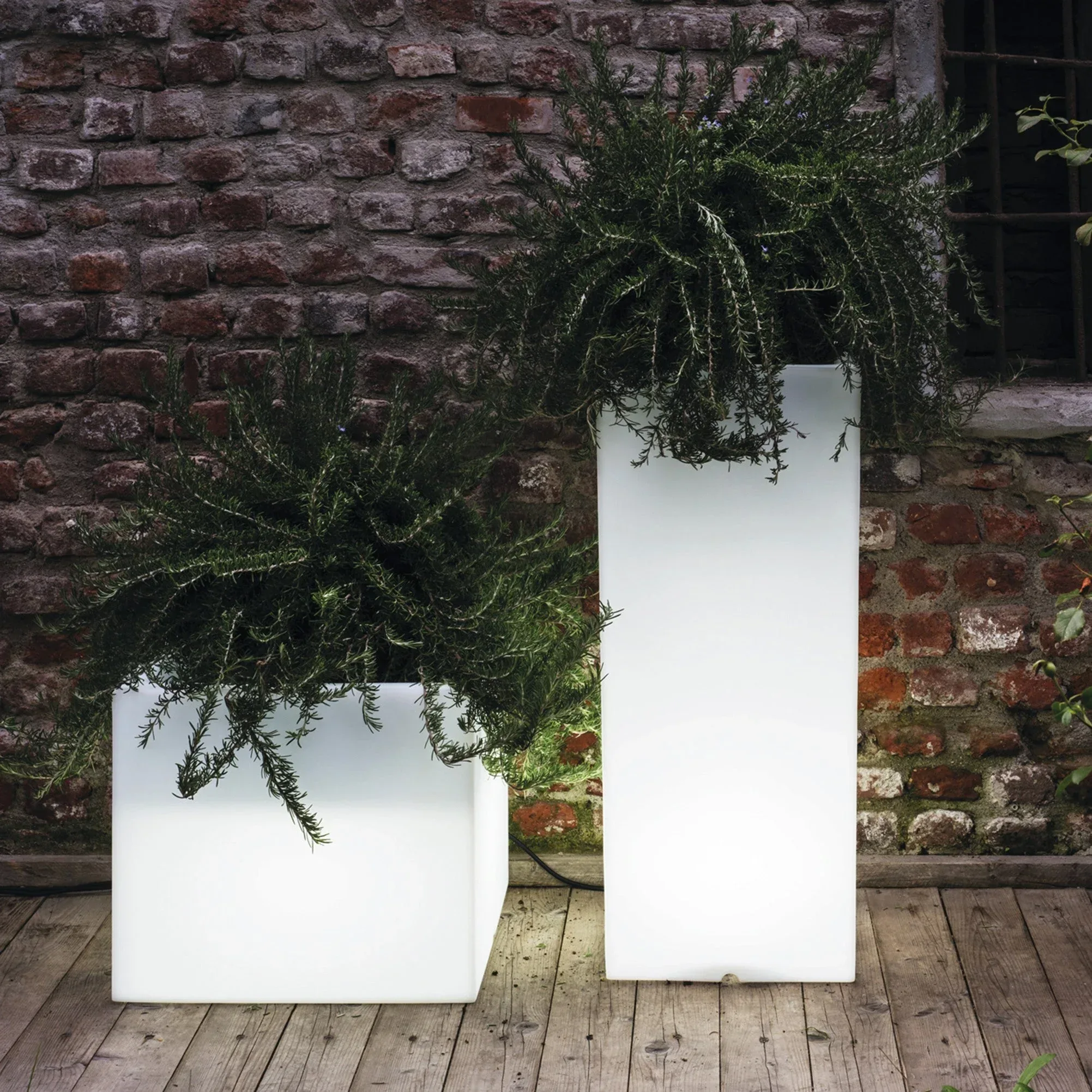
photo: vondom.com
What stands out right away? The Germans focus on technology and functionality (self-watering, modularity), while the Italians and Spaniards go for spectacular forms with lighting, and the Belgians stick to tradition. All of them operate in the premium segment, where prices range from hundreds to tens of thousands of euros, depending on size and finish.
Atelier Vierkant is the choice for residences with soul, LECHUZA works well in modern office buildings and atriums (where no one will remember to water the plants), Serralunga and Vondom dominate in boutique hotels and representative spaces. Scheurich? A universal, sturdy German option for most commercial applications.
Now let’s dive into the profiles of individual brands so you know exactly what to expect.
Craftsmanship and ceramics
Ceramics on an XXL scale are more than just a large vase. They are a physical presence, mass, a texture you can feel when you stand beside them. In the hand-shaped clay or the precisely glazed surface, you read the story of the process, not just the product.
Atelier Vierkant
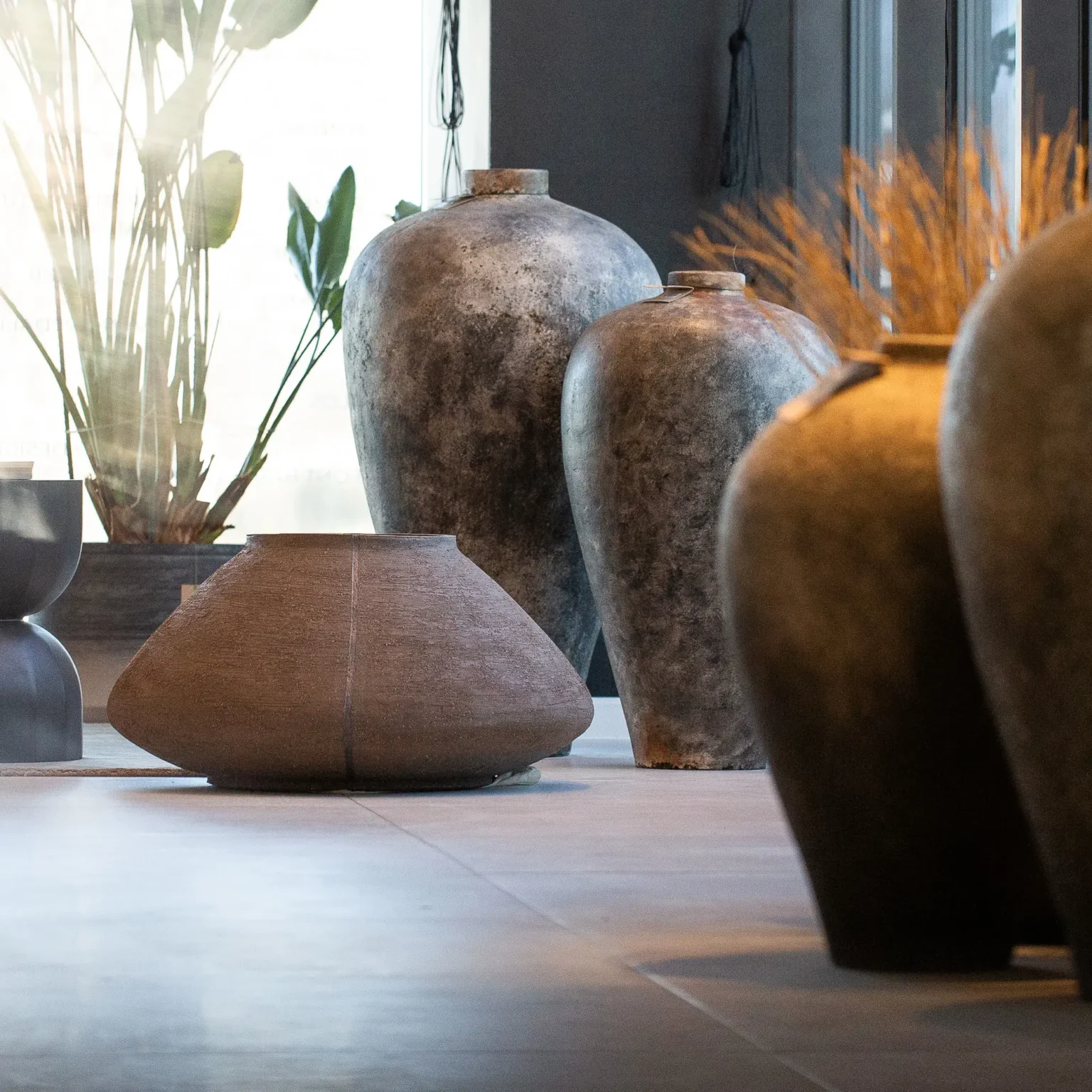
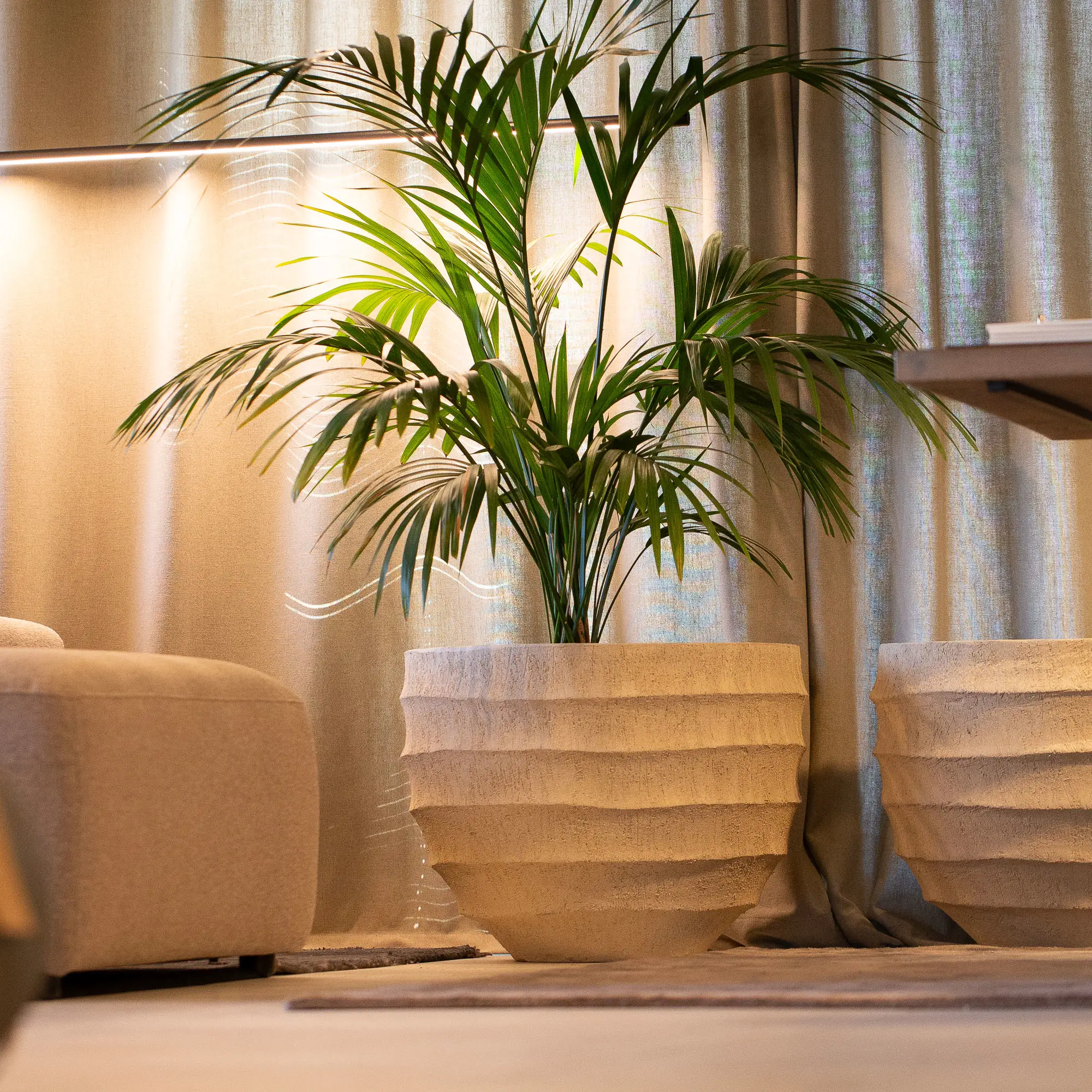
A Belgian family workshop where each piece is handcrafted. They use local clay from Western Europe, fire it at around 1,200°C, and create big things—really big (we’re talking over 100 cm tall). What sets Vierkant apart? The textures. Hand-carved grooves, irregularities, fingerprints in the ceramics that ensure no two pots are ever the same.
Every piece from Atelier Vierkant is a work of art, not just an accessory for a plant.
photo: ginglas.com
They produce around 70 tons per week, which sounds impressive, but it is still an artisanal scale. Here:
mass and form matter more than smoothness
each pot has its own weight (literally, lifting it is a challenge)
patina and natural finishes instead of lacquers
Scheurich
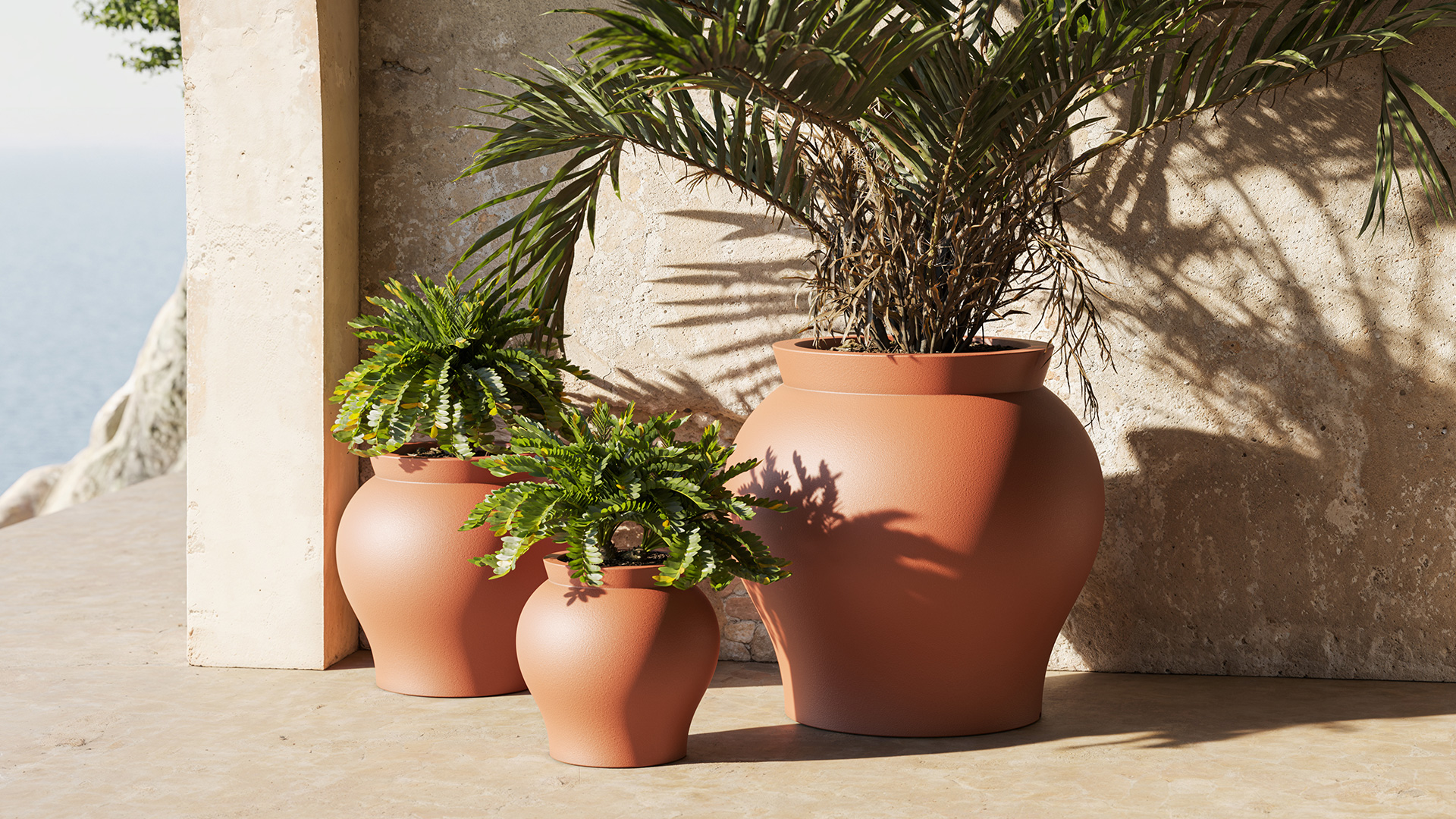
The Germans approached the subject differently: precision, innovative glazes, and surface effects that imitate concrete, stone, and metal. Scheurich is a guarantee of Made in Germany plus durability that people talk about for years. Their premium lines have a touch of industrial luxury, eco-friendly production processes, and finishes that look like they weigh a ton (though they’re lighter than you’d expect).
photo: scheurich-shop.de
They work well when you want to:
modern minimalism in the hotel reception
the “heavy stone” effect without any issues with the flooring
a surface that can withstand a public interior
Where does ceramics take center stage?
Galleries of art, corporate atriums, museums, boutique hotels. Wherever a planter is not meant to disappear, but to engage in dialogue with the architecture. Vierkant fits organic interiors, industrial lofts, spaces with soul. Scheurich finds its place in representative halls, premium office buildings, anywhere details and timelessness matter.
Resins and innovations
Resins are now the standard in large premium planters, as they combine something neither ceramics nor concrete can offer: radical lightness at a meter scale, smart features, and freedom of form. These three brands have gone the furthest in technology and design.
LECHUZA
The Germans from Dietenhofen have perfected the irrigation system in polypropylene pots with metallic lacquers. How does it work? Removable liner + reservoir + LECHUZA‑PON (mineral substrate) + water level indicator. Autonomy lasts up to 12 weeks, which may sound abstract, but it means: travel, vacation, peace of mind. Lines:
“Classico” – classic top hat, suits any occasion
“Cubico” – minimalist cube, sharp edges
“Canto” – slightly tapered geometry, more subtle than a cube
All produced in Germany, “Blue Angel” certificate for recycling and low emissions. Gloss and metallics look more expensive than they are.
Serralunga
A family company from Biella (since 1825!) has elevated rotational molding of LLDPE to the level of urban sculpture. Planters over 2 meters are standard, the weight is remarkably low, 100% recyclable, UV-stable for decades. But the real breakthrough lies in the designs:
“Flow” by Zaha Hadid – organic waves, as if sculpted by the wind
“Holly” by Philippe Starck – a radical form, recognizable from afar
photo: serralunga.com
LED highlighting options are now standard in large-scale projects. Serralunga is the choice when a planter is meant to be an art piece, not just a container.
Vondom
The Spanish use HDPE/PE in rotational molding, but they focus on avant-garde shapes and RGBW LED technology. “Bloom” by Eugeni Quitllet is the best example: a geometric, plant-inspired form with built-in lighting in 16 million colors. Matte and lacquered finishes, a wide palette, self-watering systems in selected models, resistance to temperatures from minus to extreme. Vondom is scenography, not just garden furniture for interiors.
Final
When you choose an XXL planter, you’re not just buying a container for a plant. You’re investing in an element that transforms the energy of a space, sets the tone for the interior, and makes a room feel complete. That’s why premium brands from Europe devote so much attention to both form and function. At this scale, there’s no room for half-measures.
photo: ginglas.com
A good XXL planter is an investment that serves your space for years, so see the portal’s offer. When form meets thoughtful functionality, you get a solution that not only looks impressive but truly works. And that’s exactly why it’s worth choosing European craftsmanship over cheap imitations.
Finally, an interior that impresses is one where every element has its place and meaning. Large planters are not a trend; they are a way to create interior architecture that stays with us for longer.