




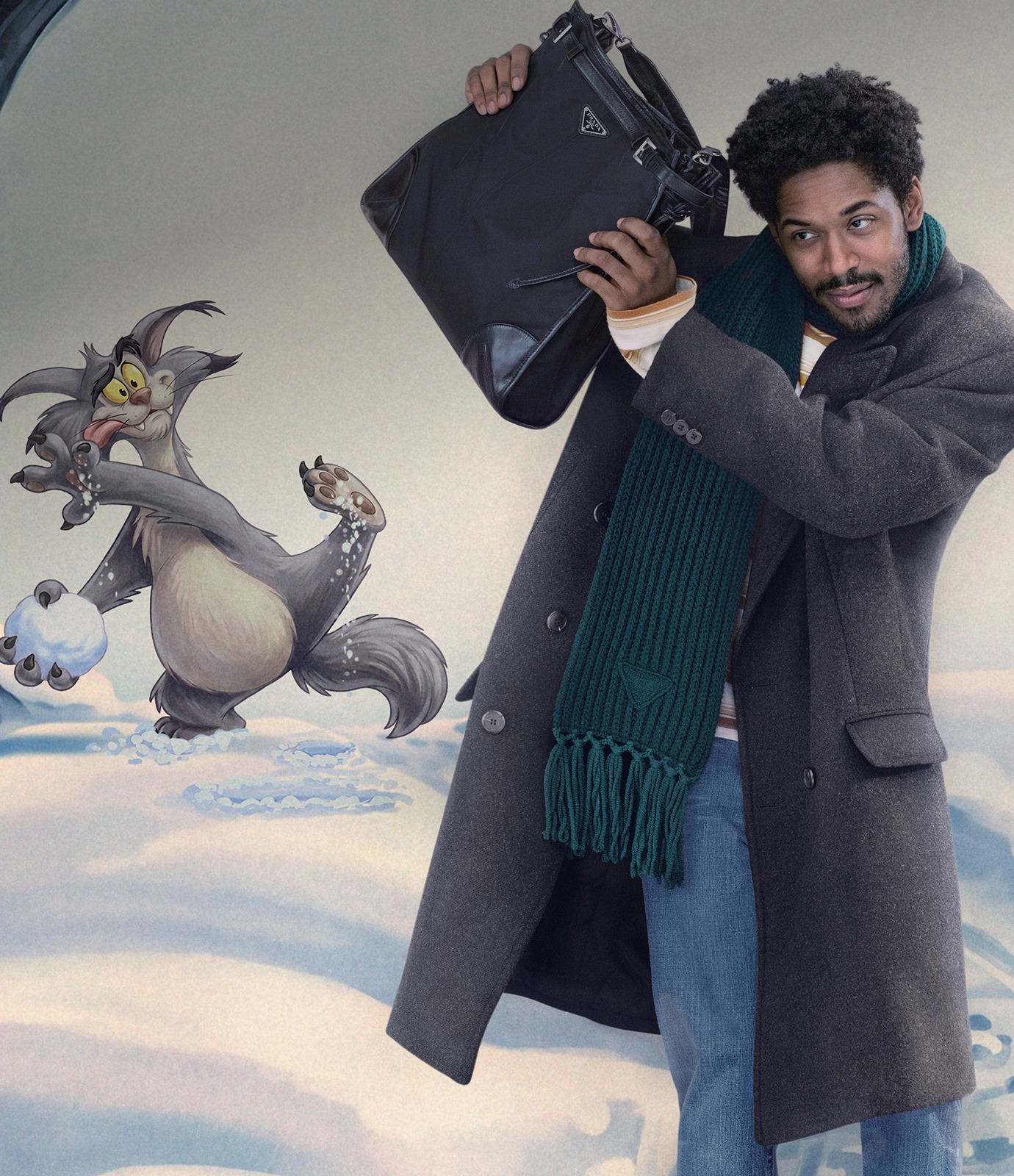
Prada returns to hand-drawn animation. It recently released a beautiful holiday commercial based on the work of artists. Tiffany falls in love with the 90s. The Little Prince appears on Berluti leather. There are many examples of luxury brands that, after several years of fascination, are turning away from artificial intelligence and strongly embracing craftsmanship—not only in the process of creating clothes, shoes, or bags, but also in their campaigns and the way they communicate their ideas to clients. Is contemporary luxury breaking up with AI?
Luxury breaks up with AI? Prada, Berluti, and Tiffany campaign inspired by the ’90s. The fight for authenticity in the world of prestige
Today, perhaps more than ever, luxury is associated with the human touch, imperfections, nostalgia, and true craftsmanship. Prada invites us into a world of hand-drawn animation, Tiffany & Co. brings back the emotions of the ’90s, and Berluti transforms the literary imagination of The Little Prince into leather works of art. This is no coincidence. Luxury is rediscovering the value of what is human .
Not long ago, the fashion world was fascinated by the possibilities of technology. Perfectly crafted worlds, unreal sets, digital models, and images that required neither a photo studio nor a large production team to create. Artificial intelligence opened up vast opportunities for brands. However, it quickly became clear that when everything can look perfect, perfection itself stops being impressive.
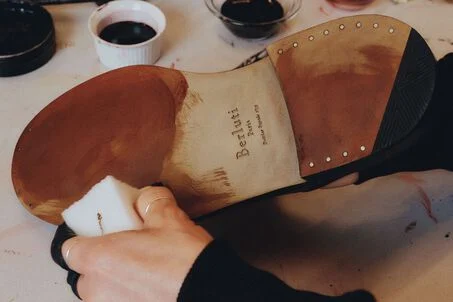
That’s why something seemingly opposite is becoming an increasingly interesting value: the visible trace of human labor. In fashion, there is a phenomenon known as effort signaling —showcasing the effort, time, and work invested in creating something. Brands no longer want to show only the finished product. More and more often, they also present the people, processes, and techniques behind its creation.
Prada holiday campaign: a return to the pencil-drawn world
In the holiday campaign “Drawing Prada: Animated by Hand,” Prada invites you on a journey into a world that looks as if it were taken straight from a classic Disney animation. Instead of computer-generated fantasy landscapes, we are presented with hand-drawn winter scenes, forest animals, and a fairytale atmosphere.
The campaign features, among others, Maya Hawke, Sadie Sink, Kelvin Harrison Jr., and Luther Ford. Real actors are placed in a world created by illustrators under the direction of John Pomeroy—a legendary animator whose portfolio includes productions such as “Pocahontas” and “Fantasia 2000.”
Here, the artists’ handcrafted work is part of the story. It shapes it just as much as the clothing.
Tiffany & Co.: nostalgia that sells emotions
Tiffany & Co. has chosen a different path. Instead of experimenting with new technologies, the brand draws on collective memory and the aesthetics of the 1990s.
In the holiday film “You & Me,” starring Amanda Seyfried, the brand builds the emotional weight of the story around the relationship between mother and daughter. The key element is a Christmas keepsake from December 1992, which returns years later as a symbol of family bond and remembrance.
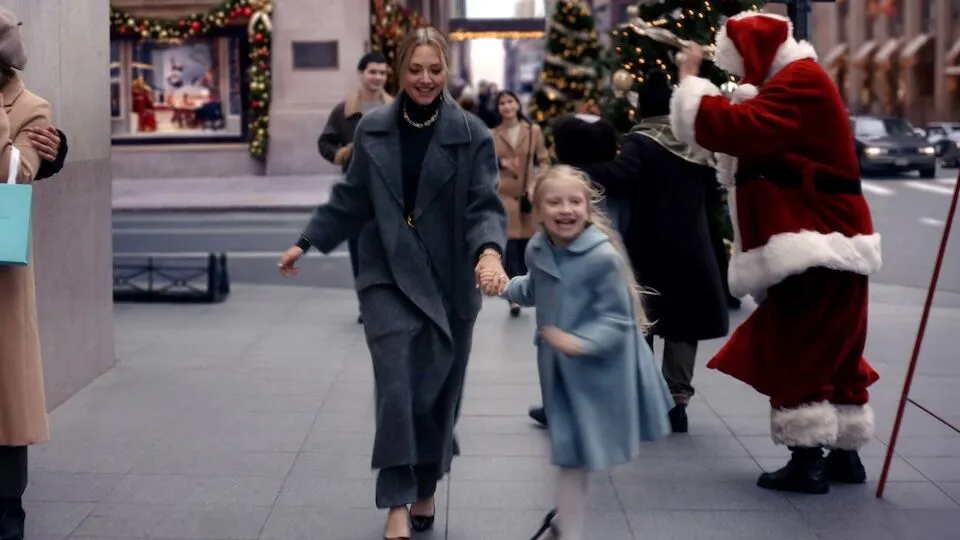
This is not a classic jewelry advertisement, where the main focus is on close-ups of diamonds and spectacular gifts. Tiffany tells a story. The jewelry is “only” its medium.
The Little Prince in the World of Berluti: When Literature Meets Craftsmanship
Berluti is renowned for its unique bespoke shoes. It is also known for its limited collections of artisanal leather goods. AI has not ventured here yet. This year, the brand decided to combine its artisanal heritage with one of the most recognizable works of literature – “The Little Prince” by Antoine de Saint-Exupéry.
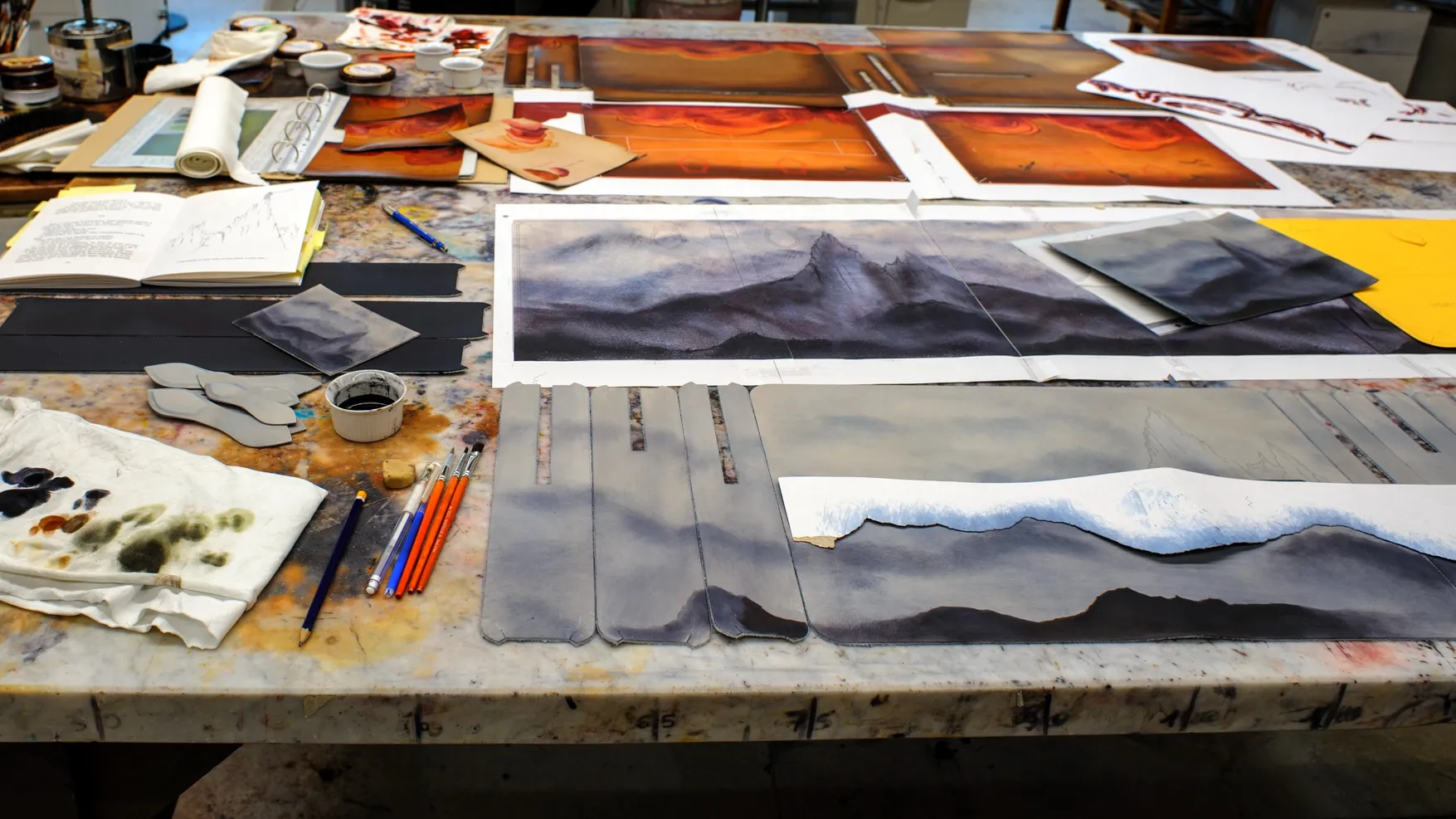
In Berluti’s workshops, leather becomes a canvas on which artists recreate a literary world through patination, laser engraving, watercolor painting, leather tattooing, and marquetry.
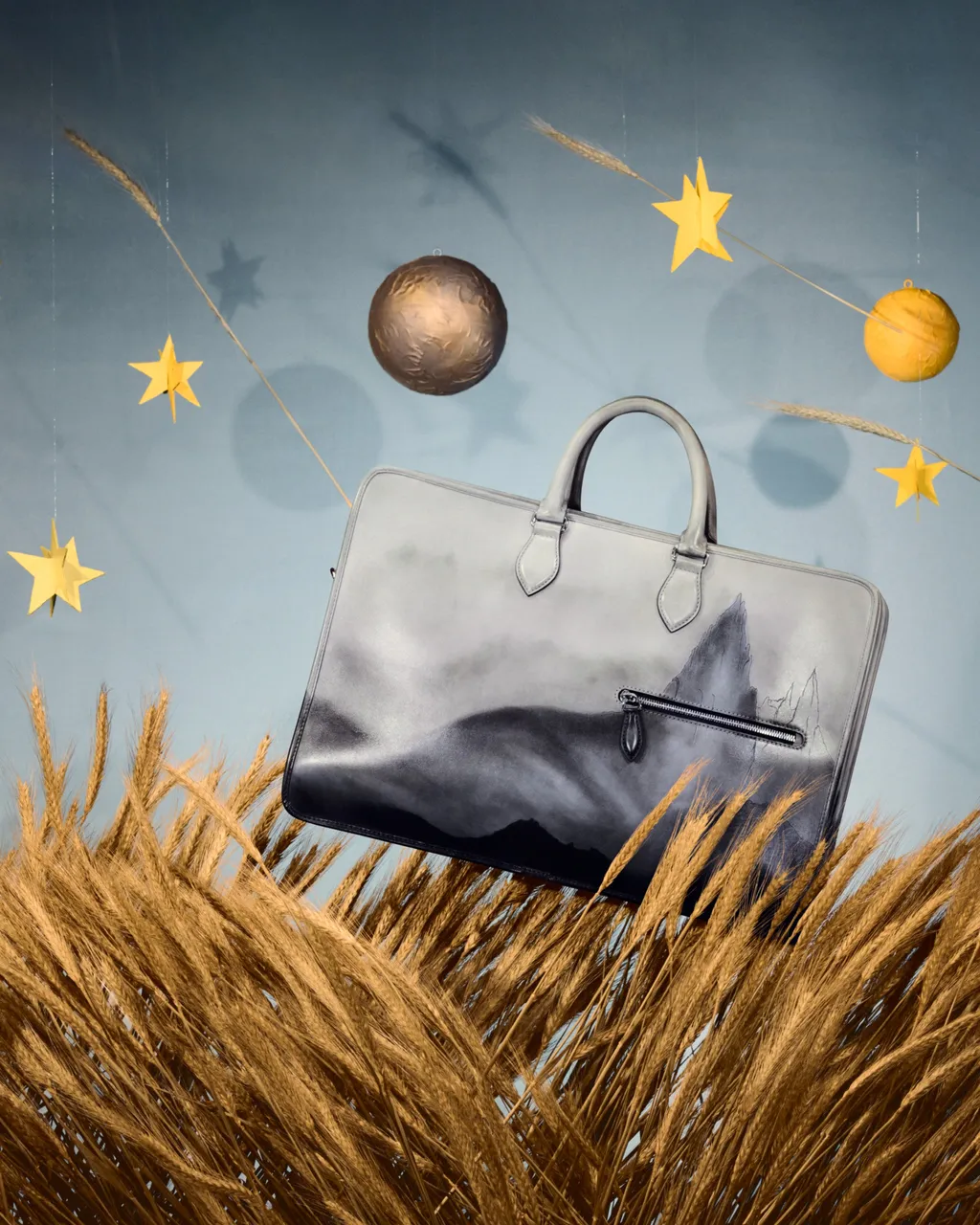
One of the most extraordinary projects is the Trois Nuits bag. Its creation requires as many as 72 hours of work. A mountain landscape has been crafted on its surface, built from multiple layers of artistic finishes.
The Makore Compact wallet is also particularly interesting. When folded, it looks abstract, but when opened, it reveals an illustration of a snake swallowing an elephant. One of the most recognizable motifs from the book.
Hermès: a digital world, but drawn by the human hand
An interesting example is also Hermès, which skillfully combines technology and craftsmanship in its marketing.
At the beginning of 2026, the brand invited illustrator Linda Merad to create a unique visual design for its website. Instead of a typical, perfectly polished interface, users were greeted with a whimsical underwater world full of seahorses, fish, eels, and other creatures.
The illustrations were created using traditional techniques. You can see the texture of the paper, irregular lines, and uneven color fills. Moreover, the drawings are not just decorative. They interact with the brand’s products and become part of the site’s navigation.
LOEWE: 2,000 watercolors instead of a digital shortcut
In the same vein, LOEWE, which will celebrate its 180th anniversary in 2026, has taken a similar approach. To mark the occasion, the brand has created a film composed of around 2,000 watercolor paintings crafted by ten artists under the direction of illustrator Joanna Blémont. This is an exceptionally meaningful choice. A brand whose history originates from a Madrid leather workshop has chosen to tell its story using a technique that demands patience, precision, and the individual artistry of its creators.
This is not just a nostalgic nod to traditional illustration. It is a reminder that creativity can take many tangible forms, and an image does not have to be instantaneous to capture attention.
Is luxury breaking up with AI? The end of fascination with technology or new energy at the intersection of craftsmanship and technology
Luxury does not have to reject artificial intelligence to reclaim the value of human creativity. The modern consumer is increasingly aware of how images, products, and campaigns are created. They notice when something is repetitive, lacks character, and is made solely to quickly fill advertising space.
That’s why it’s so important to show not only the result, but also the journey that leads to it. The artist who spends hours painting a single picture. The craftsman who works for dozens of hours on the details of a leather bag. The family story that gives jewelry a meaning beyond its material value.
Perhaps this is exactly what luxury needs most today: not more spectacular images, but reasons to truly be captivated by them.
