




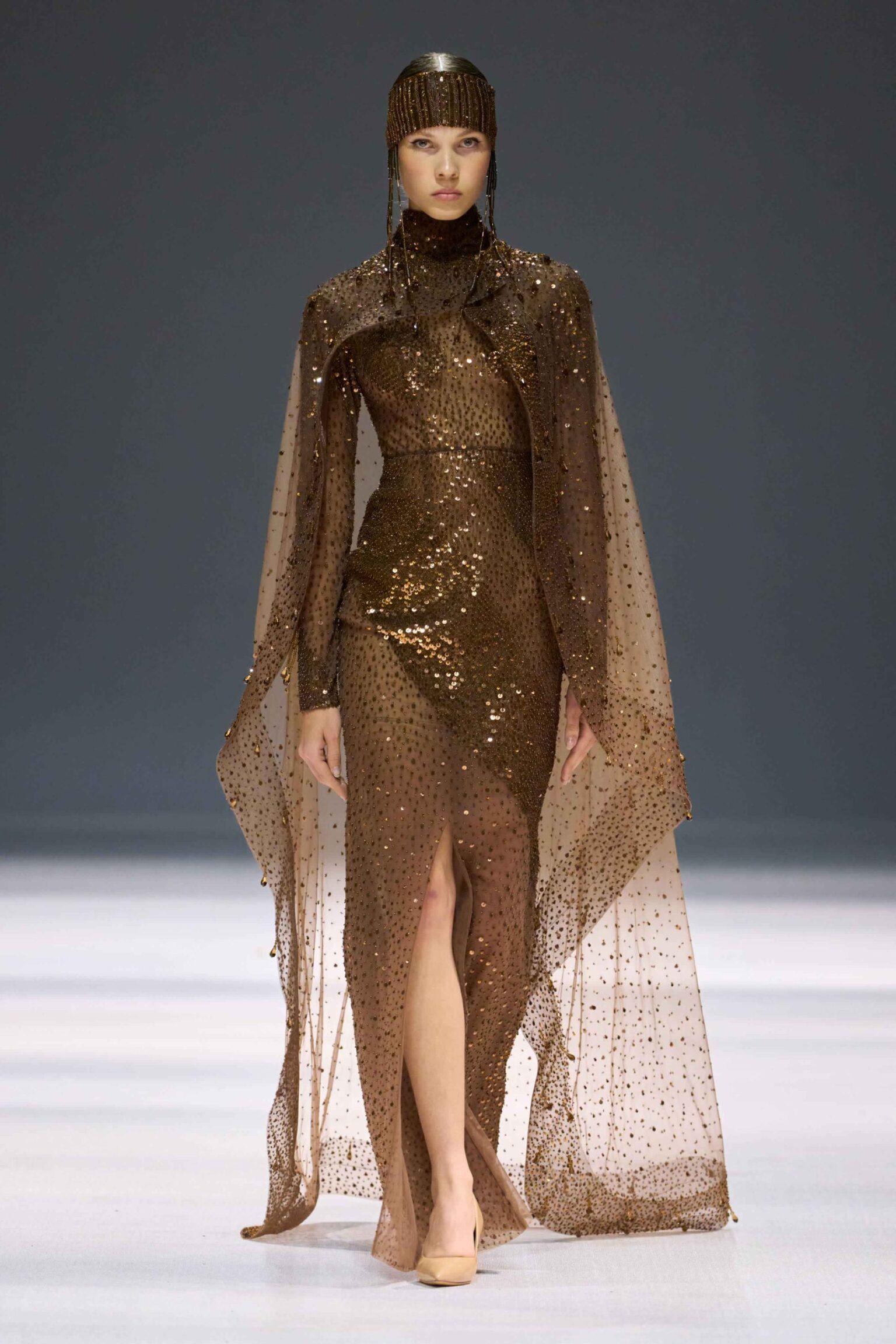
Dubai Fashion Week does not yet carry the same weight as Paris, Milan, London, or New York. However, it does have something that the traditional fashion capitals are finding increasingly hard to match: a market, capital, an international audience, and a clear ambition to become a place where fashion meets business. The Spring/Summer 2027 edition is highly international and diverse. Here, we have both emerging designers and established brands from around the world.
Dubai Fashion Week Spring/Summer 2027 at D3
Dubai Fashion Week Spring/Summer 2027 took place from October 22 to 26. It was held in the Dubai Design District. The choice of location is significant. D3 is not a traditional commercial district, but a purpose-built ecosystem for the creative sector, where fashion exists alongside design, art, architecture, and business. So, are we witnessing the emergence of a platform that connects different markets?
Fashion UAE and much more
And indeed, the list of participants in this year’s edition is geographically diverse. Alongside designers from the United Arab Emirates, there were creators from Kuwait, India, Ukraine, France, Colombia, Jordan, Vietnam, Azerbaijan, and Trinidad and Tobago. This is no longer a program built solely around the local scene. Its structure says something important about DFW’s ambitions: Dubai wants to be a meeting place.
Not just the local scene
Among the SS27 names were both regional brands and designers recognized beyond the Middle East. Tarun Tahiliani brings the experience of Indian couture to the program. Yousef AlJasmi represents the strong Kuwaiti school of spectacular eveningwear. The French Weinsanto exemplifies the presence of a designer rooted in the European fashion circuit.
It is also interesting to note the participation of brands from markets that are less frequently seen at the center of the international calendar. A good example is Shoma from Trinidad and Tobago.
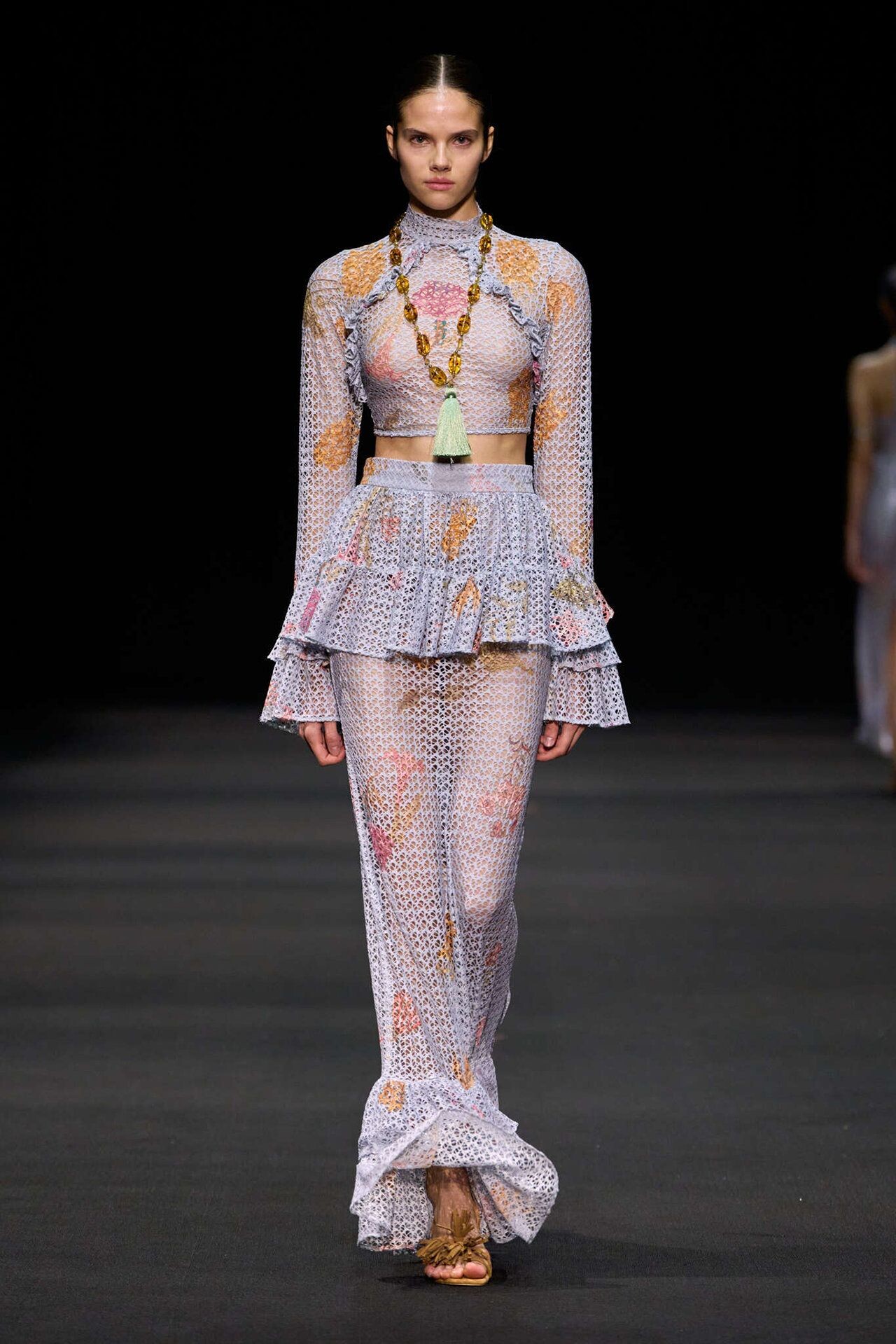
The SS27 Shoma collection played with color, floral prints, draping, and relaxed silhouettes, aligning with a more practical yet decorative direction in contemporary fashion.
Dubai wants to be a market, not just a stage
The most interesting aspect of SS27, however, is what happens off the runway. Dubai Fashion Week is expanding its program for buyers, inviting representatives from regional and international department stores as well as digital platforms. In addition, there is a collaboration with Harvey Nichols, which in October will showcase selected regional brands as part of a month-long pop-up.
This is precisely where the difference becomes apparent between an event that primarily aims to generate media images and one that focuses on building business infrastructure.
Fashion naturally needs photographers, editors, celebrities, and social media. But for a designer, orders, distribution, client relations, and the opportunity to enter a new market are just as important. In this respect, Dubai holds an exceptionally strong position. It is one of the region’s most important commercial and tourist hubs, and its luxury retail sector has long attracted customers from the Middle East, Asia, Africa, and Europe. Of course, this is also due to the unique character of the city itself.
Is this Paris already?
No. And an honest assessment of Dubai Fashion Week requires stating this directly. Paris /London/Milan Fashion Week is part of a long-standing fashion history and a system in which the world’s most important fashion houses operate. Dubai does not yet possess this historical capital. Nor can it boast a comparable number of major fashion houses whose histories are part of global culture. However, this does not mean its significance should be measured solely by these criteria. In a way, Dubai is redefining the concept of fashion week. This event is driven by internationalism, pace, access to capital, and proximity to one of the most attractive markets for luxury goods.
Dubai Fashion Week Spring/Summer 2027: What draws attention?
In SS27, what stands out is the sheer scale of this experiment. Brands from vastly different cultural and business backgrounds come together in a single program. Couture appears alongside ready-to-wear, local talents are presented next to designers operating on international markets, and runway shows are accompanied by a shopping program and collaboration with a global retailer.
The edition’s partners also demonstrate that DFW operates within a broader lifestyle ecosystem. KIKO Milano, Schwarzkopf, Spotify, Delano Dubai, and Joe & The Juice are not merely accessories to the shows. Collaboration with brands from various sectors is part of a model in which fashion week becomes an urban and commercial event.
This model is very Dubai-like: fast, international, and strongly focused on experience and business.
Prestige that is only just being built
The most accurate way to describe Dubai Fashion Week would be as an event of growing international prestige, but not yet with the status of a global fashion capital.
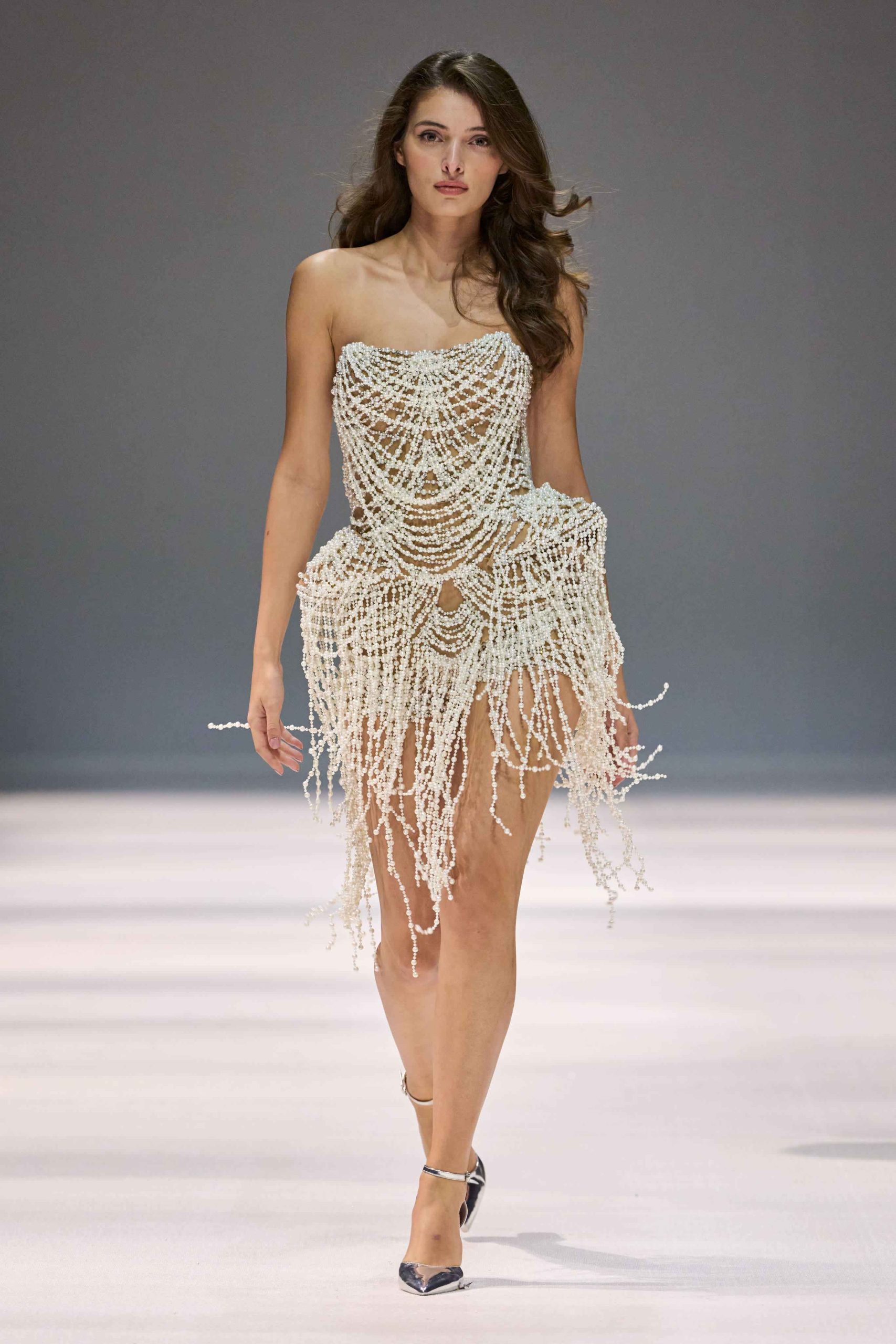
Its significance now goes far beyond the local level. DFW is able to attract designers from several continents, draw the attention of buyers, and create market access for brands that is of immense importance to the luxury sector. At the same time, it continues to build its own story and its own language.
And perhaps that is precisely what makes it most interesting right now. Paris doesn’t have to prove to anyone why it is Paris. Dubai still does.
If he manages to combine an international designer program with actual sales, the presence of buyers, a strong luxury market, and consistent development of local talent, Dubai Fashion Week could become one of the most important points of contact between the West, Asia, and MENA markets.
