




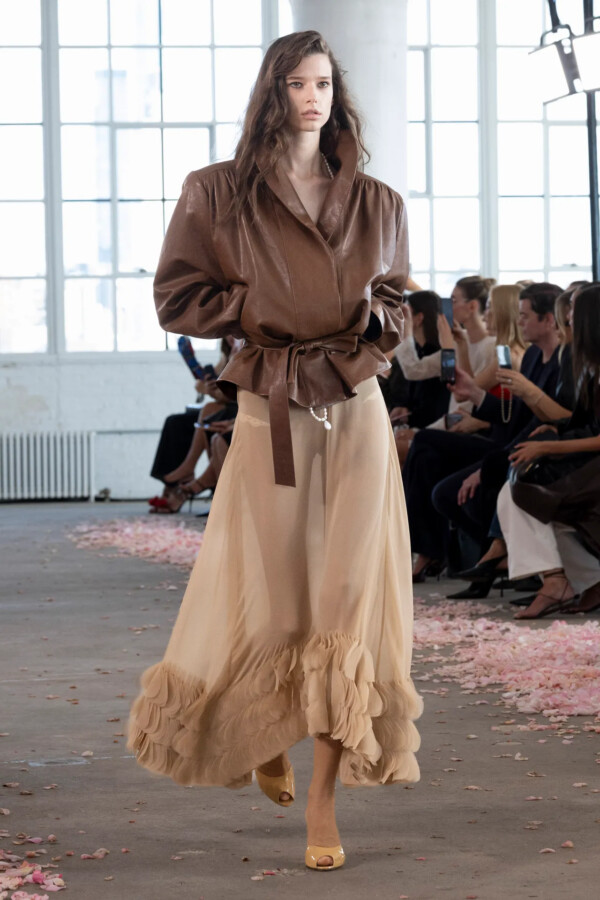
While most luxury brands require the backing of major conglomerates, multimillion-dollar budgets, and accreditation from prestigious Parisian schools, a Polish designer has built one of the decade’s most coveted fashion empires on her own terms. What is the secret behind the phenomenon of Magda Butrym, and what was her latest show on September 13, 2026 like—a show that captured the hearts of New York’s fashion scene?
The phenomenon of Magda Butrym had humble beginnings
The designer started out in Warsaw, without much publicity. She built her brand solely with her own resources. Today, she is a symbol that modern luxury does not need a French or Italian passport to set the rules in the global fashion capitals.
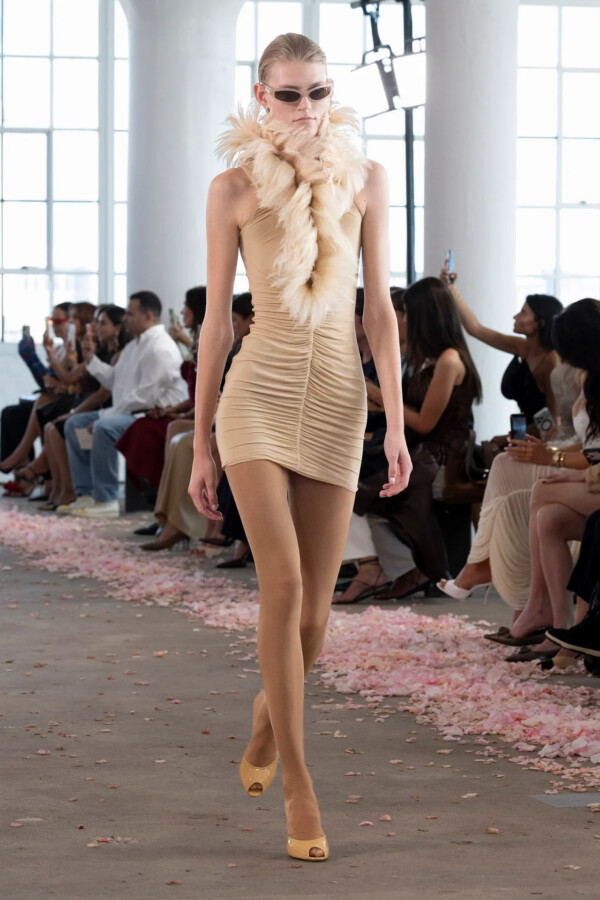
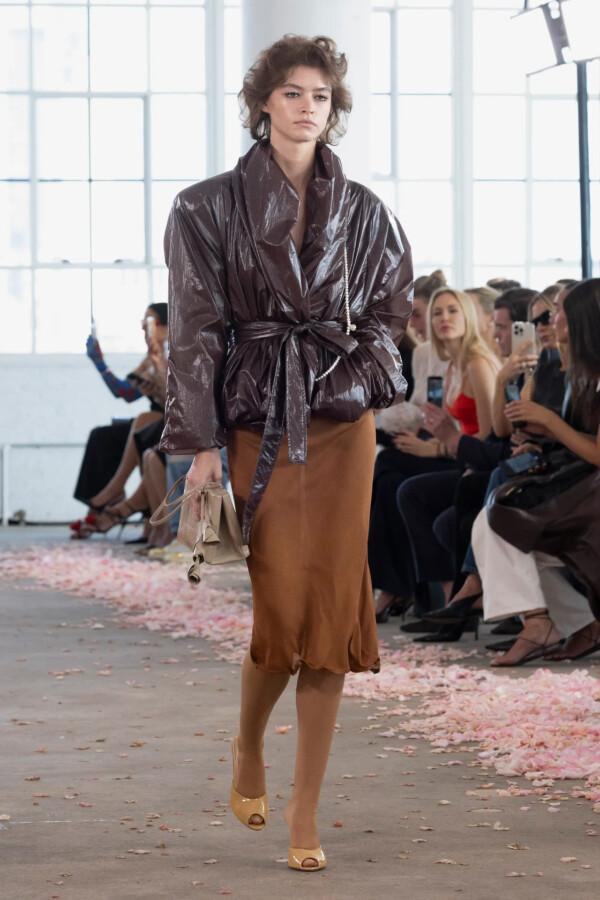
The Butrym phenomenon lies in an incredible sense of authenticity. Coming from a background as a stylist, the designer has always had a deep understanding of the female body, its movement, and the fact that clothing should serve the person wearing it, rather than being merely a conceptual sculpture on the runway. That’s why, instead of blindly following fleeting social media trends, she created a unique aesthetic code based on sensuality, distinctive construction, and Slavic heritage.
At the heart of her identity lies a controlled contradiction: powerful, exaggerated shoulders and sharp cuts of masculine silhouettes combined with uncompromising delicacy. Hand-shaped roses, silks, lace, tights, and sensual sheerness. It is this consistency and contrast that form the phenomenon of Magda Butrym.
How can Slavic nostalgia be translated into the language of global luxury?
A particular pillar of this success turned out to be Polish identity, which the designer made her greatest asset. At a time when local heritage is often pushed to the margins, Butrym invited craftswomen from small Polish towns to collaborate. It is their skilled hands behind the intricate Koniaków lace, crocheted sets, hand-knitted pieces, and woven leather details. Slavic nostalgia—the memory of a grandmother’s wardrobe, the warmth of home, and tradition—has ceased to be a relic of the past. Thanks to Butrym, it has become an ultra-modern definition of elegance.
The world went crazy for this aesthetic almost instantly. Clothes bearing the Butrym label found their way into the wardrobes of the most important pop culture icons without aggressive product placement. They are worn by choice by the likes of Hailey Bieber, Rihanna, Dua Lipa, Selena Gomez, Lady Gaga, Sydney Sweeney, and Margot Robbie, making the brand’s signature blazers and dresses with three-dimensional flowers dominate red carpets in Los Angeles and New York.
Why did the debut in SoHo and the tribute to Natalia LL change everything?
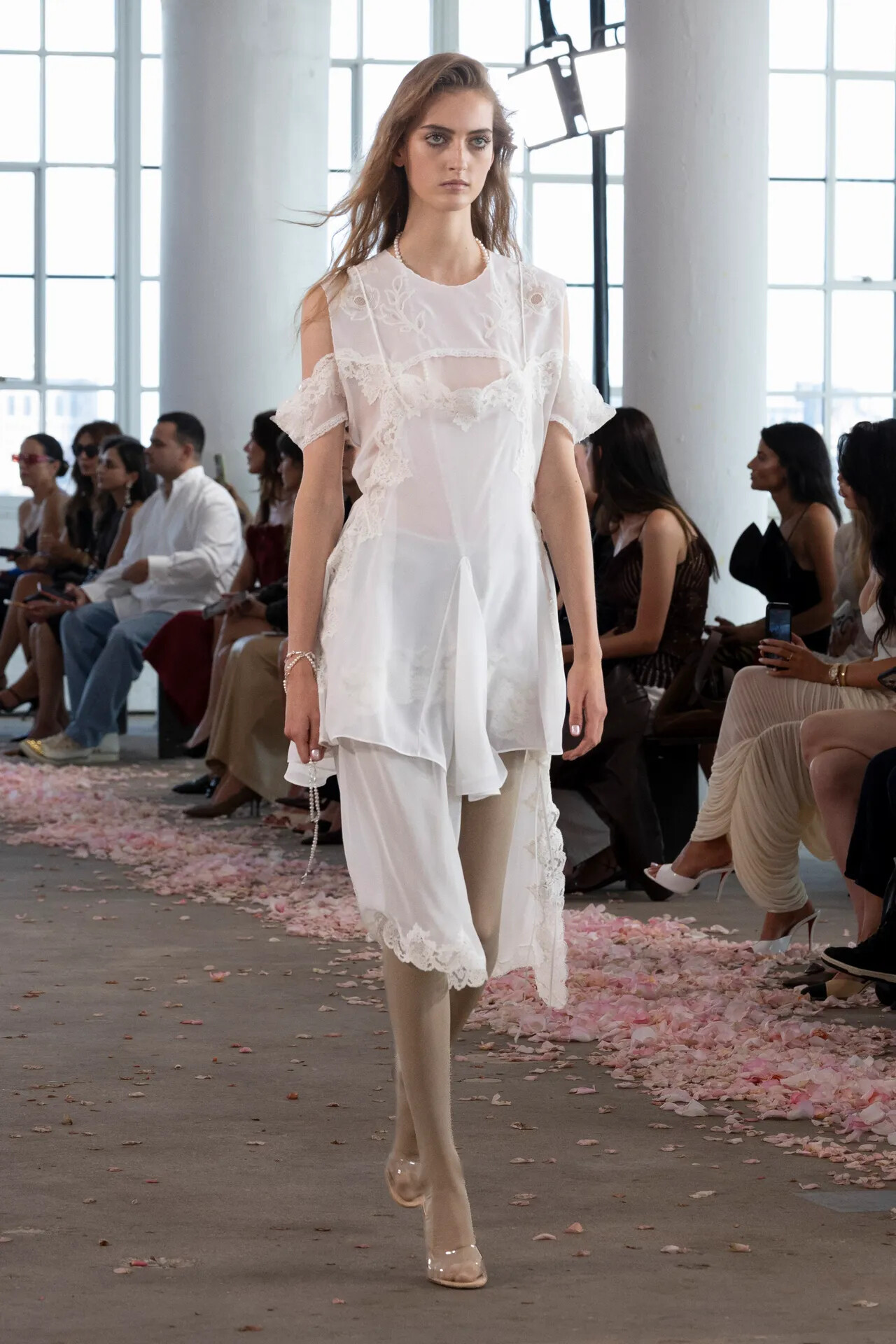
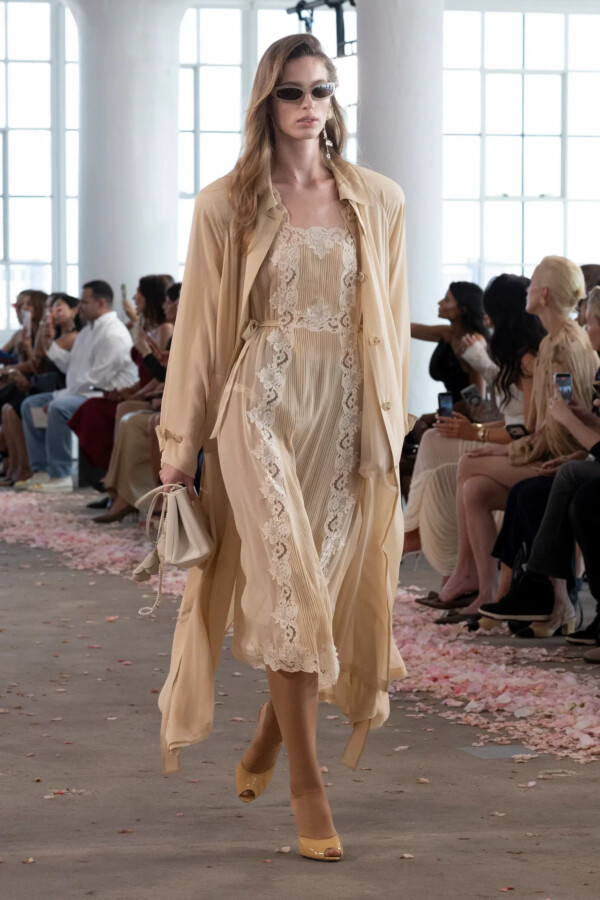
September 2026 marked a definitive milestone in the brand’s history. The show on the official New York Fashion Week calendar—with a poetic Spring/Summer 2027 collection titled Natalia —coincided with the opening of the brand’s first flagship boutique on Mercer Street in New York’s SoHo. The United States, despite market challenges and tariffs, has now become its largest stronghold. Meanwhile, the debut on the New York runway cemented its maturity. It also proved that the Magda Butrym phenomenon is far from a passing trend.
The main spiritual patron of the collection became Natalia LL. An outstanding Polish neo-avant-garde and feminist artist, who in the 1970s came to New York from behind the Iron Curtain to fight for space for her art. Butrym found a personal reflection in her biography. The story of an independent woman from Poland who enters the big world and makes her presence known without any compromises.
Can sensuality exist in the realm of everyday functionality?
The collection itself showed a clear evolution. Previously known for strong silhouettes and heavy leathers, the designer introduced unprecedented lightness and luminosity into her creations. The main motif became the apron—a nod to domestic romanticism and memories of a grandmother in the kitchen—reinterpreted through cascades of semi-transparent silks layered one over another. The transparent trench coat with pockets filled with fresh roses, worn over a nude dress, was captivating, as were the final looks referencing the 1960s, completed with tights and pearls. Alongside refined glamour, there was also American practicality ( wearability). Fashion closer to everyday life, yet without losing its sophisticated charm.
The symbol of this international success became the front row of the New York show. Among the guests, Demi Moore stood out, dressed in a cream gown with an open back and finished with crocheted lace, thanking the Polish designer for a show about the power of women writing their own stories. Next to her sat Nara Smith, perfectly embodying the return to tradition blended with modernity.
After the show in New York, one thing is clear: Magda Butrym no longer needs to prove her place at the top. Her phenomenon lies in the fact that the more international she becomes, the more boldly she draws on her Polish roots. That’s why with each new collection, she proves that true luxury begins where beauty meets history and authentic craftsmanship.
